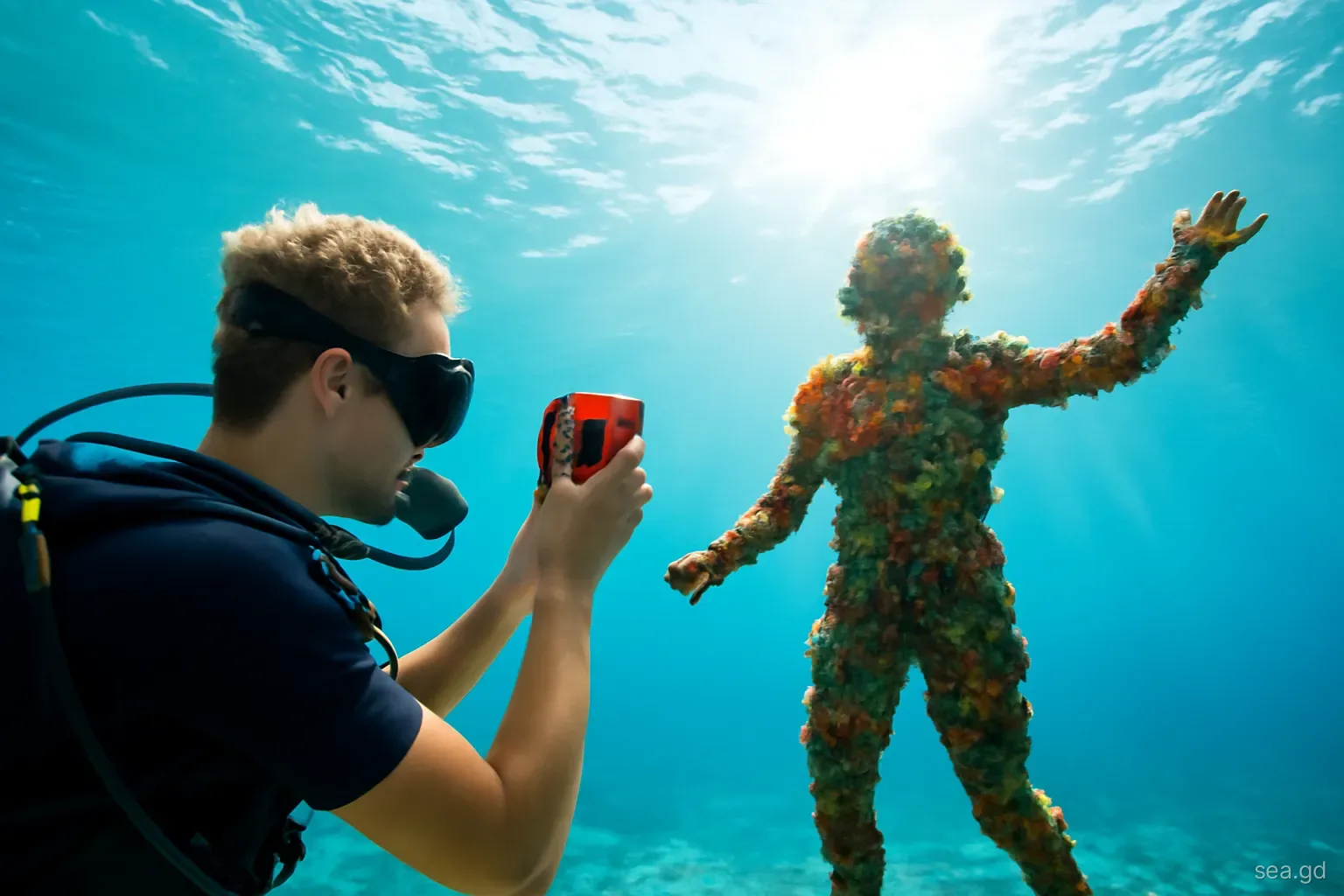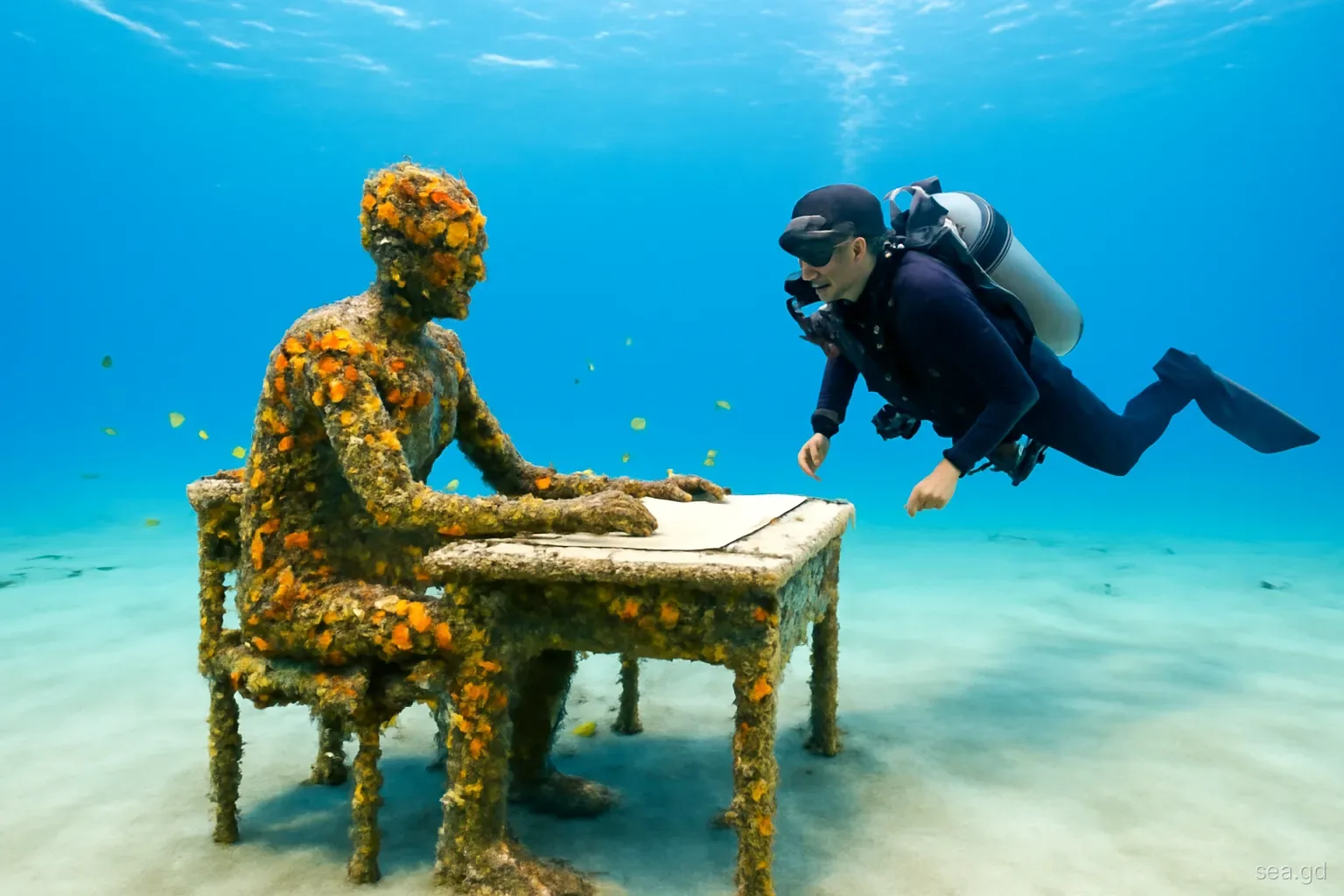
When the first figures went down in Moliniere Bay in 2006 they were bare grey concrete on bare sand. Today the same figures carry crusts of purple and pink, sponges in orange and red, waving hydroids, small hard corals and a resident population of fish that treat the sculptures as home. The park is, among other things, a nearly twenty-year experiment in how a reef builds itself on an empty surface.
Knowing what you are looking at turns the overgrown faces from a disappointment into the most interesting part of a visit. This page explains the stages of colonisation, the organisms that now cover the works, the animals that use them, the scientific debate about artificial reefs and the pressures that still threaten the bay.
Why concrete figures could become reef
Coral larvae, sponge larvae and the spores of algae drift in the water column looking for somewhere hard to settle. Sandy bottoms offer almost nothing to hold on to, and shifting sand smothers whatever does settle. A solid object rising above the sand changes that, giving larvae a stable surface lifted out of the zone of moving sediment.
The sculptures were made from a marine cement chosen to be roughly pH-neutral and free of harmful additives, with textured surfaces that larvae can grip. Their human shapes also create a range of micro-habitats: sunlit tops of heads and shoulders, shaded undersides of arms and chins, vertical faces, crevices between figures and sheltered gaps near the base. Each attracts a different community.
The location helped too. Moliniere sits beside natural reef, within a protected area where fishing is banned, so there is a nearby supply of larvae and juvenile fish ready to move onto new structure.
The stages of colonisation
Days to weeks: biofilm. Within days of going into the sea, any surface is coated in a thin film of bacteria and microscopic algae. This film changes the surface chemistry and helps other organisms settle.
Weeks to months: algae and pioneers. Turf algae, small hydroids and other fast colonisers follow. At this stage the sculptures look fuzzy and greenish brown, and this is when many early photographs were taken.
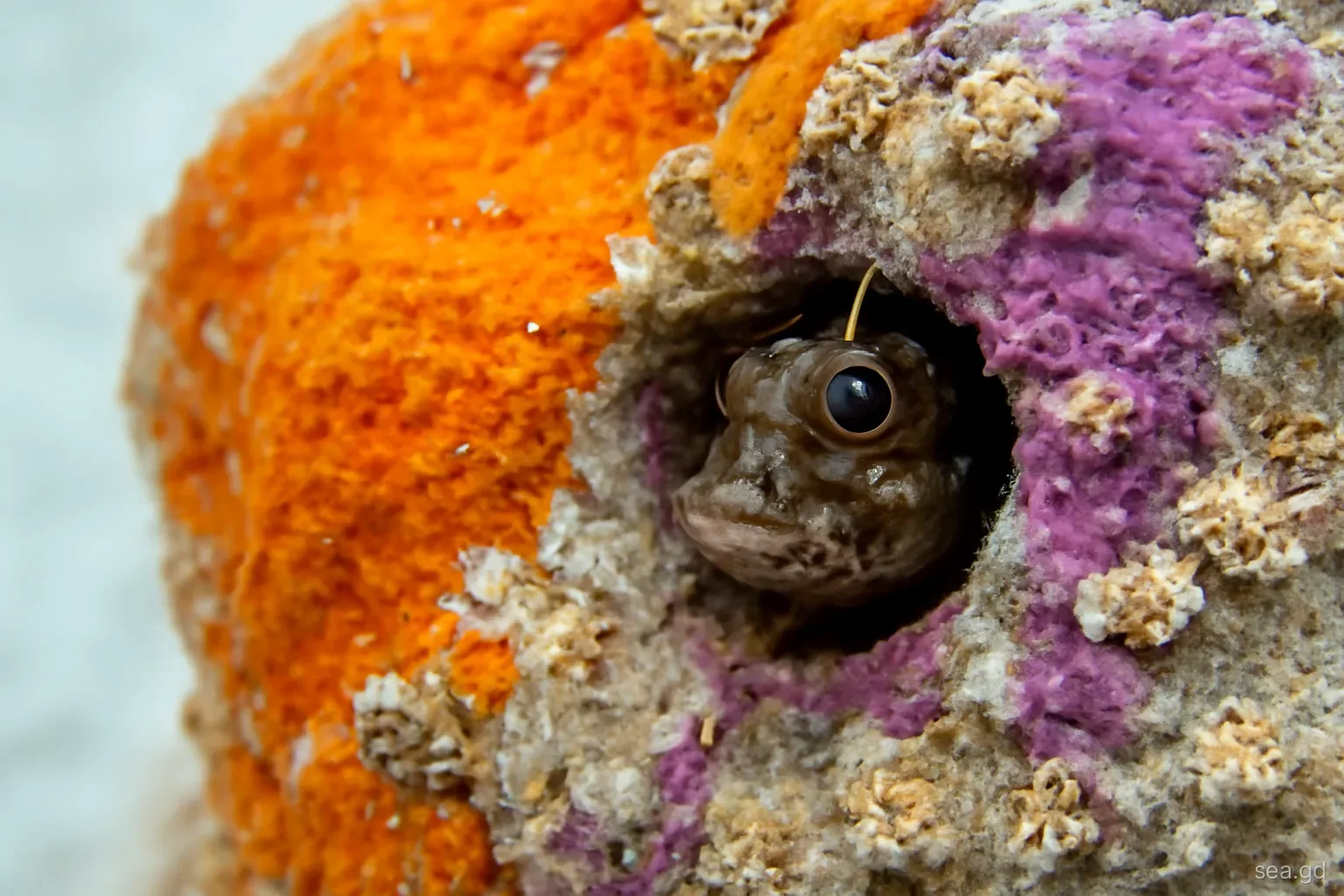
Months to years: crusts and filter feeders. Crustose coralline algae, pink to purple and rock-hard, spread over exposed surfaces. These crusts matter, because the larvae of many corals prefer to settle on them. Sponges, sea squirts and other filter feeders colonise the shaded parts.
Years: corals and complexity. Small hard corals appear, along with fire coral, zoanthids and soft corals. Growth thickens and colours multiply. The figures begin to lose their sharp outlines.
Decades: reef. Over the long term the sculptures are expected to become increasingly indistinct, structurally part of the reef, with coral colonies large enough to dominate their surfaces.
What you can see growing on them now
Look closely at any sculpture and you will find a mixed community. These are the main groups to recognise:
- Crustose coralline algae: smooth, hard pink and purple crusts on upward and outer surfaces, often mistaken for paint or stone.
- Sponges: encrusting sheets of orange, red and yellow, especially on shaded surfaces and undersides, plus small tube and branching forms.
- Sea squirts: small translucent or brightly coloured blobs, sometimes in clusters, with two openings for drawing in and expelling water.
- Hydroids: delicate feathery growths; some sting, which is another reason not to touch.
- Fire coral: mustard-coloured crusts and blades that have grown on some figures. It stings painfully on contact.
- Hard corals: small colonies of species such as starlet, finger and lettuce corals, and occasional brain coral recruits, typically a few centimetres across.
- Tube worms: feather dusters and Christmas tree worms that withdraw instantly when a shadow passes over them.
The animals that use the sculptures
Fish arrived almost immediately. Damselfish claimed territories on the figures within the first years, defending small algae patches and chasing off larger fish. Sergeant majors lay patches of purple eggs on the concrete and guard them. Wrasses, parrotfish and surgeonfish pass through to graze, and juvenile fish of many species shelter among the figures where the sand would otherwise leave them exposed.
Crevices and hollows between figures host squirrelfish and cardinalfish by day, and small spiny lobsters, crabs and occasionally a moray eel. Tiny blennies live in holes in the concrete with only their heads showing, a favourite subject for patient photographers. At night octopus hunt across the surfaces.
Over time the sculptures have shifted from being objects in the bay to being a functioning piece of habitat, used by animals that do not distinguish between concrete and coral as long as it offers shelter, food and a place to settle.
Do artificial reefs actually help?
Marine scientists have long debated what artificial reefs achieve. One view is that they produce new life, adding habitat where none existed and increasing the total number of fish and invertebrates. The other is that they mainly attract animals from surrounding areas, concentrating existing life without increasing it, and in fished areas can even make fish easier to catch.
The answer depends on the site. At Moliniere, the structures sit on sand that previously offered little habitat, within a protected area where fishing is banned, so concentration does not translate into easier catches. The sculptures clearly support settlement of corals and sponges that would not have grown on the sand. Whether they increase fish numbers in the wider area is harder to measure.
The other stated aim, drawing visitors away from fragile natural reef, may be the bigger benefit. A swimmer hovering over a concrete figure is not trampling living coral elsewhere. That only works if visitors behave carefully at the park itself.
How to watch the transformation on your visit
A visit becomes far more interesting if you treat the sculptures as a living record. A few simple habits help you read them:
- Compare the top and the underside of the same figure. Sunlit surfaces carry coralline crusts, algae and corals; shaded surfaces carry sponges and sea squirts. The difference shows how light shapes reef communities.
- Look for the smallest hard corals, often only a thumbnail across, on heads, shoulders and the edges of tables or desks. Each one began as a larva that settled from the water.
- Watch one damselfish for a minute. It will chase much larger fish away from its patch of algae, showing how quickly territorial behaviour took hold on the new structure.
- Peer into holes and joints at close range for blennies, small crabs and worms. Hover still; movement sends them back inside.
- Notice the sand around the bases. Pieces that are periodically buried carry less growth on their lower parts, which is a reminder of how sediment limits reef development.
- If you have older photographs of the same piece, compare them after your swim. Seeing ten or fifteen years of change side by side is the clearest demonstration of what the project set out to do.
How the park compares with other artificial reefs nearby
Grenada already had a famous artificial reef before the sculptures: the wreck of the cruise liner Bianca C, which caught fire and sank off the south-west coast in 1961. Over six decades it has become a large, heavily encrusted structure attracting big schools of fish, though it lies far deeper than the sculptures and is a dive for experienced divers only. Other wrecks around the island and Carriacou tell a similar story on different scales.
The sculptures differ in being shallow, deliberately designed for colonisation and placed within easy reach of snorkellers. They show the early stages of the process that the older wrecks have long since passed through, which is part of what makes them a useful living comparison.
What still threatens the sculptures and the bay
Sediment and runoff. Rain washes soil, nutrients and pollutants from the hillsides and settlements into the bay. Sediment smothers settling organisms, and nutrients feed algae that compete with coral.
Heat stress. Marine heatwaves cause bleaching in corals on the sculptures as on natural reefs, as seen in the severe regional event of 2023.
Physical damage. Visitors standing on figures, fins striking them and careless anchoring have all caused breakage over the years. Mooring use and good buoyancy are the answer.
Storms and swell. Big swells can shift sand, bury or expose pieces, and break growth. Hurricanes remain the largest natural threat.
Invasive species. Lionfish shelter around the figures and eat the small fish that make the sculptures lively. Removal by trained divers helps keep numbers down.
Frequently asked questions
Why are the sculptures covered in growth?
They were designed to be colonised. The pH-neutral marine cement and textured surfaces encourage algae, sponges, corals and other organisms to settle, turning the sculptures into artificial reef. The growth is the intended result, not a sign of neglect.
Is real coral growing on the sculptures?
Yes. Small hard corals, fire coral and soft corals have settled on many figures, alongside coralline algae, sponges and sea squirts. Most coral colonies are still relatively small, as reef-building corals grow slowly.
Do fish live on the underwater sculptures?
Many do. Damselfish and sergeant majors defend territories and nests on them, juvenile fish shelter among the figures, and crevices host squirrelfish, lobsters and occasional morays. At night octopus hunt across the surfaces.
Does the sculpture park help coral reefs?
It adds hard surface for coral and sponge settlement on previously bare sand, and it draws visitors away from fragile natural reef. Whether it increases overall fish numbers in the area is still debated, as with most artificial reefs.
Will the sculptures eventually disappear under coral?
Over many decades the figures are expected to become increasingly indistinct as growth thickens, eventually becoming structurally part of the reef. That transformation was always intended as part of the artwork.