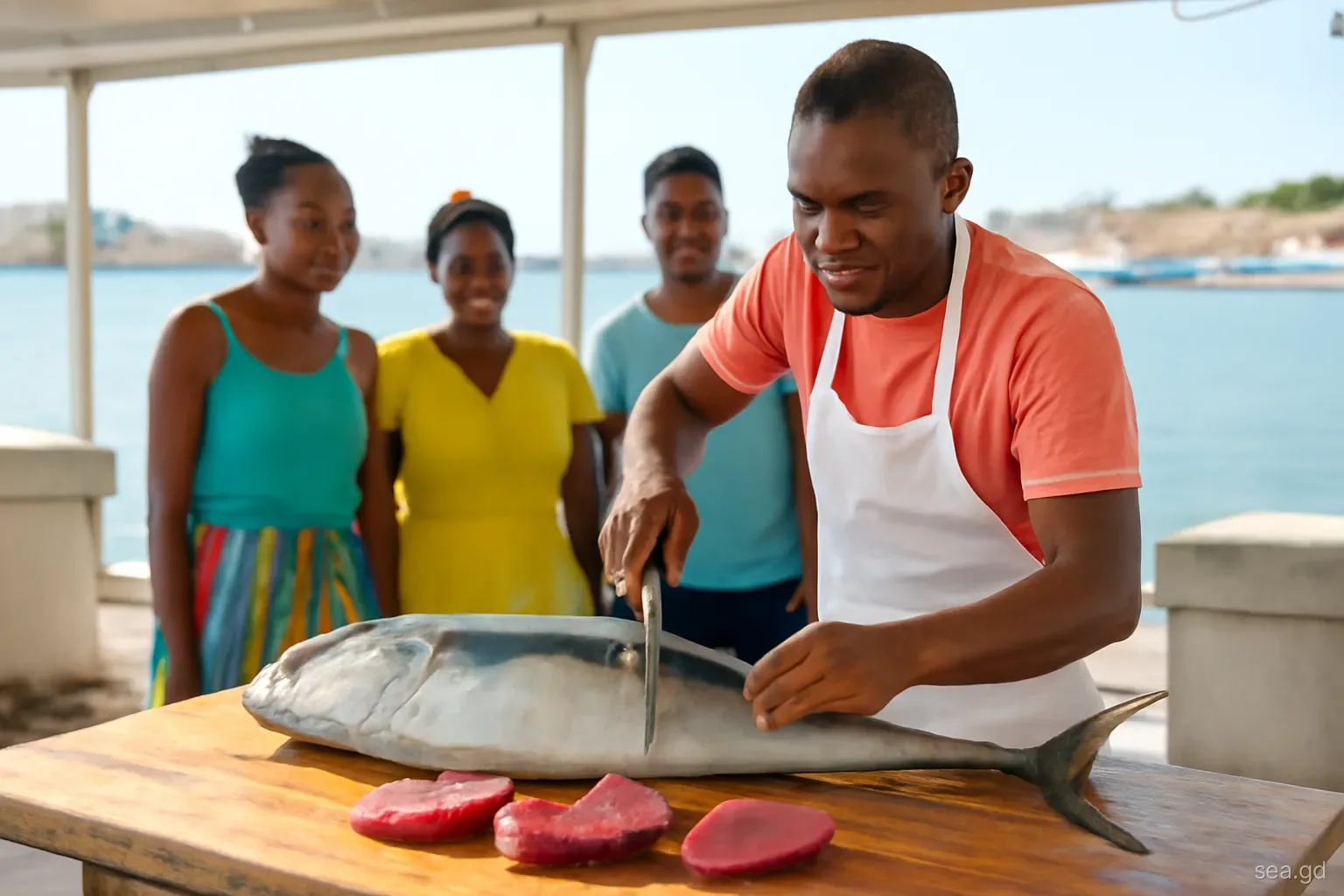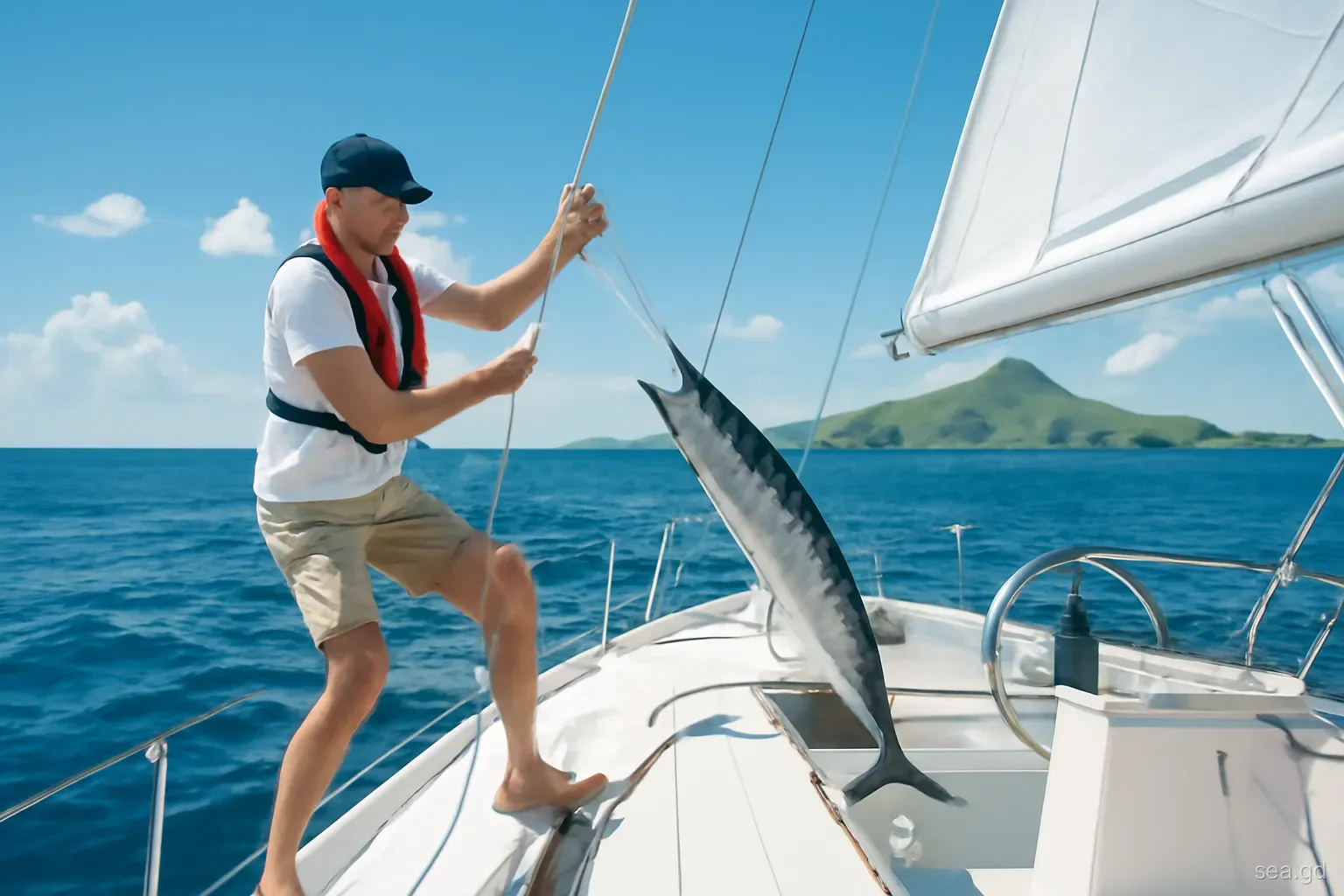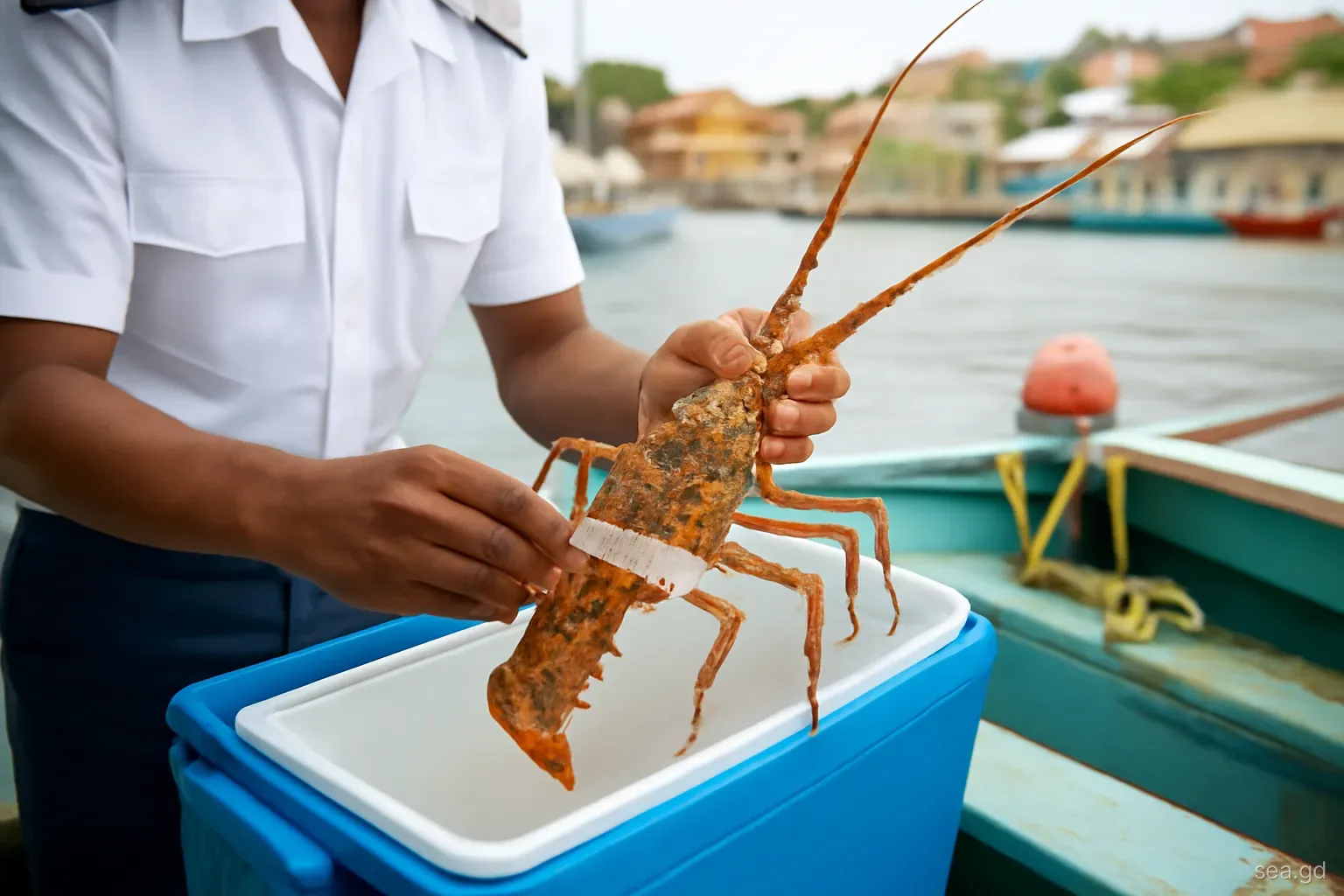
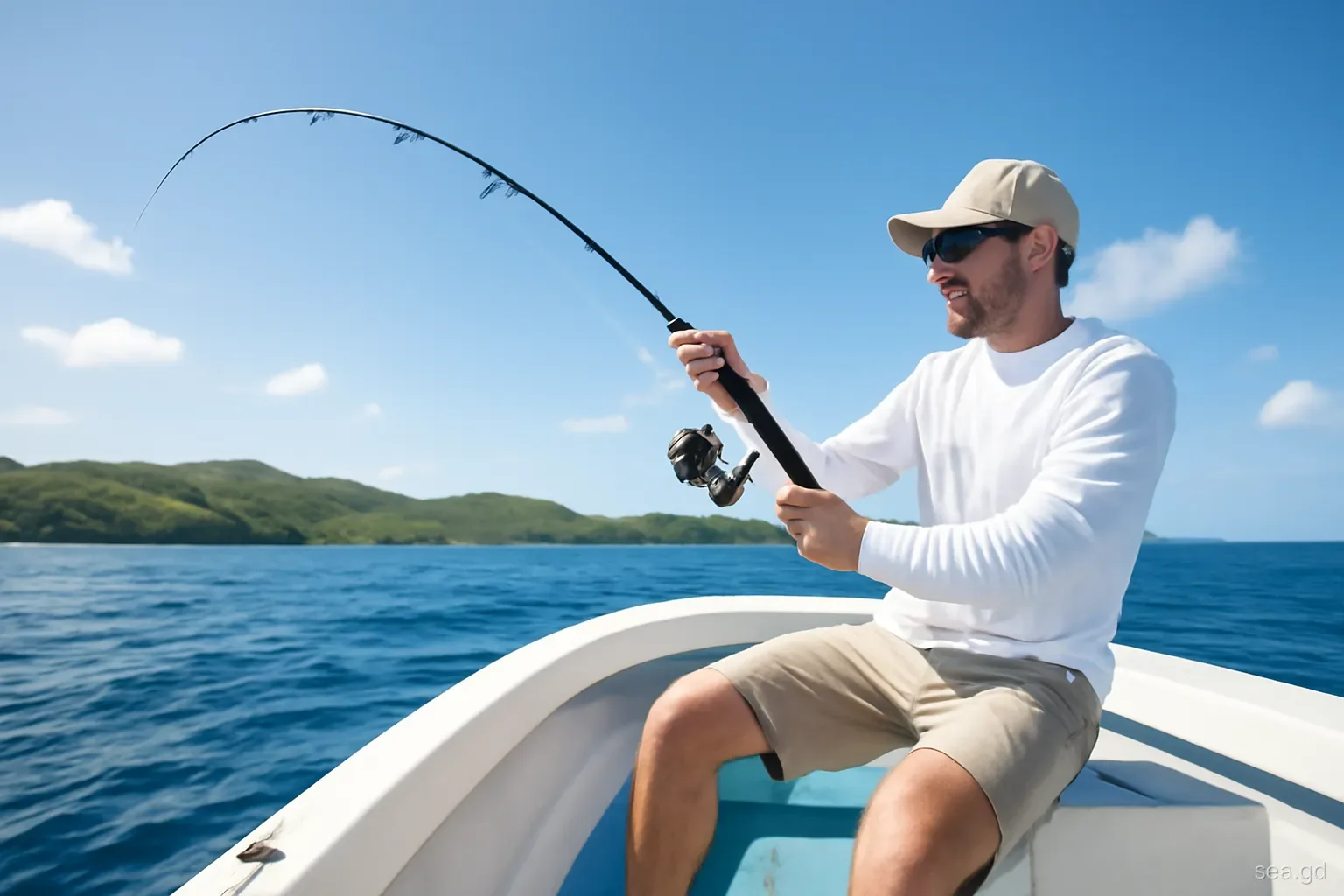
Trolling for marlin gets the photographs, but a lot of Grenada's fish are caught straight down. Local fishers have long worked the banks and ledges around the island with hand lines for snapper, grouper and hinds, and modern sport anglers have added vertical jigging and deep-drop rigs to the same grounds. On a slow pelagic day, or a windy one when long runs offshore are uncomfortable, bottom fishing often saves the trip.
It is also the type of fishing where the angler's choices have the most direct effect on fish stocks. Reef fish grow slowly, many gather in predictable places to spawn, and fish pulled up from deep water often cannot survive release without help. This page explains where and how bottom fishing and jigging work around Grenada, what you are likely to catch, and how to do it responsibly.
Where the bottom fish are
Grenada's underwater landscape is varied. Off the west coast the slope drops quickly into deep water, so a boat can be over a reef edge one minute and hundreds of metres of water the next. To the north, the shallower Grenada Bank stretches toward Carriacou and the Grenadines, with banks, shoals and isolated rocks that hold fish. Off the south and east, the shelf extends farther from the coast, with ledges and patch reefs scattered across it.
Bottom fishing generally focuses on three zones. Shallow reefs and patch reefs, in roughly ten to thirty metres, hold yellowtail snapper, lane snapper, grunts, small groupers and triggerfish. The edges of banks and drop-offs, perhaps forty to one hundred metres, are where larger snappers, red hind, amberjack and almaco jack patrol. Beyond that, deep-drop fishing in several hundred metres targets species such as queen snapper and other deep-water snappers and groupers, which few visitors ever see.
Exact marks are closely guarded. Local skippers have learned them over a lifetime, often from fathers and grandfathers, and they are the main reason to fish with an experienced local crew rather than trying to find spots alone with a chart plotter. Even with a known mark, current and wind decide whether the boat can hold over it, and reading that is a skill in itself.
Methods used around Grenada
Hand lines. The traditional method of Grenadian fishers. A heavy monofilament line wound on a wooden frame or plastic spool, a weight and several hooks baited with fish or squid. It is efficient, cheap and gives a direct feel of the bottom. Some charters let guests try it for an authentic experience.
Rod and reel bottom rigs. Conventional reels with braided line and a dropper rig holding two or three hooks above a sinker. The angler drops to the bottom, lifts slightly and waits for a bite. Good for mixed bags of snapper, grunts and hinds over reefs.
Vertical jigging. Metal jigs dropped to the bottom and worked back up with sharp lifts or, in slow-pitch jigging, gentle flutters. Jigging is effective for amberjack, almaco jack, horse-eye jack, snapper and groupers, and sometimes tunas and kingfish mid-water. It is physical work; a day of high-speed jigging tires even fit anglers.
Deep dropping. Fishing at depths of a few hundred metres with heavy sinkers, multiple hooks and often electric reels. It needs precise boat positioning and knowledge of the deep ledges, and is offered by relatively few boats.
Drift and anchor fishing. Boats may drift across a reef edge or anchor on a sand patch beside it. Anchoring on coral damages reefs and is prohibited in protected areas; responsible crews choose sand or use moorings.
What you might catch
Catches vary with depth, season and grounds, but these are the species most often encountered on bottom and jigging trips around Grenada:
- Yellowtail snapper: common over reefs, excellent eating, often caught in numbers.
- Red snapper and silk snapper: deeper-water snappers prized in local kitchens.
- Mutton and lane snapper: found over reefs and sand edges.
- Red hind and coney: small groupers that are common and good to eat.
- Larger groupers: including species of conservation concern. Nassau grouper, listed as critically endangered by the IUCN, should be released.
- Amberjack and almaco jack: powerful fish that test tackle and anglers on jigs.
- Horse-eye jack and bar jack: aggressive, hard-fighting and common around reefs and drop-offs.
- Triggerfish and grunts: smaller reef fish, good fun on light tackle and popular locally.
Barotrauma: why deep fish need help to survive release
Fish with gas-filled swim bladders suffer when pulled quickly from depth. As pressure drops, the gas expands, bloating the fish, pushing the stomach out of the mouth and sometimes bulging the eyes. Released at the surface, such fish often float helplessly and are picked off by predators or die from injuries. This is barotrauma, and it means that "catch and release" of deep reef fish only works if it is done properly.
Two techniques improve survival. Descending devices, weighted clips or inverted hooks attached to a line, carry the fish back down to depth where the gas recompresses, then release it. They are increasingly recommended by fisheries scientists as the best option. Venting, puncturing the swim bladder with a hollow needle, is an older technique that can work but causes injury if done wrongly, and some fisheries agencies now advise against it.
The simplest approach is not to catch more than you need. Once the cool box has enough fish for dinner, move to catch-and-release targets such as jacks that cope better, switch to trolling, or call it a day. Avoiding known spawning aggregations, where groupers and snappers gather in large numbers at certain times of year, also matters a great deal. A skipper who knows where those sites are and stays away from them at the wrong time of year is worth seeking out.
Ciguatera and eating reef fish
Ciguatera fish poisoning is caused by toxins produced by microscopic algae on reefs, which accumulate up the food chain in fish that eat reef grazers. Larger predatory reef fish, especially big barracuda, amberjack and some groupers and snappers, are the most likely to carry it. Cooking and freezing do not destroy the toxin, and there is no way to see or smell it.
Grenada and the southern Caribbean are generally regarded as lower-risk areas than some islands farther north, but ciguatera has been reported throughout the region, and risk varies between reefs. Local knowledge is the best guide: Grenadian fishers know which species and sizes are eaten locally and which are avoided. A sensible rule is to follow their lead, avoid eating large barracuda and very large reef predators, and favour smaller fish and pelagics such as tuna, wahoo and mahi-mahi, which carry little risk.
Symptoms typically include stomach upset followed by tingling, temperature reversal (cold feeling hot), itching and fatigue, sometimes lasting weeks. Anyone with these symptoms after eating reef fish should see a doctor and mention what they ate, because the diagnosis depends largely on that history.
A responsible bottom-fishing trip, step by step
These steps apply whether you are on a charter or fishing from your own boat:
- Confirm that the grounds are outside marine protected areas and that the boat will not anchor on coral.
- Agree with the crew how many fish you will keep and which species you will release.
- Use circle hooks where practical; they hook fish in the jaw and make release easier.
- Have a descending device ready before the first drop, not after the first bloated fish comes up.
- Handle fish to be released with wet hands, keep them in the water if possible and return them quickly.
- Release undersized fish, Nassau grouper and any fish full of eggs.
- Ice kept fish immediately, as reef fish spoil quickly in tropical heat, and clean them before returning to port where possible.
Frequently asked questions
Where is the best bottom fishing in Grenada?
Good grounds include the reef edges and drop-offs off the west coast, the banks to the north toward Carriacou, and the shelf and ledges off the south and east. Exact spots are local knowledge, so fishing with an experienced local skipper is the most reliable way to find productive marks.
What is the difference between bottom fishing and jigging?
Bottom fishing usually uses bait on hooks dropped to the seabed and held still or moved slightly. Jigging uses metal lures dropped and worked actively up and down, imitating injured baitfish. Jigging is more physical and targets aggressive predators such as jacks and groupers, while bait fishing catches a broader mix.
Is it safe to eat snapper and grouper in Grenada?
Snapper and grouper are widely eaten in Grenada, and most are safe. Ciguatera poisoning is possible in larger reef predators anywhere in the Caribbean. Follow local fishers' advice on species and size, avoid very large barracuda and amberjack, and remember that cooking does not remove the toxin.
What is a descending device?
It is a weighted tool that clips onto a fish caught from deep water and lowers it back down, where water pressure recompresses the expanded gas in its swim bladder. Once at depth, the device releases the fish. It greatly improves survival of released deep-water reef fish suffering from barotrauma.
Can you go jigging on a half-day charter in Grenada?
Yes, many boats can include jigging on a half day, especially if the grounds are close to port. Tell the operator in advance that you want to jig, ask whether they have suitable tackle or whether you should bring your own, and expect the trip to be physically demanding.