Most visitors who fish in Grenada do so on a charter boat and never need to think about regulations; the operator handles licences and knows the rules. The questions start when people want to fish from their own yacht, bring a speargun, buy lobster from a fisherman on the beach, or troll through a bay that turns out to be a marine protected area.
Grenada's fisheries are managed by the Fisheries Division under the ministry responsible for fisheries, using the Fisheries Act and regulations made under it. Rules are updated from time to time, and enforcement has become more visible in protected areas. This page explains the main principles in plain language so you know what to ask, but it is not a substitute for the current regulations: confirm specifics with the Fisheries Division or a reputable local operator before you fish independently.
Licences: who needs what
Grenadian commercial fishers and fishing vessels are registered and licensed through the Fisheries Division. Charter boats offering sport fishing operate under their own licensing and business arrangements, and their clients normally fish under those arrangements without obtaining individual permits. If you are booking a charter, ask whether any fee or licence is required for visiting anglers and whether it is included; usually it is.
Foreign yachts and private boats are where it becomes less clear. Fishing in another country's waters from a foreign-flagged vessel generally requires permission, and several countries in the region require visiting yachts to buy a recreational fishing licence or permit before trolling a line. When you clear in with Customs and Immigration in Grenada or Carriacou, ask whether a fishing licence is needed for your vessel and where to obtain it. The Fisheries Division in St George's is the authority to confirm with.
Shore fishing with a hand line or rod for personal consumption is a long-standing local tradition and is generally treated differently from commercial or vessel-based fishing. Even so, protected area rules and species limits apply wherever you are standing. A rod on the rocks at the edge of the Molinière reserve is still fishing inside it.
Marine protected areas: no fishing at all
Molinière-Beauséjour MPA. The stretch of the west coast north of St George's, including Molinière Bay, Dragon Bay and Flamingo Bay. Fishing of any kind is prohibited, along with collecting and anchoring on the reef.
Woburn and Clarkes Court Bay MPA. On the south coast, covering bays, mangroves and reefs around Woburn, Clarkes Court Bay and Hog Island. The same no-take principle applies within its boundaries.
Sandy Island Oyster Bed MPA. Carriacou's south-west coast, including Sandy Island, L'Esterre Bay and the Tyrrel Bay mangroves known as the Oyster Bed. Fishing restrictions and zoning apply.
Other designated or proposed areas. Grenada has identified further sites for protection, and boundaries and zoning can change. Marked moorings and buoys often indicate protected areas, but not always. If in doubt, ask the MPA management or a local operator before fishing near a reef.
Penalties. Wardens patrol the main MPAs, and fishing inside them can lead to confiscation of gear and fines under the relevant regulations. Ignorance of the boundary is not a defence.
Lobster, conch and other shellfish
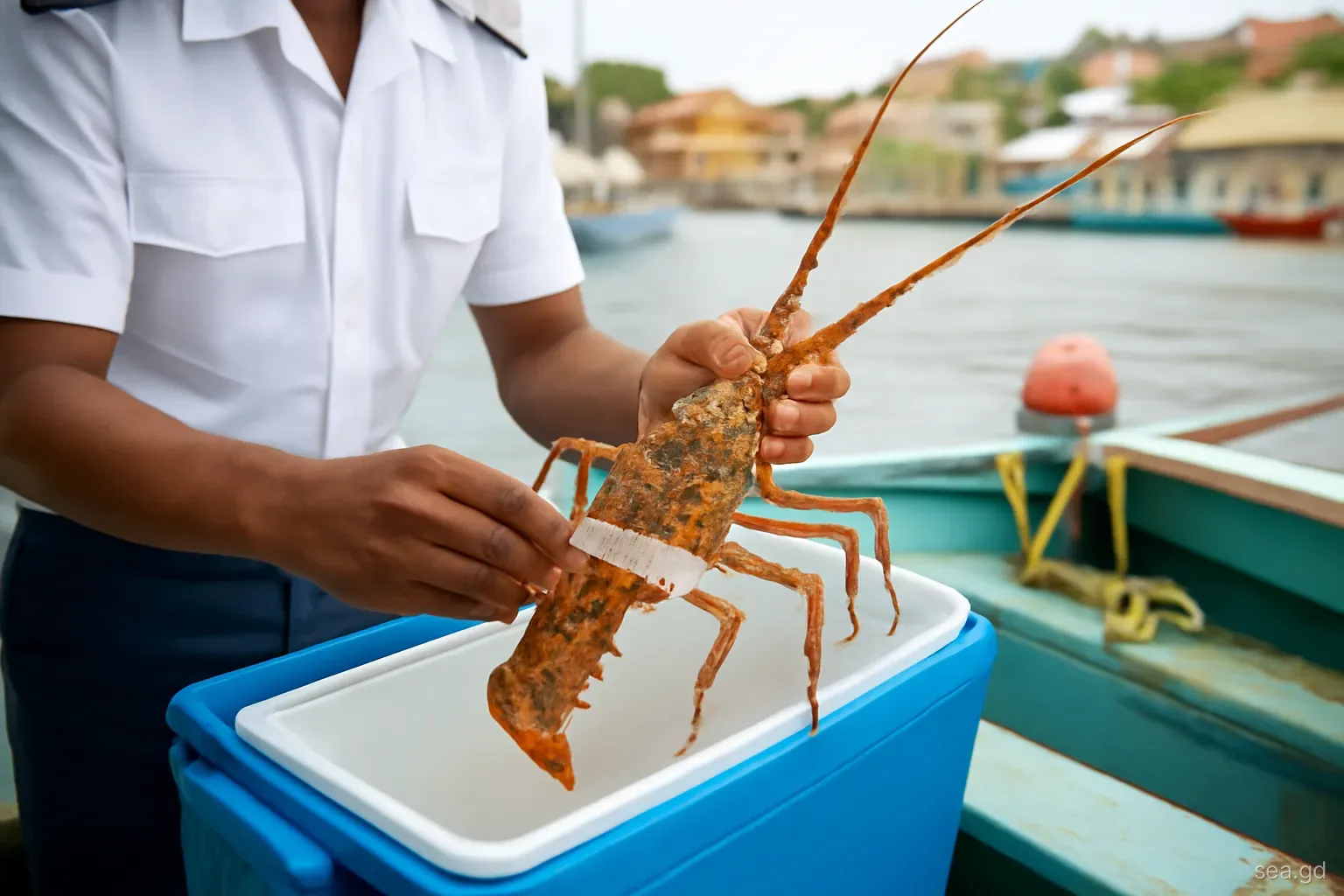
Caribbean spiny lobster is one of Grenada's most valuable fisheries and one of the most tightly regulated. Rules have long included a closed season during the summer months, historically starting in May, during which lobster may not be taken or sold; a minimum size, usually measured on the carapace; and a ban on taking females carrying eggs, which are visible as an orange or dark mass under the tail. Confirm current season dates and size limits with the Fisheries Division, because they are reviewed periodically.
For visitors, the lobster rules matter mostly when buying. Being offered lobster on a beach or from a boat during the closed season is a sign it was taken illegally; ordering it in a restaurant out of season may mean it was frozen before the closure, which is lawful, but it is fair to ask. Avoid buying undersized lobster or females with eggs at any time.
Queen conch, the large pink-lipped sea snail used in lambi dishes, is also regulated, with protections aimed at ensuring conch reach maturity before harvest. Visitors should not collect live conch, and empty shells on beaches are best left where they are. Coral, sea fans and live shells of any kind should never be taken.
Spearfishing, turtles and practices that are banned
Some activities are prohibited outright or so heavily restricted that visitors should assume they are off limits unless told otherwise by the Fisheries Division:
- Spearfishing with scuba: using a speargun while breathing from scuba is treated as prohibited in Grenada, as it is across much of the region; confirm the current wording of the regulations if in any doubt.
- Spearfishing by visitors: rules for spearguns are restrictive, and some neighbouring countries ban visitors from spearfishing entirely. Do not bring a speargun without confirming what is allowed, and declare it on arrival if you do.
- Fishing in protected areas: no fishing of any kind, by line, net, trap or spear, inside marine protected areas.
- Explosives and poisons: banned, as are other destructive methods.
- Sea turtles: nesting females and eggs are protected, and taking them is illegal. Visitors should never harm, catch or buy any turtle product.
- Tortoiseshell: hawksbill shell products are covered by CITES, the international convention on trade in endangered species. Buying and exporting them is illegal and they may be seized at customs at home.
- Marine mammals: dolphins and whales must not be harassed. Mahi-mahi, called dolphin locally, is a fish and is legal to catch.
A compliance checklist for independent anglers and yachts
If you plan to fish without a charter, run through these steps before putting a line in the water:
- On clearing in, ask Customs and Immigration whether your vessel needs a fishing licence or permit, and obtain it from the Fisheries Division if so.
- Learn the boundaries of the three main MPAs and any newer protected zones, and keep lines out of the water while passing through them.
- Use moorings where provided and never anchor on coral or seagrass.
- Check current closed seasons and size limits for lobster, conch and any other species you might keep.
- Keep only what you will eat; release billfish and undersized reef fish quickly.
- Do not sell your catch. Selling fish is a licensed commercial activity.
- If you plan to take fish home by air, check both Grenada's export requirements and the import rules of your destination country, as well as airline packing rules.
Why the rules exist
Fishing is a livelihood for many Grenadian families, from longline crews in Grenville and Gouyave to small-scale fishers working pirogues from beaches around the island and in Carriacou and Petite Martinique. Reef fish, lobster and conch have all come under heavy pressure in the Caribbean, and coral reefs that support fisheries have been damaged by storms, bleaching and pollution. The MPAs and seasonal rules are tools to give stocks a chance to recover.
Visitors have more influence than they might think. Choosing operators who follow the rules, declining illegal or undersized seafood, and respecting protected areas all send a signal in a small economy where tourism matters. Fisheries officers and MPA wardens are generally happy to explain the rules to anyone who asks. A conversation before fishing is always easier than one after a warden has found a line in a no-take zone.
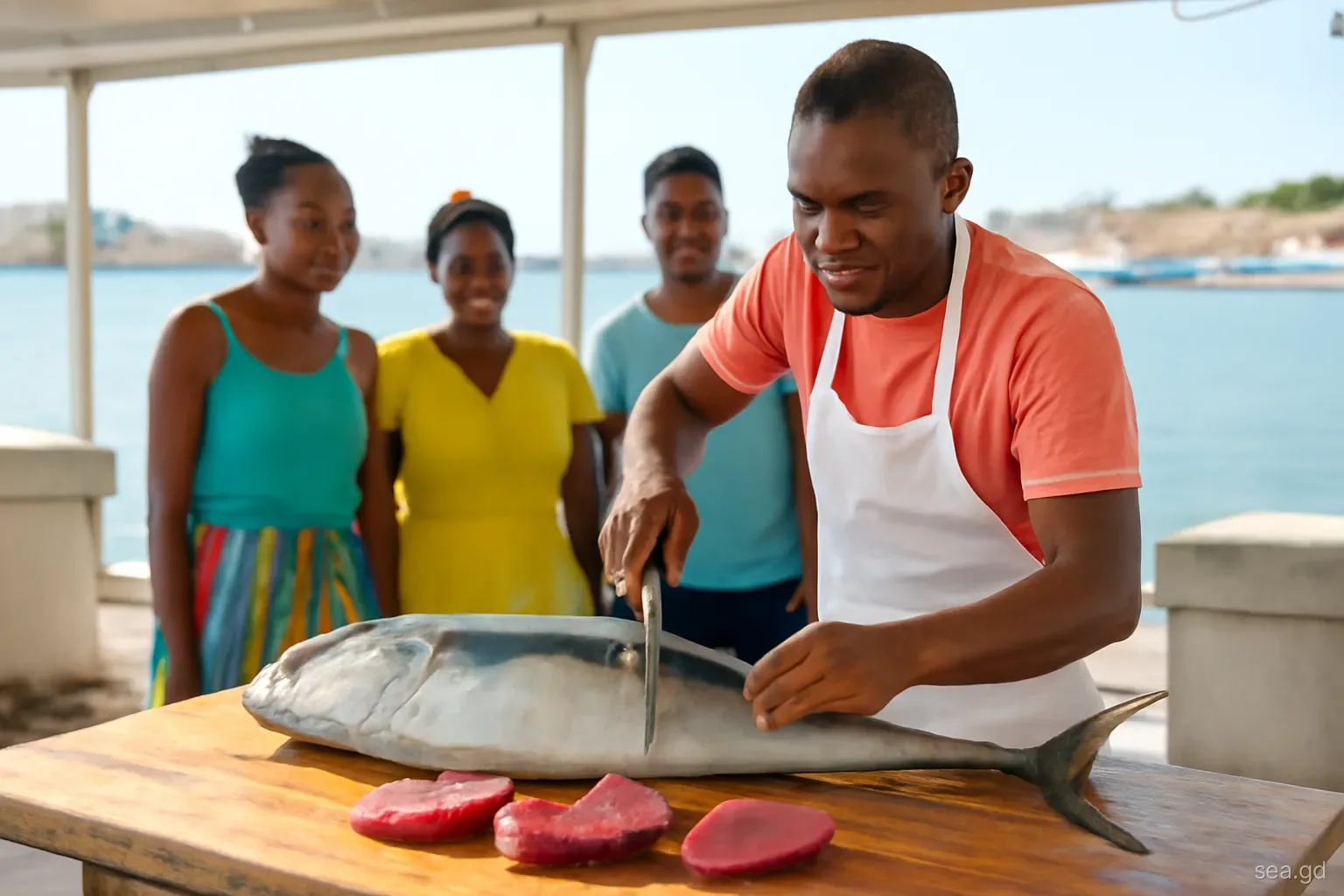
The same logic applies to buying fish. Fish sold at the markets in St George's, Gouyave and Grenville, or straight off the boats, is part of a legal local trade that supports coastal communities. Paying a fair price there, rather than seeking out cheap lobster out of season, is one of the simplest ways for visitors to support responsible fishing.
Frequently asked questions
Do visitors need a fishing licence in Grenada?
Visitors fishing on a licensed charter boat generally do not need to arrange their own licence, though you should confirm with the operator. Those fishing from a private or foreign-flagged yacht should ask Customs and the Fisheries Division whether a recreational licence or permit is required before fishing in Grenadian waters.
When is lobster season in Grenada?
Grenada has a closed season for spiny lobster during the summer months, historically beginning in May, when lobster cannot legally be caught or sold. Exact dates and minimum sizes are set by the Fisheries Division and can be reviewed, so confirm the current season before buying lobster from fishers.
Is spearfishing allowed in Grenada?
Spearfishing is restricted. It is prohibited inside marine protected areas and while using scuba, and other rules may apply to spearguns and to visitors. Do not bring or use a speargun without first confirming current regulations with the Fisheries Division. Many visitors choose not to spearfish at all.
Can you fish in the Molinière-Beauséjour Marine Protected Area?
No. Fishing of any kind is prohibited inside the Molinière-Beauséjour MPA on the west coast north of St George's, as it is in Grenada's other designated marine protected areas. Wardens patrol, and violations can result in confiscated gear and fines. Keep lines out of the water while passing through.
Is it legal to buy turtle products in Grenada?
Visitors should not buy any turtle products. Hawksbill shell items are covered by CITES, and importing them into most countries is illegal; they are often seized at customs. Turtle eggs and nesting females are protected under Grenadian law. Supporting turtle conservation means avoiding all such products.