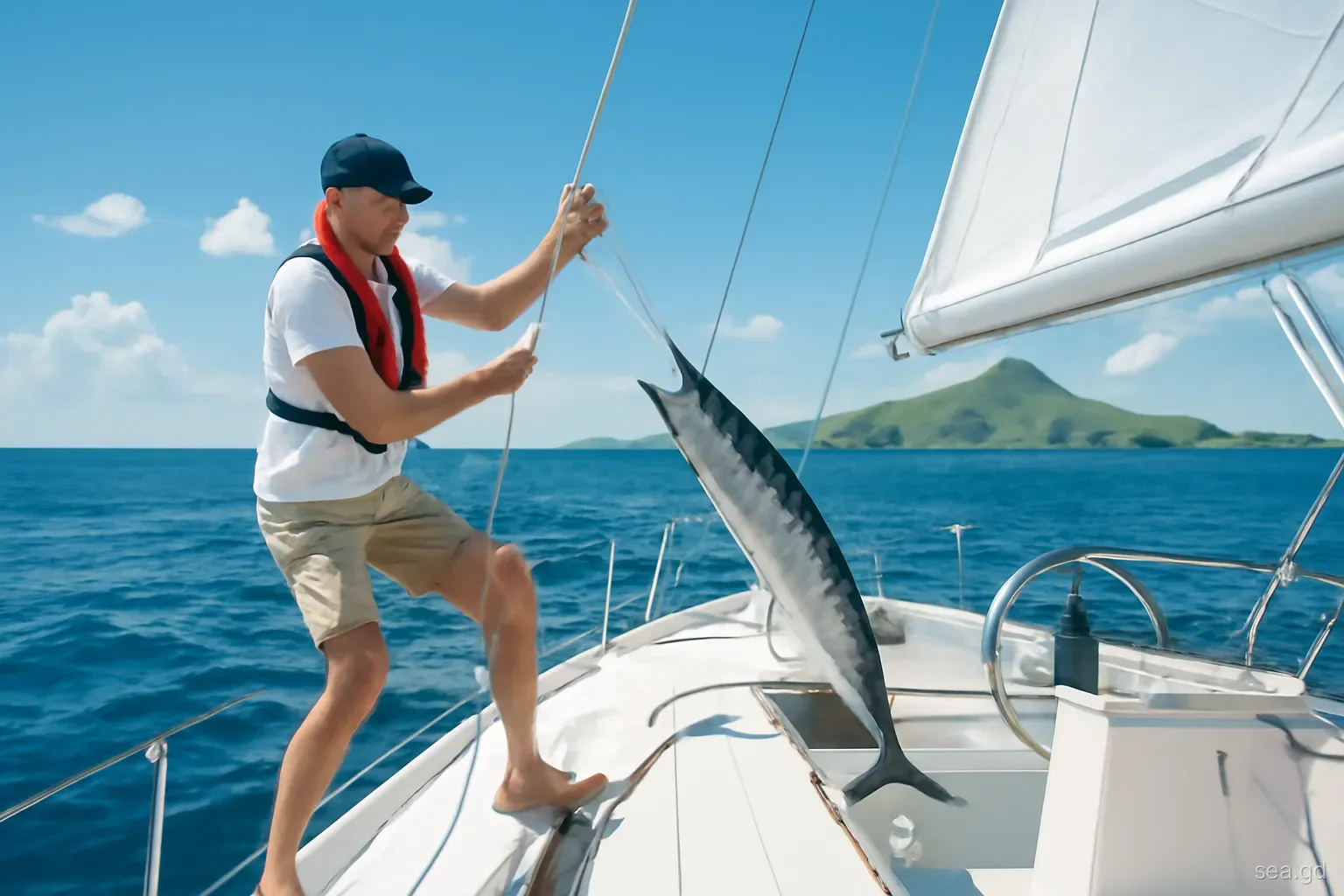
The passage north from Grenada to Carriacou is one of the best stretches of water in the southern Caribbean to drag a lure behind a yacht. Boats leaving St George's or the south coast run up the sheltered leeward coast, then cross the open channel past Isle de Ronde and the submarine volcano Kick 'em Jenny before reaching the shelter of Carriacou. Along the way, the line crosses drop-offs, current edges and floating weed that hold mahi-mahi, tuna, wahoo and barracuda.
A cruising yacht making six or seven knots is moving at an ideal trolling speed. Plenty of sailors catch their dinner on this passage with little more than a handline and a cheap lure. This guide covers the gear, the route, the safety issues specific to this crossing, how to land fish without chaos on deck, and the rules that apply along the way.
The route and where fish tend to be
From St George's to Hillsborough or Tyrrel Bay is roughly thirty to thirty-five nautical miles, depending on the start point and route. The first leg runs north along the west coast past Grand Mal, Molinière, Gouyave and Victoria, usually in the lee of the island with lighter wind and flatter water. Off the north end, near Sauteurs and David Point, the trade winds and Atlantic swell arrive and the sail usually becomes livelier for the crossing.
Fish tend to be found where something changes. The drop-off along the west coast, where water deepens quickly, is a good place to have lines out early. Current lines, visible as a band of choppy or differently coloured water, often with debris and weed, attract bait and predators. Floating sargassum, logs and other debris shelter small fish, which attract mahi-mahi in particular. Feeding birds, especially terns and boobies diving into the water, almost always mean tuna or other predators below.
Between the islands, the shallower banks around Isle de Ronde, Les Tantes and the rocks farther north hold barracuda, jacks and occasionally wahoo, while the deeper channel water is the domain of tuna and mahi. Watch, too, for local fishing boats and their gear: pirogues work these waters daily, and floats marking pots or lines should be given a wide berth so that a trolling lure does not foul them. Note that the leeward coast between Molinière and Beauséjour lies within a marine protected area where fishing is prohibited, so lines should be in only once you are clear of it.
The crossing itself deserves respect. Once clear of the island, the trade winds blow across the channel with nothing to stop them, swell from the Atlantic rolls through the gaps, and the current generally sets toward the west. A yacht steering a direct course for Carriacou can find itself pushed to leeward, and the heading usually needs to allow for that. An early start gives the lightest winds of the day for the open stretch, the best light for spotting birds and weed lines, and time to deal with a fish without arriving in the anchorage after dark.
Kick 'em Jenny: the safety issue unique to this passage
What it is. Kick 'em Jenny is an active submarine volcano roughly eight kilometres north of Grenada's north coast, west of Isle de Ronde. Its summit lies well below the surface, but it has erupted repeatedly in recorded history and is one of the most active volcanoes in the Eastern Caribbean.
Who monitors it. The volcano is monitored by the University of the West Indies Seismic Research Centre, and Grenada's National Disaster Management Agency issues alert levels. Mariners can check the current level before departure.
The exclusion zone. A maritime exclusion zone around the volcano applies at all times; at the routine green alert level it has typically been 1.5 kilometres, and it has been expanded, for example to five kilometres, when the alert is raised to yellow. Gas released by the volcano can reduce water density, which may affect a vessel's buoyancy, and eruptions can throw material into the air.
Practical planning. Check the alert level with official sources before leaving, plot the exclusion zone on your chart plotter and keep well outside it. Many skippers pass to the east of the volcano, closer to Isle de Ronde, or well to the west.
Gear that works from a cruising yacht
You do not need a sportfishing set-up to catch fish on this passage. A simple, robust kit is easier to manage on a small crew:
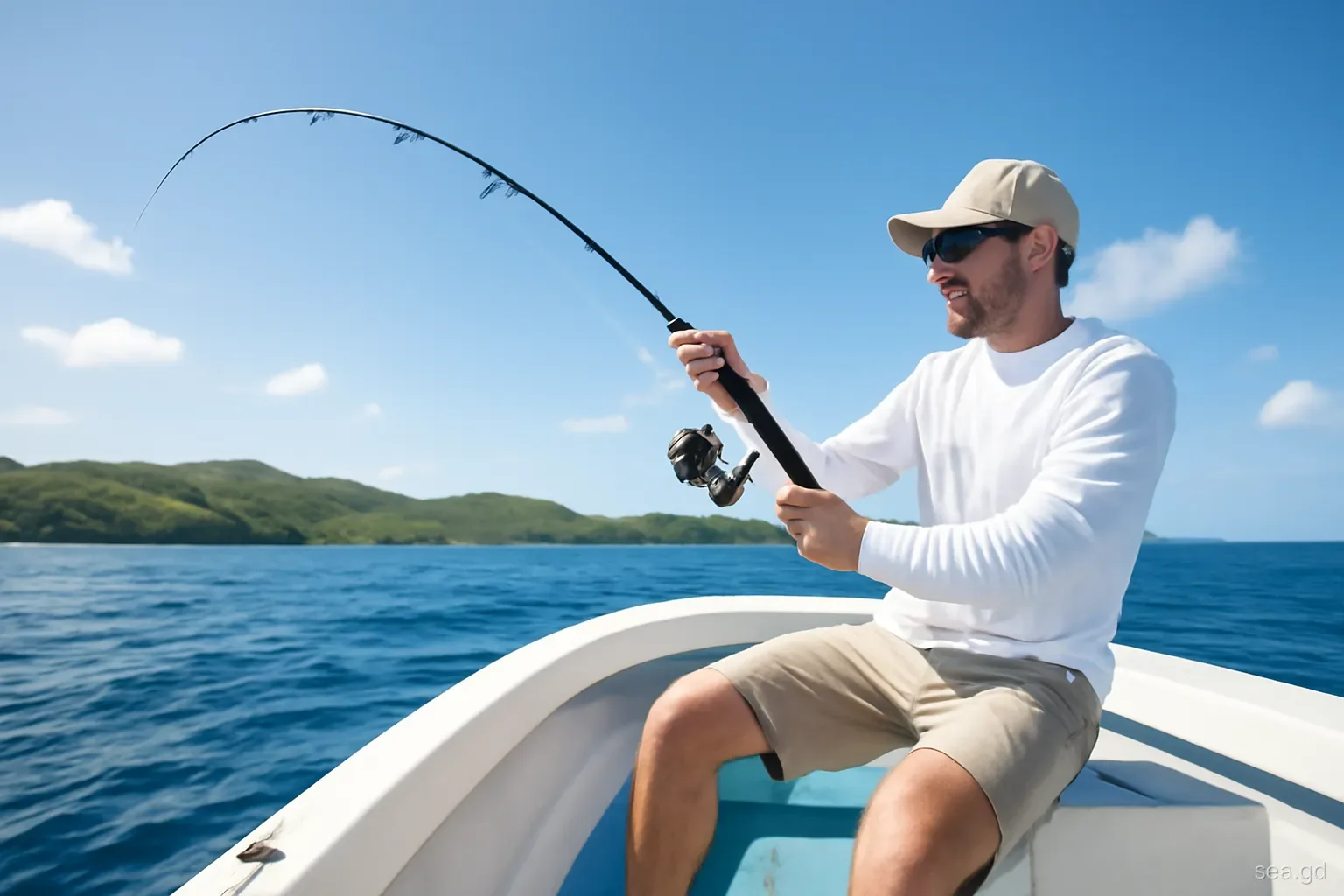
- Handline or trolling reel: a heavy monofilament handline of around 100 to 200 pounds on a yo-yo or spool, or a stout trolling rod with a lever-drag reel.
- Shock absorber: a length of bungee or a purpose-made snubber tied between the line and a cleat to cushion strikes at sailing speed.
- Strike alarm: a clothes peg on the line or a bell, so the crew notices a fish when nobody is watching the wake.
- Lures: cedar plugs, squid-style skirts and small diving plugs in natural colours. Wire leaders help with wahoo and barracuda, which bite through mono.
- Gaff and gloves: a short gaff to bring fish over the rail and gloves to handle line under load.
- A bottle of cheap rum or alcohol in a spray bottle: a few drops in the gills quickly subdue a fish, a common cruisers' technique that avoids a bloody struggle in the cockpit.
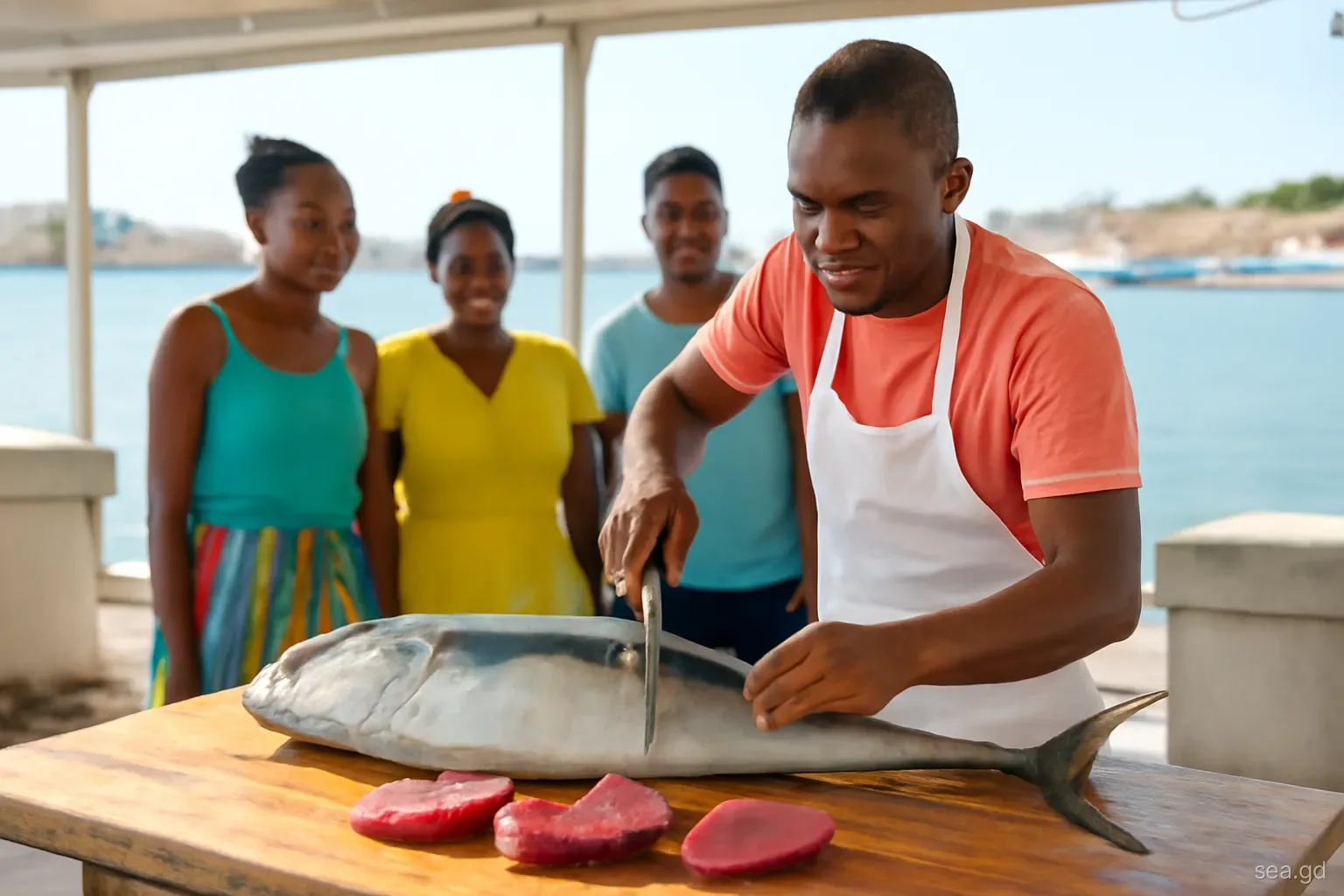
- Cutting board, sharp knife, bucket and ice: clean the fish promptly and refrigerate fillets.
Landing a fish under sail without chaos
A strike under sail can turn a calm passage into a messy deck in seconds. A rehearsed routine keeps everyone safe:
- Agree beforehand who handles the line, who steers and who works the sails, so nobody leaves the helm unattended.
- When a fish strikes, slow the boat: ease the sheets, furl the headsail partly or head up a little. Heaving to is ideal if the crew is practised.
- Bring in any other lines so they do not tangle.
- Haul the fish steadily, hand over hand on a handline, keeping tension so the hook does not fall out. Wear gloves.
- Gaff the fish behind the head and lift it straight into a bucket or onto a mat, or into a large bag to contain blood.
- Subdue it quickly with alcohol in the gills or a sharp blow, then bleed it into the sea from the stern.
- Clean the fish on a board, ice the fillets and wash down the deck before resuming course.
- If the fish is too large, unwanted or a billfish, cut the leader as close to the hook as safely possible and let it go.
Rules, limits and arriving in Carriacou
Carriacou and Petite Martinique are part of Grenada, so sailing between them and the main island does not involve clearing customs, provided you have already cleared into Grenada. Visiting yachts should confirm whether a fishing licence or permit is required when they clear in, and keep lines out of all marine protected areas, including the Sandy Island Oyster Bed MPA off Carriacou's south-west coast, which covers Sandy Island, L'Esterre Bay and the Tyrrel Bay mangroves.
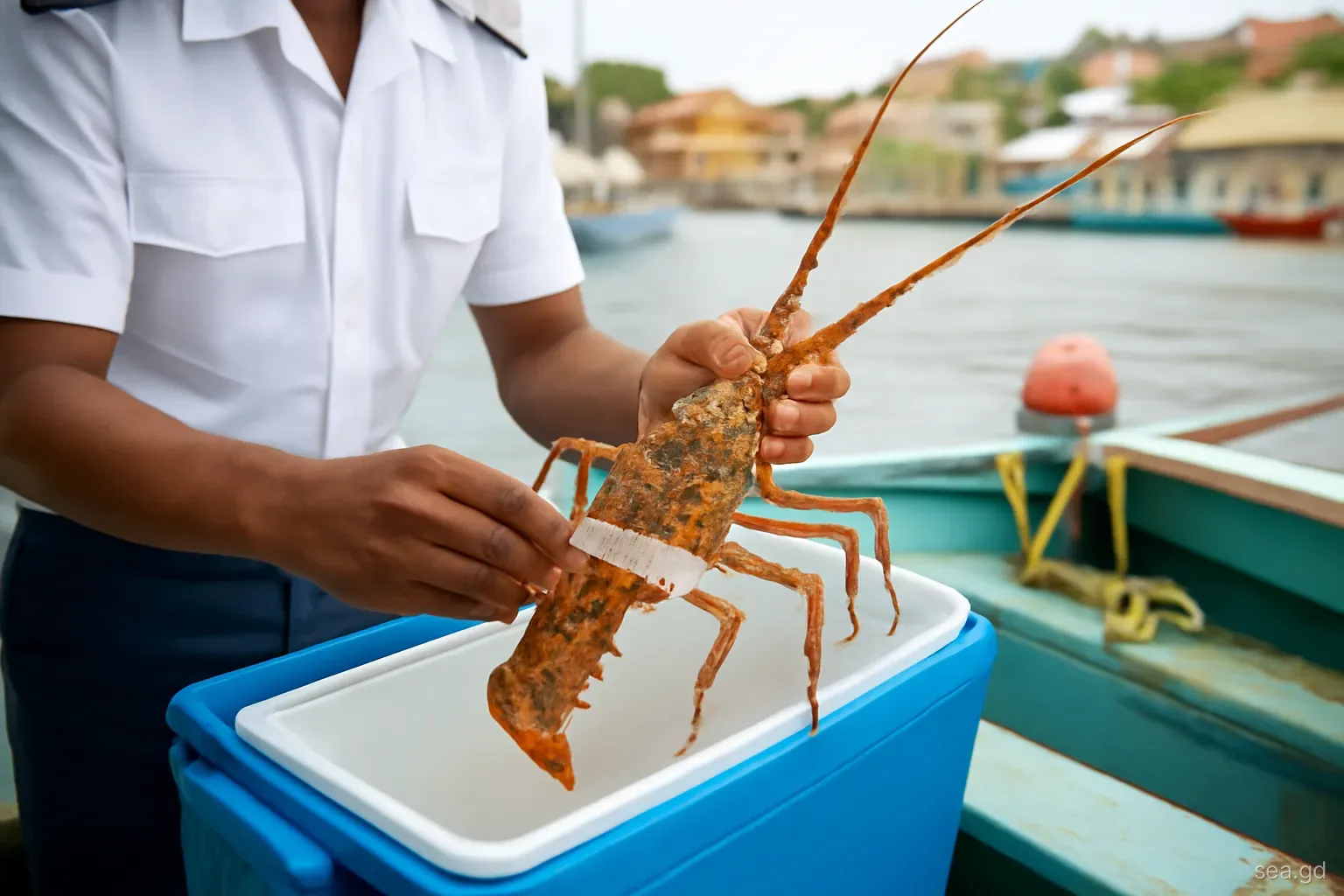
Keep only what the crew can eat fresh or store, bearing in mind that a small yacht fridge holds far less than a big fish yields. A single mahi or a good-sized tuna will feed a crew of four for several meals, and trolling on through the afternoon only to throw fillets away later is wasteful. Release billfish, which are occasionally hooked on yachts' lines, quickly and with minimum handling.
Continuing north into St Vincent and the Grenadines means clearing out of Grenada, usually at Hillsborough, and complying with that country's rules, which include no-fishing zones such as the Tobago Cays Marine Park. Rules on both sides of the border are updated from time to time, so check them at clearance.
Frequently asked questions
Is it worth trolling a line between Grenada and Carriacou?
Yes. The passage crosses drop-offs, current lines and open channel water that hold mahi-mahi, tuna, wahoo and barracuda. Many cruising yachts catch fish on this route with a simple handline and lure. Keep lines out of the Molinière-Beauséjour MPA on the west coast and the Sandy Island Oyster Bed MPA near Carriacou.
How close can you sail to Kick 'em Jenny?
Stay outside the official exclusion zone, which has typically been 1.5 kilometres at the green alert level and has been widened to five kilometres at yellow. Check the current alert level with official sources before departure, plot the zone on your chart plotter and give it a generous margin.
What lures work best when trolling under sail in Grenada?
Cedar plugs, squid-style skirts and small diving plugs are reliable choices. Natural colours work well in clear water, brighter colours in poorer light. Use a wire leader if wahoo or barracuda are likely. Trolling speeds of around five to eight knots suit most of these lures.
Do you need a fishing licence to troll from a yacht in Grenada?
Visiting yachts may need a licence or permit to fish in Grenadian waters. Ask Customs and Immigration when you clear in and confirm with the Fisheries Division. Requirements can change, and different rules apply in neighbouring St Vincent and the Grenadines.
How do you stop a fish thrashing in the cockpit?
A few drops of cheap rum or other strong alcohol in the gills subdue a fish quickly, a common cruiser technique. Alternatively, a sharp blow to the head with a heavy object works. Having a large bucket or bag ready to contain the fish and its blood keeps the cockpit manageable.