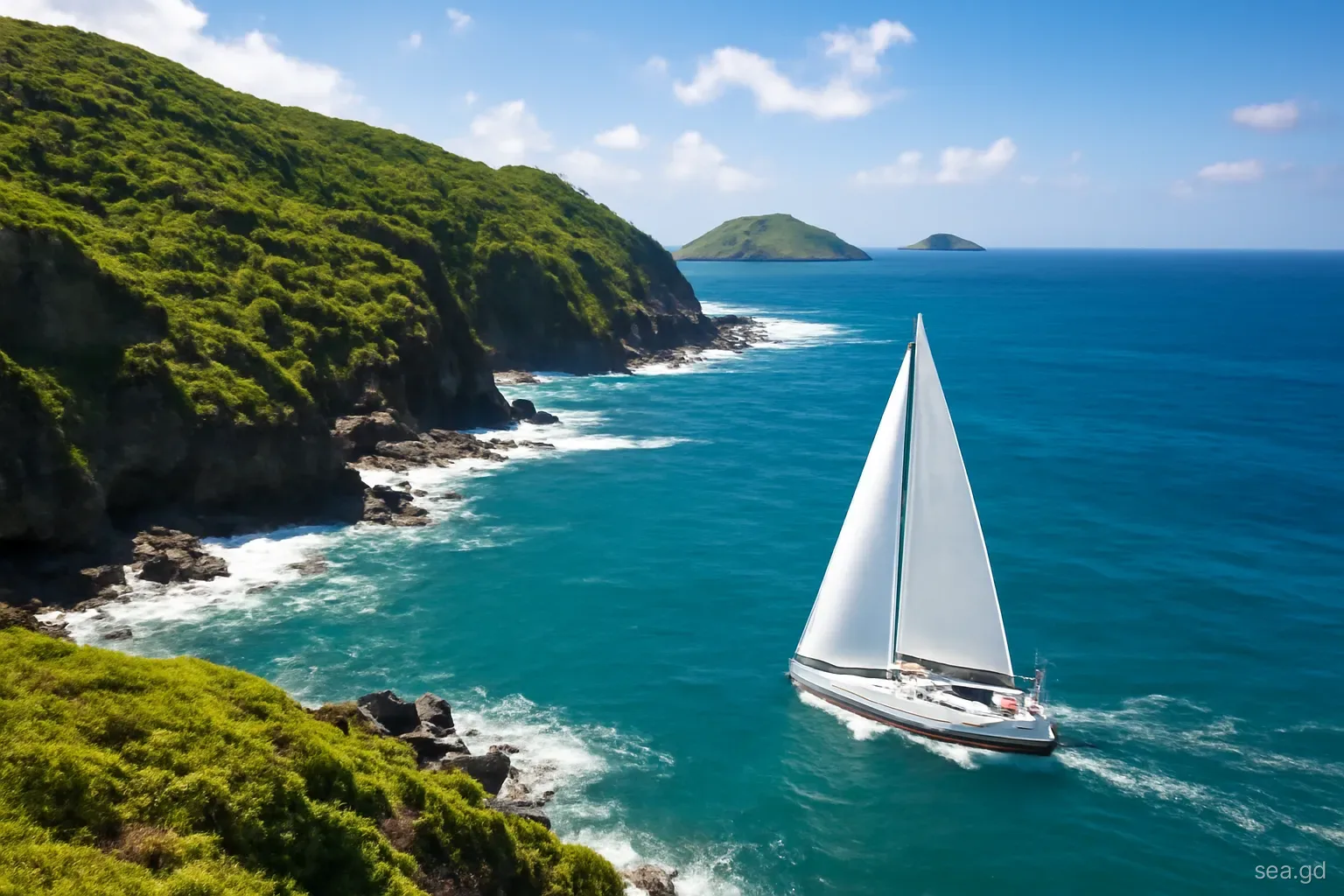
Almost every cruising guide to Grenada concentrates on the leeward west coast and the sheltered southern bays, and for good reason. The east coast faces the open Atlantic, takes the full force of the trade-wind swell, and is lined with reefs and rocky headlands. Fishing boats work out of Grenville and other windward communities, but visiting yachts rarely go there, and charter companies often restrict them from doing so.
That does not make the windward side forbidden, only demanding. A circumnavigation of the island in settled weather is possible for an experienced crew on a well-prepared boat, and the views of the green interior, the offshore islands off Levera and the surf-washed coast are unlike anything on the leeward side. This page is a decision guide: what the coast is like, who should attempt it, and how to plan if you decide to go.
What makes the windward side different
The trades usually blow from the east or north-east, so on the Atlantic coast they blow onshore. Combined with the swell that has built across the ocean, that means the east coast is very often a lee shore: if the engine fails or a sail tears, wind and sea push you towards the land. Every decision on this coast flows from that fact.
The shoreline adds to it. Fringing reefs extend offshore in many places, especially in the north-east and around Grenville, with breaking water marking some of them and not others. Rocky headlands produce confused seas where swell reflects back. Charts are less detailed here than in the heavily used southern bays, and markers are sparse.
Safe havens are few. Grenville, the main town on the east coast, has a harbour inside a reef with a channel used by local boats, but it is not set up for visiting yachts and its approach is not one to attempt without good local knowledge and favourable conditions. Several smaller bays offer only limited shelter that disappears when the swell rises.
Points along the coast worth knowing
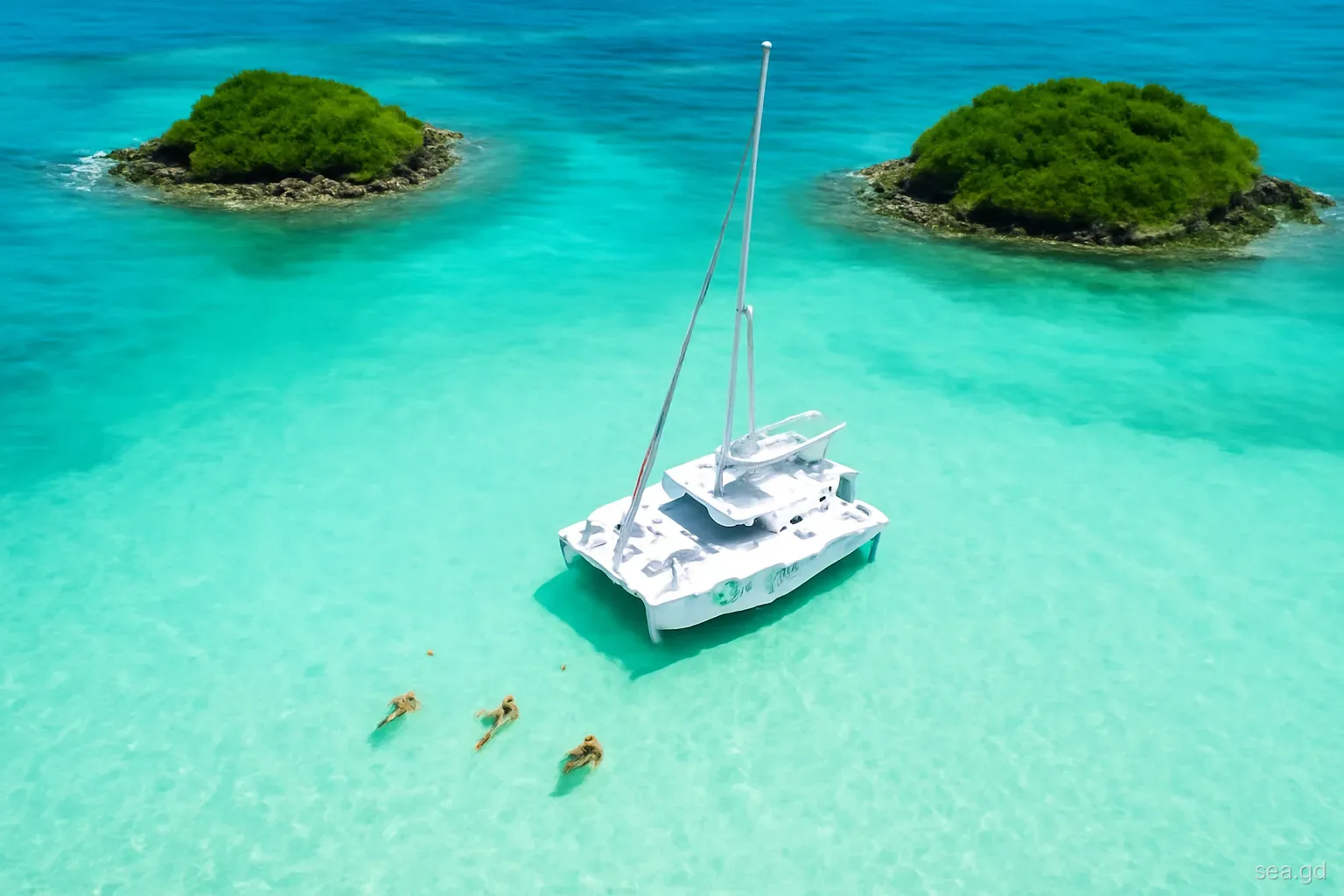
Levera and the northern islands. At the north-east corner, Sugar Loaf, Green Island and Sandy Island lie off the Levera area, part of a protected landscape that includes a coastal wetland. Seas between the islands and the mainland can be rough, with currents running around the headlands; give them room.
The north-east beaches. Bathway and the long Levera shoreline are beautiful from offshore but are surf beaches protected only by reef, not anchorages for a visiting yacht.
Grenville Bay. The commercial and fishing centre of the windward side, approached through reefs. Treat it as a place to observe from seaward unless you have current local guidance.
The south-east corner. Further south, the coastline between the Grenville area and the bays of St David's is broken by headlands and small bays. Bays such as La Sagesse and those around Westerhall and St David's lie closer to the end of the windward run, where the south coast starts to offer more protection.
Offshore islets and rocks. Small islets and rocks off the windward coast, such as Marquis Island near Grenville, are reminders that hazards extend some distance from shore. Keep a generous offing unless you have specific pilotage information.
Who should and should not attempt it
Being honest about your boat, crew and experience matters more on this coast than anywhere else around Grenada. As a rough guide:
- Suitable: experienced skippers with offshore sea time, a reliable engine, a well-maintained boat with good ground tackle and a crew who can handle a long beat in a lumpy sea.
- Suitable with caution: competent coastal sailors who plan for a settled day, keep well offshore and treat the trip as a passage rather than a cruise with stops.
- Not suitable: bareboat charters whose agreements usually forbid it, crews new to the boat, boats with doubtful engines or rigging, and anyone who would be uncomfortable hand-steering in steep swell for hours.
- Not sensible in some conditions at all: during strong Christmas winds, after a big Atlantic swell event, or with a tropical wave or storm approaching.
Planning a circumnavigation in settled weather
If you do decide to sail round the island, plan it as a single-day passage with clear escape options. One workable approach:
- Choose a forecast period with moderate trades, ideally under 15 knots, and a small swell, more likely in spring or on a lull in late summer before tropical activity picks up.
- Decide direction. Sailing anticlockwise from the south coast, east and then north, takes you up the windward side into the wind early in the day while the crew is fresh, then lets you run down the leeward coast; clockwise does the reverse, with the hard windward work at the end. Most choose to do the windward work first.
- Leave at first light so the whole windward stretch is completed in daylight with the sun high for any reef observations.
- Keep a generous offing, measured in miles rather than cables, from reefs and headlands. You lose nothing by staying out, and you gain room if anything goes wrong.
- Identify fall-back options: turn back south while the windward run is short, or continue round the north end to the leeward coast where the sea calms quickly.
- File a float plan with someone ashore and agree a check-in time on arrival.
Mistakes and what to check before leaving
The most common error is underestimating the beat. A coastline only some 30 or so kilometres long looks like a short sail on paper, but tacking into the trades and swell can double or triple the distance through the water and turn a pleasant morning into an exhausting day. Plan fuel for long motor-sailing.
The second is going too close. The scenery tempts crews towards the cliffs and beaches, and the waves breaking on outer reefs can be hard to see from a low cockpit until close. A reef that would be obvious on the calm leeward side can hide in the general whiteness of an Atlantic swell.
Before leaving, check the engine cooling and fuel filters, because a lumpy sea stirs up sediment in tanks, and a blocked filter off a lee shore is a classic emergency. Make sure the anchor is ready to drop quickly as a last resort, though anchoring on the windward coast should only ever be a measure to stop drifting onto rocks. Stow everything below as for an offshore passage.
Reading the weather for a windward day
Choosing the day is the most important decision. Look beyond the wind figure at the swell forecast: a period of moderate trades following a week of strong winds can still leave a large, steep swell running onto the coast. Long-period north swells in winter wrap around the northern end of the island and make the Levera area particularly rough.
Check the tropical outlook in summer even when the local forecast looks benign. A tropical wave approaching from the east can bring squalls with sudden gusts and poor visibility, exactly the conditions in which a reef or headland becomes hard to judge.
Finally, watch the sky and sea for the first hour before committing. If the swell on the south-east corner is already breaking heavily on reefs that are normally quiet, the windward run will be worse. Turning back early costs little.
Alternatives that give a taste of the windward side
For most visitors, the better way to see Grenada's Atlantic coast is not by yacht. Hiking and driving routes reach Levera, Bathway and the cliffs of the north-east, and local fishermen in windward communities know the reefs intimately. A day trip with an experienced local boat operator can show the coast from the water without risking your own vessel.
Sailors who want an Atlantic flavour can also choose the passage from Grenada to Carriacou, which crosses open water where swell from the east rolls through, or the windward side of the southern Grenadines, where reef-protected anchorages such as those around the Tobago Cays feel the ocean without exposure to a lee shore.
In the end, the windward coast rewards respect. A crew that turns back halfway because the sea is building has made a good decision, not a failed one, and the leeward side will still be there for the rest of the trip.
Frequently asked questions
Can you anchor on Grenada's east coast?
There are few places on the Atlantic coast where a visiting yacht can anchor safely. Most bays are open to the trade-wind swell and fringed with reef. Grenville's harbour is used by local boats through a reef channel, but visitors should not attempt it without current local knowledge and calm conditions.
Is it possible to sail around Grenada in one day?
Yes, an experienced crew in settled conditions can circumnavigate in a long day, though the windward stretch is slow and often uncomfortable. Leave at first light, keep well offshore, plan fuel for motor-sailing and turn back if the swell or wind are stronger than forecast.
Do charter companies allow sailing on Grenada's Atlantic side?
Many charter companies restrict bareboat charters to the leeward coast, the south coast bays and the Grenadines, and exclude the windward coast from their permitted area. Check your charter agreement; sailing outside permitted waters can void insurance and break the contract.
Which way should you sail around Grenada?
Many skippers prefer to tackle the windward side first, sailing up the east coast early in the day with a fresh crew, then running down the sheltered leeward coast later. The best choice depends on the forecast, your starting point and how the wind is expected to change during the day.
What are the main hazards on Grenada's windward coast?
Onshore trade winds that make the coast a lee shore, Atlantic swell, fringing reefs that may not show clearly in breaking water, offshore rocks and islets, and few safe harbours. Engine reliability, a generous offing and conservative weather choices are the best defences.