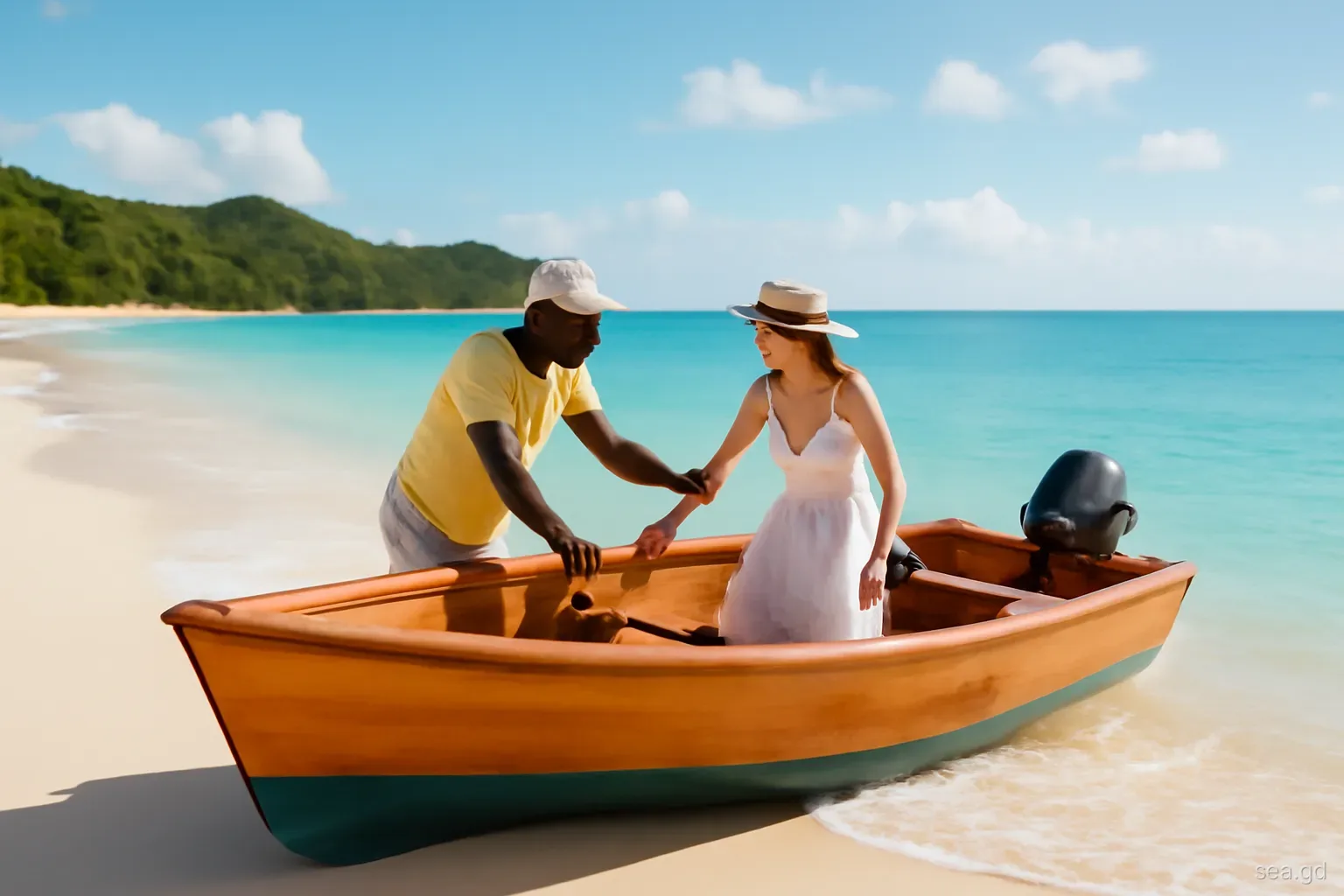
Water taxis in Grenada are small open boats, usually fibreglass pirogues with an outboard engine, run by local boatmen who carry passengers between beaches, bays and town. The best-known run is between Grand Anse Beach and the Carenage in St George's, a short hop across the bay that many visitors find more pleasant than the bus or a road taxi. Water taxis also take snorkellers to the sculpture park and, in Carriacou, carry people to Sandy Island and the other offshore beaches.
There is no timetable, no ticket office and, in most cases, no fixed published fare. That suits relaxed travellers and frustrates those who like certainty. This page explains how the system works, how to agree a price, what to check before you climb aboard and when the road is the better choice.
How the Grand Anse to St George's run works
Boatmen wait along Grand Anse Beach, often near the busier hotel and beach-bar stretches, and approach visitors directly. The ride to the Carenage takes around fifteen minutes in calm water, curving around the headland and into the harbour, where you are dropped near the waterfront. The trip back works the same way from the Carenage, where boatmen also look for passengers.
The advantage over the road is the view: the town, Fort George and the red roofs of St George's come into sight from the water, and you avoid the traffic and the climb on the main road. The disadvantage is that you depend on boatmen being around for the return, which is easy in the middle of a cruise day and less so in the late afternoon or on a quiet Sunday.
Many visitors arrange a return time with the same boatman. If you do, agree clearly whether payment is per leg or for the round trip, and pay at least part at the end rather than everything up front, so both sides have an interest in meeting again.
Agreeing the price
There is usually no meter and no posted tariff. Prices are agreed before departure. Ask the boatman directly what he charges, and whether that is per person or for the boat.
Clarify the currency. Quotes may be in EC dollars or US dollars. The EC dollar is pegged at EC$2.70 to US$1, and confusion over which currency was meant is the most common source of arguments at the end of a ride.
Expect cruise-day pricing. When ships are in, demand is high and quotes may rise. Off-peak, there is more room for a reasonable rate.
Agree waiting time. If the boatman will wait while you snorkel or walk around town, agree how long and whether the price includes the wait.
Carry small notes. Boatmen may not have change for large bills. Small EC or US notes make the end of the trip smoother.
Water taxis to snorkel spots and in Carriacou
On the main island, water taxis also run snorkellers north to Moliniere Bay and the Underwater Sculpture Park, or to nearby bays such as Dragon Bay. This is a flexible alternative to a catamaran trip: you choose the time, stay as long as agreed and avoid crowds of fifty people entering the water at once. Remember that the area lies within the Moliniere-Beausejour Marine Protected Area, so a user fee applies and the boat must use moorings rather than drop anchor on the reef.
In Carriacou, water taxis are part of daily life. Boats run from Hillsborough and from Tyrrel Bay to Sandy Island, Paradise Beach, White Island and other spots, and boatmen often drop passengers in the morning and collect them at an agreed time. Sandy Island has no shade beyond a few palms and no facilities, so take water, food and sun protection, and make sure the pickup time is clear.
Hurricane Beryl caused severe damage on Carriacou and Petite Martinique in July 2024, including to boats and waterfront infrastructure. Services have been recovering, but what operates and from where may differ from older guides, so check locally before you rely on a particular boat or landing.
On Petite Martinique, boats are equally central to life, and local boat owners can be hired for trips around the island or across to Carriacou when the ferry timing does not suit. As anywhere, agree the price and pickup time before you go.
Safety checks before you board
Most water-taxi rides are uneventful, but these boats are small and open, so it is worth a quick look before you hand over money.
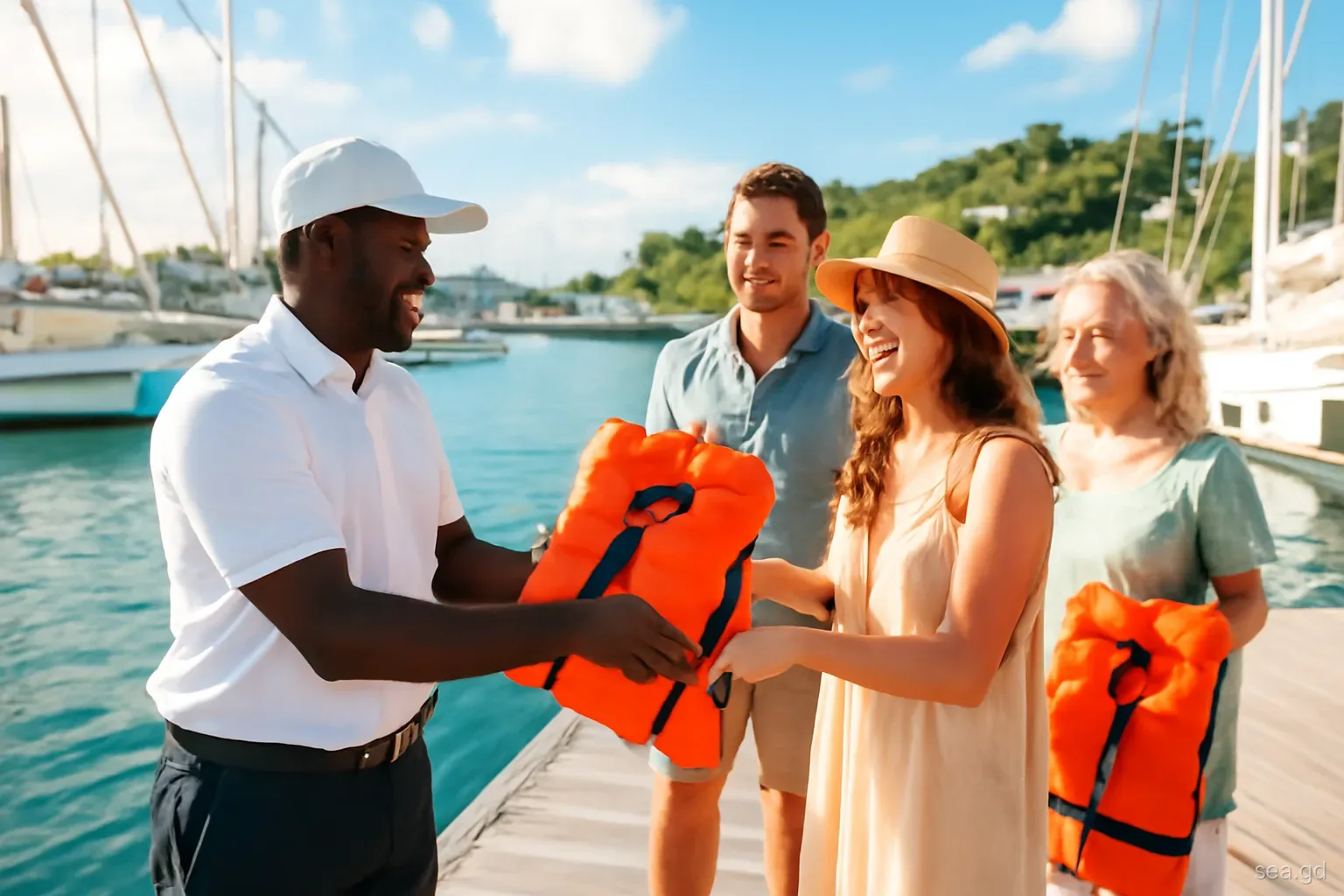
- Are there life jackets aboard, enough for everyone, including children's sizes if needed?
- Is the boat dry inside and the engine running smoothly, without excessive smoke?
- Does the boatman seem sober and in no hurry to overload the boat?
- Is there somewhere to keep bags and phones dry? Spray is normal on any ride.
- In rough conditions, would you be better on the road? Water taxis have no shelter from waves or rain.
- For families, can small children sit low and central, held by an adult, with a life jacket on?
- Does the boatman know where you are going and how long the trip takes? Vague answers about the route are a reason to choose someone else.
- Is there a way to call for help? A charged mobile phone in a waterproof pouch is the minimum; in an emergency, 911 reaches the police, and the Coast Guard is part of the Royal Grenada Police Force.
When a bus or road taxi makes more sense
Rough water or heavy rain. A choppy bay turns a scenic ride into a wet and uncomfortable one. The route bus between Grand Anse and St George's runs frequently during the day and costs a few EC dollars.
Travelling with luggage. Water taxis are for people with day bags. Suitcases belong in a road taxi.
Late evenings. Boatmen thin out after dark. If your dinner in town will run late, plan to come back by road.
Limited mobility. Boarding from a beach involves wading and climbing over the side. Anyone who struggles with that will find a road taxi far easier.
Tight schedules. If you must be back on a cruise ship or at the airport by a fixed time, the road is more predictable. A boatman who has gone to lunch or is running another fare cannot be summoned by app, and a missed ship costs far more than a taxi fare.
Etiquette on the beach and in the boat
On Grand Anse Beach, boatmen, vendors and hair braiders all approach visitors, and the experience can feel like a lot at first. A polite "no thank you" is enough and is respected far more often than not. If you are interested, a friendly conversation about where you want to go and when is the normal way to start; haggling aggressively over a few dollars sours the ride for everyone and rarely saves much.
Licensed beach vendors and boat operators have been part of Grand Anse life for decades, and many are well known along the beach. If your hotel recommends a particular boatman, that is often the simplest route to a reliable return pickup, because the boatman knows the hotel will hear about it if he does not show up.
In the boat itself, follow the boatman's instructions about where to sit. Small boats are sensitive to weight distribution, and passengers moving around suddenly can make the ride wetter and less stable. Keep hands inside the boat when coming alongside a jetty or another vessel, and let the boatman or his crew handle lines.
Before stepping out at the Carenage, take a moment to note where you were dropped and agree where you will be collected. The waterfront is busy, especially on cruise days, and a meeting point described as "by the boats" is not much help when there are dozens of them.
Frequently asked questions
How much does a water taxi from Grand Anse to St George's cost?
There is no fixed published fare. Prices are agreed with the boatman and vary with demand, the number of passengers and whether you want a return trip. Always confirm the amount, the currency and whether it is per person before boarding.
How long does the water taxi take?
The run between Grand Anse Beach and the Carenage takes around fifteen minutes in normal conditions. Rough seas slow it down, and in very choppy water it may be better to go by road.
Do Grenada water taxis carry life jackets?
Responsible boatmen carry them, but standards vary. Check before you set off and ask for a life jacket for every person, particularly children. If none are available, choose another boat.
Can you take a water taxi to the Underwater Sculpture Park?
Yes, boatmen offer trips from Grand Anse and nearby beaches to Moliniere Bay. Agree how long you will stay, whether snorkel gear is included and who pays the marine protected area user fee.
Are there water taxis in Carriacou?
Yes. Boats run from Hillsborough and Tyrrel Bay to Sandy Island, Paradise Beach and White Island. Agree drop-off and pickup times clearly, take water and shade, and check locally on current services, as Hurricane Beryl disrupted many in 2024.