Hurricane season in Grenada is not six months of fear. For the hundreds of crews who spend it afloat, most days are hot, sunny and calm, punctuated by passing squalls, heavy downpours and the occasional system that has everyone checking the forecast twice a day. The south-coast bays fill with boats, the cruising community is at its busiest, and Grenada's own big summer festivals happen in the middle of it.
Each month has its own character, and knowing what to expect makes the season more comfortable and safer. This page walks through June to November from the deck of a boat at anchor or in a marina: the weather patterns, the sea, the social calendar and the practical jobs that come with each month. Climate is not weather; individual years vary, so treat this as a general guide and follow the forecast.
June: arrivals, hauling out and the first waves
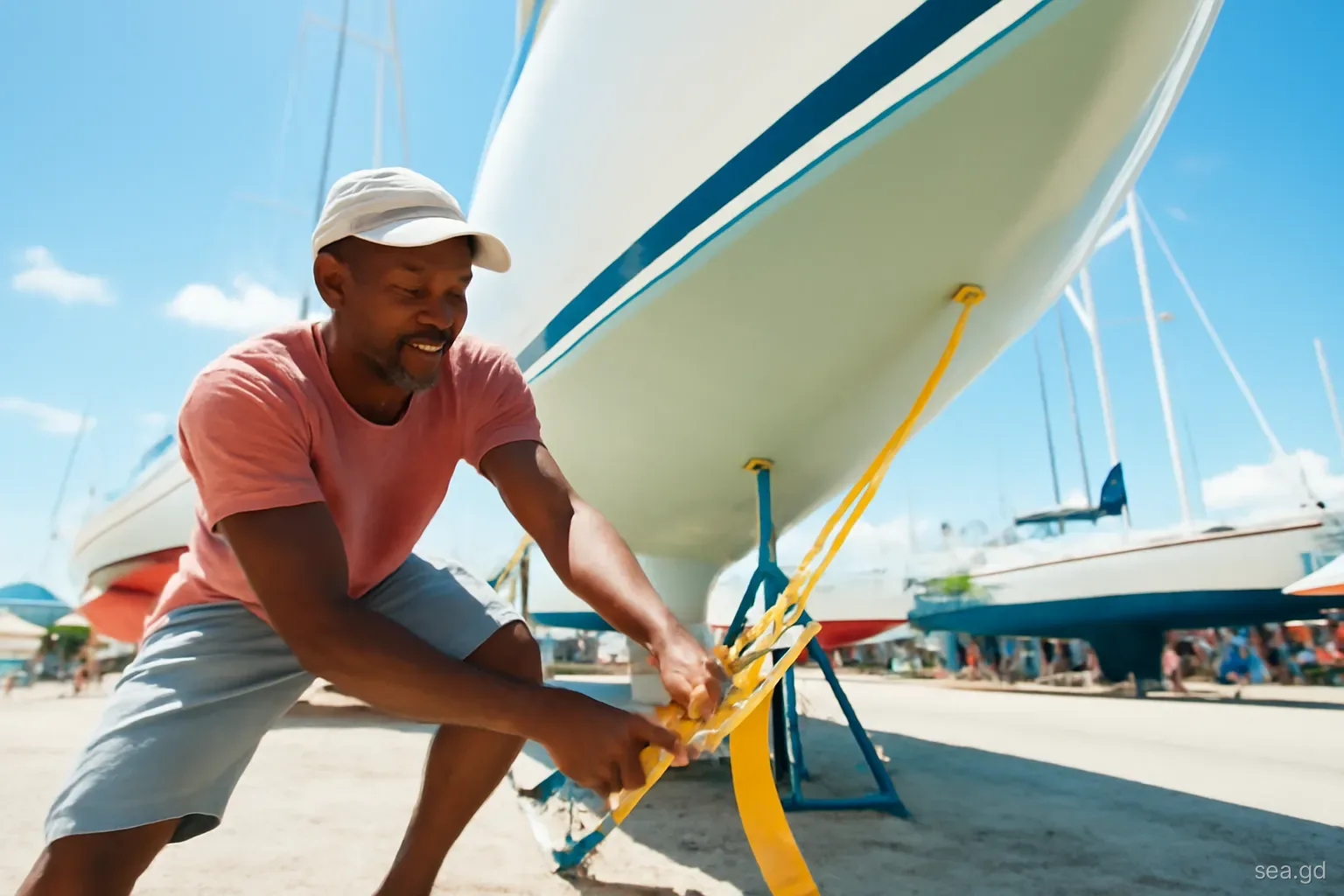
June is the month of movement. Boats arrive from the islands further north to beat the insurers' deadlines, the yards are busy hauling out boats whose owners are flying home, and the anchorages fill steadily. The dry season gives way to the rainy season, though early June can still be dry.
The first tropical waves of the season arrive, bringing squalls and showers every few days. Saharan dust often reaches the Caribbean in June and July, giving the sky a milky haze, reducing visibility and leaving a fine reddish film on decks. It also tends to suppress storm development while it lasts.
Early-season hurricanes at Grenada's latitude are historically uncommon, but Beryl on 1 July 2024 showed they are possible. June is the month to finish storm preparations, confirm plans with the insurer and the yard, and check that storm anchors, lines and chafe gear are aboard and serviceable, rather than assuming the risk begins in August.
July: heat, haze and festival preparations
July brings steady heat. Daytime air temperatures typically reach the low thirties Celsius, the sea is warm enough to feel like a bath, and still nights at anchor can be uncomfortable without fans and a wind scoop. Rain comes more often, usually as short, heavy showers rather than all-day downpours, and the hills turn a deep green.
Tropical waves continue to pass every few days. Most are routine, bringing a few hours of squalls and a wind shift, but each one gets watched. July is also when Grenada begins to hum with Carnival preparations, with calypso and soca competitions and the build-up to Spicemas in August, and when Carriacou gets ready for its regatta.
For the boat, July is good for maintenance afloat: hull cleaning, small repairs and canvas work, done in the cooler mornings. Mould starts to become a constant battle in the humidity, so ventilation and regular cleaning below decks become part of the routine.
August: Carnival, Regatta and the start of the peak
Spicemas. Grenada's Carnival reaches its climax in August, traditionally on the Monday and Tuesday of the second week of the month, with J'Ouvert in the early hours and the parades through St George's. Many cruisers join in; it is one of the liveliest events of the Caribbean calendar.
Carriacou Regatta. The Carriacou Regatta Festival, with its locally built wooden workboats, takes place around the start of August. Boats sail up to watch, though the anchorage at Hillsborough is open and can be rolly. Check dates and arrangements each year, especially since Hurricane Beryl.
Weather. August marks the start of the busiest part of the hurricane season across the Atlantic. The trade winds often ease, leaving calm, humid days, with squalls and heavy rain from passing waves.
Practical jobs. Keep the hurricane plan current, keep fuel and water tanks topped up, and make sure crew know what the triggers for moving are. Avoid being far from your chosen shelter for long periods during the peak.
September and October: the heart of the season
September and October are, across the Atlantic basin, the busiest months for hurricanes, and Grenada's most destructive storms, Janet in 1955 and Ivan in 2004, both struck in September. Crews watch the forecasts closely, the morning net's weather segment gets more attention, and boats tend to stay close to their planned shelter.
The weather is hot, humid and often windless for long spells, broken by thunderstorms. Lightning is common in this period, and a strike on a boat can destroy electronics. Many crews disconnect antennas and unplug sensitive equipment when storms approach. Rainfall is high, and sudden, very heavy downpours can fill dinghies in minutes and flood roads ashore.
Sea temperatures reach their annual peak. Swimming and diving are excellent on calm days, though visibility can drop after heavy rain as runoff reaches the bays. Long swells from distant storms passing to the north can arrive at any time, turning normally calm anchorages uncomfortable, especially west-facing ones.
November: winding down and relaunching
November is still officially hurricane season, until the 30th, and late storms are possible, although they are less frequent at Grenada's latitude than in the peak months. The rainy season continues, often well into December, with some of the heaviest rainfall of the year.
The anchorages begin to change. Owners return to relaunch boats laid up for the summer, and the yards are busy again, so book relaunch slots and contractors well in advance. Boats that spent the summer at anchor start preparing for the winter cruising season: provisioning, servicing engines, checking rigging and planning trips north through the Grenadines.
November is also when the cruising community takes stock. Boats that rode out the season compare notes on what worked, gear damaged by months of sun and humidity gets replaced, and those planning to stay another year start booking next summer's storage. Owners who flew home can relaunch with confidence only after a proper check of the hull, through-hulls, rigging and engine, which is easiest while the yard and contractors are still on hand.
The trade winds strengthen towards the end of the year, sometimes called the Christmas winds, making for brisk, lively sailing, and the north-easterly swell of the winter season begins to arrive. By December the cruising fleet disperses north and the bays become quieter.
Choosing where to sit out the summer
Swell direction. In summer, swell on Grenada's south coast tends to come from the south-east and south, which makes the more open bays, Prickly Bay especially, roll on some days. The deeper inlets further east stay calmer, which is one reason they fill up from June onwards.
Distance to shelter. Many crews choose a summer anchorage within a short motor of their intended hurricane hole or yard, so that moving takes an hour rather than a day.
Access to shore. Bays close to the main road, dinghy docks and shops make daily life easier in the heat, when long walks and bus rides become a chore.
Crowding. The most sheltered bays get crowded in summer. Anchoring a little further out, with room to swing in a squall, is often more comfortable than squeezing into the inner bay until you really need it.
Season-long habits that make life afloat easier
Whatever the month, the same routines help crews stay comfortable and safe.
- Check your anchor and snubber after every squall, and dive on it every week or two; summer squalls swing boats through wide arcs and can trip an anchor that held for weeks.
- Close hatches whenever you leave the boat; a downpour can arrive with little warning.
- Keep the dinghy lifted or secured at night, and bail it after rain; a dinghy full of rainwater can drag the outboard under.
- Ventilate below decks and fight mould weekly rather than monthly.
- Keep mosquito screens on every hatch, especially near mangroves.
- Listen to the morning net for weather and local information, and check the National Hurricane Center outlook at least once a day.
- Keep a grab bag with passports, boat papers, medicines and a handheld VHF ready to take ashore at short notice.
- Keep fuel, water and provisions topped up so you can move or wait out a storm without shopping first.
Frequently asked questions
Is it pleasant to spend hurricane season on a boat in Grenada?
Many cruisers enjoy it. Most days are hot and calm, the community is lively and the island hosts Carnival and the Carriacou Regatta. The trade-offs are heat, humidity, mould, squalls and the need to watch the forecast and be ready to act if a system threatens.
When is the rainiest time of year in Grenada?
The rainy season generally runs from around June to December, with the heaviest rainfall often in the later months. Rain usually comes in short, heavy showers rather than all-day downpours, though tropical waves and storms can bring prolonged rain. Hillier and windward areas get more rain than the south coast.
What is Saharan dust and does it affect boats?
Saharan dust is fine particles blown across the Atlantic from Africa, common in early summer. It creates a hazy sky, reduces visibility and leaves a reddish film on decks. It can affect people with breathing problems, and it tends to suppress tropical storm development while present.
When is Grenada Carnival?
Spicemas, Grenada's Carnival, reaches its climax in August, traditionally on the Monday and Tuesday of the second week, with J'Ouvert in the early hours and parades in St George's. Calypso, soca and other competitions run in the weeks before. Check the official dates each year.
Are lightning strikes a risk for boats in Grenada?
Thunderstorms are frequent in the later months of the season, and lightning can strike masts and damage electronics. Many crews disconnect antennas and unplug sensitive equipment when storms approach. A strike is unpredictable, so have insurance that covers it and keep spares of key electronics.
When do boats relaunch after hurricane season in Grenada?
Most relaunching happens from November into December, as owners return and the season ends on 30 November. Yards and contractors are busy then, so book relaunch slots and work early. Some owners relaunch in October if they are on the island and comfortable with the remaining risk.