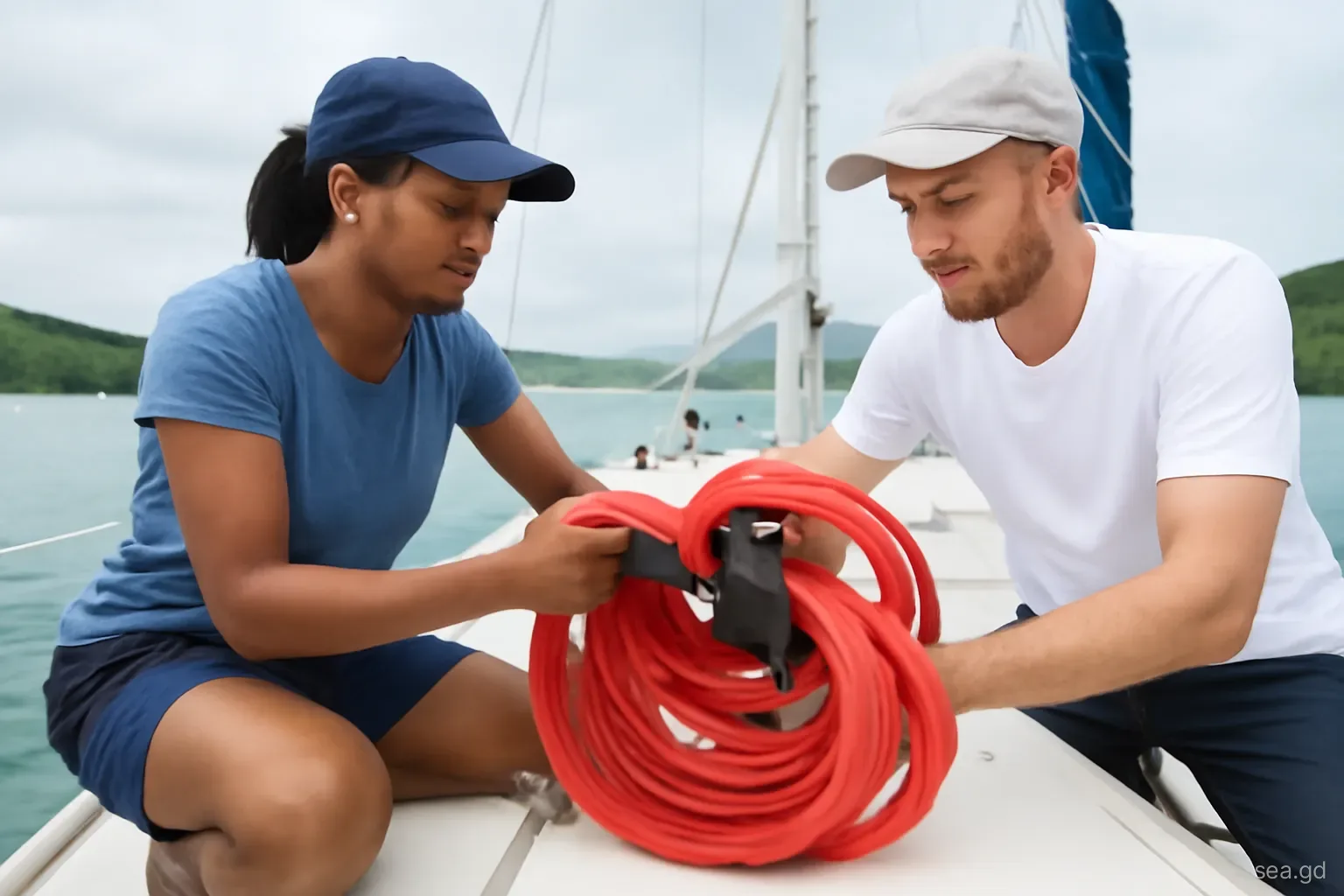
When a storm threatens Grenada and the boat is staying in the water, the hours before it arrives decide how it fares. A well-prepared boat in a reasonable shelter, stripped of windage, held by several anchors and protected against chafe, has a far better chance than a boat left with its genoa furled and a single anchor down. Preparation takes longer than almost everyone expects, which is why it starts days, not hours, before the wind.
This page sets out a practical sequence for a boat afloat, from the first serious forecast to the storm's arrival, followed by the equally important days after: checking the boat safely, dealing with damage, salvage and insurers, and helping others. It assumes you have already chosen your shelter. Follow instructions from the National Disaster Management Agency (NaDMA), the Grenada Meteorological Service and the Coast Guard throughout.
Gear to have aboard before the season starts
Hurricane gear cannot be bought once a storm is forecast: chandleries sell out of chain, rope and chafe guards within hours. Check this list in May.
- At least two anchors heavier than you would normally use, plus a third if the boat can carry it, with shackles moused and swivels checked.
- Enough chain and rode for multiple anchors in your chosen shelter's depths, and long nylon lines for running ashore.
- Heavy nylon snubbers, sized well above everyday use, and spare lengths to replace any that chafe.
- Chafe protection: lengths of fire hose or purpose-made sleeves, with cable ties or whipping to hold them in place.
- Diving mask, fins and a weight belt for checking anchors, plus a sturdy knife.
- Extra fenders and fender boards if the boat will be in a marina.
- Tape, plugs and plastic sheeting to seal vents and openings, and spare bilge pump parts.
- A handheld VHF, spare batteries, a headtorch for each crew member and a waterproof grab bag.
About 72 hours out: decide and start
When a system is forecast to come close within about three days, the decisions made now set the pace for everything else.
- Confirm your plan: which shelter, marina berth or haul-out slot, and who will do what. Tell your insurer if the plan differs from what they approved.
- Fill fuel and water tanks, withdraw cash, and stock up on food and drinking water for several days. Shops and fuel stations become crowded and then close.
- Move to your shelter early to secure a good position, or confirm your marina's storm procedures.
- Charge all batteries, power banks and handheld radios. Download documents and photographs to the cloud and a memory stick.
- Arrange where the crew will shelter ashore, how they will get there and how they will communicate.
About 48 to 24 hours out: strip and secure
This is the heavy work, best done in daylight before conditions worsen.
- Remove all sails, including furling headsails, and every piece of canvas: bimini, dodger, covers and cockpit enclosures.
- Remove or lash wind generators, solar panels, antennas, and anything that could break free. Lash the boom firmly to the deck or remove it.
- Stow the dinghy on deck lashed down and deflated, or remove it ashore, and take the outboard and fuel cans off the deck.
- Set additional anchors in the directions the wind is expected to blow from as the storm passes, and dive on each to confirm it is set.
- Run lines ashore where appropriate, with chafe protection at the boat and around trees or rocks.
- Fit long nylon snubbers to absorb shock loads, and protect every line with chafe gear such as fire hose at fairleads and cleats.
- In a marina, double all lines, set extra springs, and allow for storm surge raising the water level; fit plenty of fenders.
The final hours: close up and leave
As conditions begin to deteriorate, close all seacocks except cockpit drains, make sure the bilge pumps work automatically on battery power, and tape over vents and openings that rain might drive into. Disconnect shore power if in a marina, as surges and seawater in pedestals can cause fires. Take documents, medicines, valuables and a grab bag ashore with you.
Then leave. Staying aboard a boat in a hurricane is extremely dangerous. Lines can part, boats can drag into each other, and there is little chance of rescue while the storm is raging. Head to your planned shelter ashore with time to spare, before roads become dangerous and curfews take effect. NaDMA opens official emergency shelters when a warning is in force; their locations are announced on radio and through official channels.
If, despite all advice, crew remain aboard, they should wear lifejackets and harnesses, have a handheld VHF radio and a means of calling for help, and accept that the Coast Guard is unlikely to be able to respond until conditions ease.
During the storm: what not to do
Do not go out in the eye. If the eye passes over, conditions may become calm for a short time before the wind returns with full force from the opposite direction. Do not use the lull to check the boat.
Do not drive to the shore to watch. Storm surge, falling trees, flying debris and flooded roads make coastal roads deadly. Stay in shelter until the all-clear.
Do not rely on mobile networks. Networks often fail during and after a storm. Agree in advance how and when crew members and family will make contact.
Do not leave shelter for supplies. Shops will be shut and roads unsafe. Shelter with enough water, food, medicines and light for at least a few days, because the period after the storm, before services return, can be as difficult as the storm itself.
Do not call the Coast Guard for property. Emergency services will prioritise risk to life. Calls about boats dragging can wait until conditions allow a response.
After the storm: checking the boat safely
Wait for the official all-clear before going outside or travelling to the boat. After a major storm, roads may be blocked, power lines down and bridges damaged. Hazards in the water include debris, fuel, sewage and the wrecks of other boats. Approach a damaged anchorage with care, preferably with others, and never enter the water near downed lines or spilled fuel.
When you reach the boat, look before boarding: check for structural damage, fuel or gas leaks and electrical damage. Photograph everything before moving or repairing anything, both for insurance and for your own records. Pump out water and cover openings to prevent further damage, which insurers usually expect, but avoid major salvage operations without consulting your insurer unless there is an immediate risk of loss or pollution.
If the boat is damaged and in need of salvage, be careful with offers of help. Agree terms in writing where possible, and involve your insurer. Under maritime law, salvors may be entitled to a reward based on the value of the property saved, so understand what you are agreeing to before accepting assistance.
The weeks after a strike
Recovery from a major storm takes months. Experience from Ivan in 2004 and Beryl in 2024 offers some lessons.
- Yards, cranes, surveyors and salvage operators are in short supply. Get on lists early, and be patient.
- Building materials, parts and fuel may be scarce. Shipments to the island are prioritised for essential supplies.
- Power, water and communications on land may be disrupted for weeks; boats with watermakers, solar and fuel can be self-sufficient and can help others.
- The authorities may require wrecks to be removed and pollution contained; keep in contact with the Port Authority and insurers.
- Cruisers have a long tradition of helping after storms, from clearing debris to delivering supplies to affected communities. Coordinate through recognised organisations and NaDMA rather than freelancing.
- Look after the crew: exhaustion, injuries and stress are common in the aftermath.
Frequently asked questions
How long does it take to prepare a boat for a storm?
Usually far longer than people expect. Stripping sails and canvas, setting multiple anchors, running lines and fitting chafe protection can take a full day or more for an experienced crew. Starting about 72 hours before a storm's expected arrival allows time to work in daylight and still reach shelter ashore.
Should you stay aboard during a hurricane in Grenada?
No. Staying aboard during a hurricane is extremely dangerous, and rescue is unlikely while the storm is raging. Prepare the boat thoroughly, then shelter ashore in a safe building or an official NaDMA shelter. Leave with time to travel before roads become dangerous or curfews begin.
What chafe protection works best for storm lines?
Many sailors use lengths of fire hose or purpose-made chafe guards wherever lines pass through fairleads, over rails or around cleats and trees. Long nylon snubbers absorb shock loads but heat up and weaken where they chafe, so protect them carefully and check them before leaving the boat.
What should you do first after a hurricane passes?
Wait for the official all-clear before travelling. Then check the boat carefully, photograph damage before moving anything, pump out water and cover openings to prevent further damage. Notify your insurer as soon as communications allow, and avoid major salvage without their agreement unless there is immediate risk.
Who should you call in an emergency at sea in Grenada?
For life-threatening emergencies, call the Coast Guard on VHF channel 16 or dial 911. During a storm, response may not be possible until conditions ease. For property issues, contact your insurer, marina or yard once it is safe to do so.
What are salvage rights after a storm?
Under maritime law, salvors who save a vessel or property in danger may be entitled to a reward based on its value. After a storm, agree terms in writing where possible and involve your insurer before accepting salvage assistance, unless the boat is in immediate danger of sinking or causing pollution.