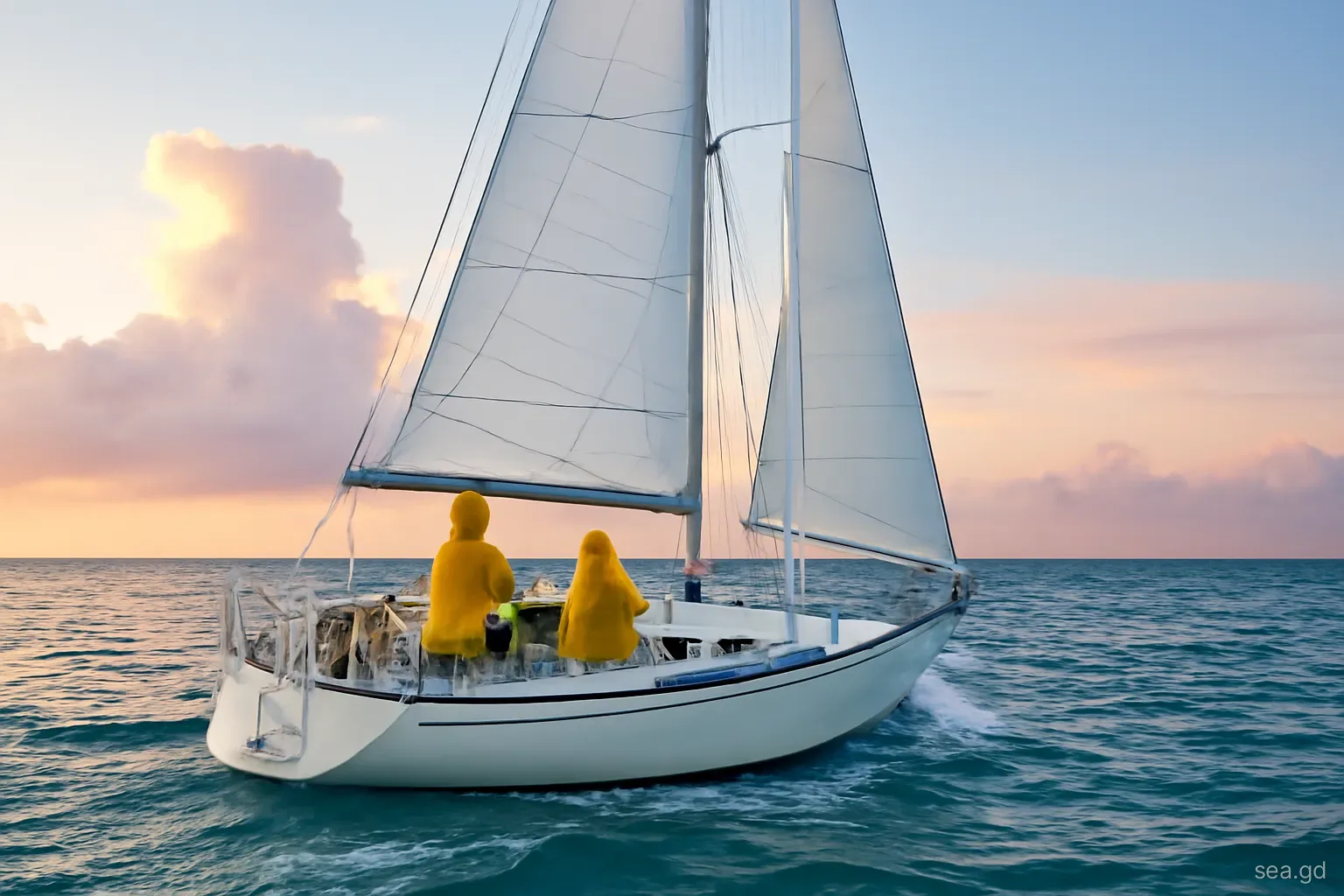
For decades the southern escape route has been part of Grenada's hurricane season. Trinidad lies roughly 80 nautical miles to the south, around two degrees further from the main hurricane track, and the yachting centre at Chaguaramas, on the north-west peninsula, has the yards and marinas to absorb a sudden influx of boats. When a storm threatens the southern Windward Islands, the anchorages along Grenada's south coast empty out as boats head south overnight.
Running can be the right call. It can also be a dangerous one, if the decision comes late and the boat ends up making a night passage in building seas with a storm closing. This page sets out when leaving makes sense, how to plan the passage, the hazards on the route, and what to expect on arrival. Trinidad and Tobago has its own clearance rules and fees; check them with the authorities there before you sail.
When running is the right decision
Running south works best when three things are true. First, the threat is credible but still a few days away, so that the passage can be made in settled or moderate conditions before the system's outer bands arrive. Second, the boat and crew are ready to go, with fuel, water and provisions aboard and the clearance formalities manageable within office hours. Third, the forecast track clearly favours the islands to the north of Trinidad rather than Trinidad itself.
If any of those fails, running becomes less attractive. A storm forecast to pass south of Grenada, a short lead time, or a boat that is not ready can make a hurricane hole or a haul-out in Grenada the safer option. Remember that a storm's track can shift, and that tropical storms have affected Trinidad itself: Tropical Storm Bret made landfall there in June 2017, and Tobago was struck by Hurricane Flora in 1963.
Many cruisers who use Trinidad as their storm option decide their trigger in advance, for example a named system forecast to pass within a certain distance of Grenada within 72 hours, so that they leave at the same point every time rather than agonising.
Planning the passage
Timing. Most boats leave Grenada's south coast in the late afternoon or evening and arrive off Trinidad's north coast in daylight. The entrance to Chaguaramas through the Boca de Monos, one of the channels of the Bocas del Dragon between Trinidad's north-west peninsula and the offshore islands, is best approached in good light.
Current. A strong current sets broadly westward across the passage, carrying boats towards the Gulf of Paria and Venezuelan waters. Allow for it in your course, aiming to stay well east of the rhumb line in the early part of the passage.
Offshore installations. Oil and gas platforms stand in the waters north of Trinidad. They are lit, but check their positions on an up-to-date chart and give them a wide berth.
Traffic. Commercial shipping, fishing boats and supply vessels for the gas fields use the area. Keep a proper watch, use AIS if fitted, and monitor VHF.
Weather on the way. Even ahead of a storm, tropical waves and squalls can cross the route. Reef early at night.
Preparing the boat for a pre-storm passage
A passage ahead of a storm is still an ordinary offshore passage, and the boat needs the same preparation. Crews who have spent the day stripping canvas for a hurricane hole sometimes forget that they now need it for sailing.
- Fuel tanks full, with spare filters to hand; you may motor a long way if the trades die ahead of the system.
- Water and simple, ready-to-eat food for the night and the following day, in case arrival is delayed.
- Jacklines rigged, lifejackets with lights and harnesses for everyone on deck at night.
- Dinghy lifted and lashed on deck or on davits, with the outboard removed and stowed.
- Navigation lights, AIS and VHF checked before leaving the anchorage.
- Reefs tucked in before dark rather than in the first squall.
- A float plan with someone ashore, including your expected arrival time and who to call if you are overdue.
Security on the route
The waters between Grenada and Trinidad, particularly those closest to Venezuela, have seen security incidents against yachts in the past, including robberies at sea. Incidents have been sporadic and the situation changes over time, but cruisers take precautions, and regional safety reporting groups and the cruisers' nets share current information.
Common practices include sailing in company with other boats, keeping well to the east of the direct course, filing a float plan with someone ashore, keeping AIS and radio protocols in line with current advice from other cruisers and authorities, and checking the latest reports before departure. If a security concern changes your route, it may also change your timing, so plan for it early.
None of this is a reason to panic, but it is a reason to make the passage a planned trip rather than a midnight dash. Rushing off alone in the dark with a storm approaching combines several risks at once.
Leaving Grenada and arriving in Trinidad
The formalities are straightforward if you allow time for them.
- Watch the forecast and decide your departure day as early as possible.
- Clear out of Grenada at Port Louis or Prickly Bay, with ship's papers, passports, crew list and receipts; settle any outstanding cruising permit fees.
- File any required pre-arrival notice for Trinidad and Tobago, and check their current requirements and office hours.
- Sail overnight, arriving at Chaguaramas in daylight.
- Proceed to the customs and immigration area at Chaguaramas as directed, and clear in. Arriving outside office hours may mean waiting aboard or paying overtime.
- Move to the marina, yard or anchorage you arranged, or find space if you did not. In a big exodus, berths and haul-out slots fill quickly.
- Inform your insurer that the boat is now in Trinidad, if your policy requires it.
The case against running late
Most bad experiences with the southern escape come from leaving too late. If several of these warning signs apply, staying and preparing in Grenada may well be the better option.
- Swell already building from the east or south-east on Grenada's south coast, a sign that the system's influence has arrived and the passage will be rough from the first hour.
- Squalls from the storm's outer bands reaching the area, with gusts and wind shifts that make a night passage hard on a tired crew.
- A forecast track that has shifted south, towards Trinidad, which removes the reason for going.
- Clearance offices closed or overwhelmed, forcing a departure without proper papers.
- Crew who are tired from preparing the boat and would face a night passage in deteriorating conditions.
- Trinidad's marinas and yards already full, leaving only a crowded anchorage on arrival, which may be no better than the shelter you left.
Trinidad as a season base, not only a refuge
The logic. If your insurer, your boat and your temperament all point towards Trinidad whenever a storm threatens, it can be simpler to be there from the start of the season and avoid the dash altogether. The trade-off is giving up Grenada's summer life.
Many spend the whole season there. Some owners avoid the decision altogether by spending the entire hurricane season in Chaguaramas, which has a large yachting industry with yards, chandleries and contractors.
Different costs and rules. Trinidad has its own customs and immigration procedures, fees and rules for long-stay boats. Research them before committing.
Different conditions. Chaguaramas is hot and often windless in summer, with heavy rain, and the water is not suitable for swimming. Crews used to Grenada's bays notice the difference.
Insurance. Some insurers offer better terms for boats in Trinidad during the season, while others treat both locations alike. Ask yours to compare before choosing, and get the answer in writing.
Frequently asked questions
How far is Trinidad from Grenada by boat?
Chaguaramas on Trinidad's north-west peninsula is roughly 80 nautical miles from Grenada's south coast. Most yachts make the passage overnight, leaving in the late afternoon or evening and arriving in daylight. The strong westward current and offshore gas platforms need allowing for in planning.
Is Trinidad safe from hurricanes?
Trinidad lies further south than Grenada and is hit far less often, but it is not immune. Tropical Storm Bret made landfall there in June 2017, and Tobago was struck by Hurricane Flora in 1963. Treat Trinidad as lower risk, not no risk, and keep watching the forecast.
When should you leave Grenada for Trinidad before a storm?
Early enough to make the passage in moderate conditions before the system's outer bands arrive. Many cruisers set a trigger such as a named storm forecast to pass within a set distance of Grenada within 72 hours. Leaving as swell and squalls build is risky.
Is the passage to Trinidad safe from crime?
Most passages are uneventful, but security incidents against yachts have occurred in the area, especially closer to Venezuelan waters. Cruisers often sail in company, stay east of the direct course, file a float plan and check current reports from cruisers' nets and regional safety groups before leaving.
Do you need to clear out of Grenada to go to Trinidad?
Yes. Trinidad and Tobago is a separate country, so the captain must clear out of Grenada at a clearance office such as Port Louis or Prickly Bay and then clear in at Chaguaramas on arrival. Check both countries' requirements and office hours to avoid overtime charges.
Can you leave the boat in Trinidad for the rest of the season?
Many owners do. Chaguaramas has yards and marinas that store boats ashore and afloat during the season, though space can fill quickly when many boats arrive at once ahead of a storm. Arrange storage in advance if possible and confirm your insurer accepts the location.