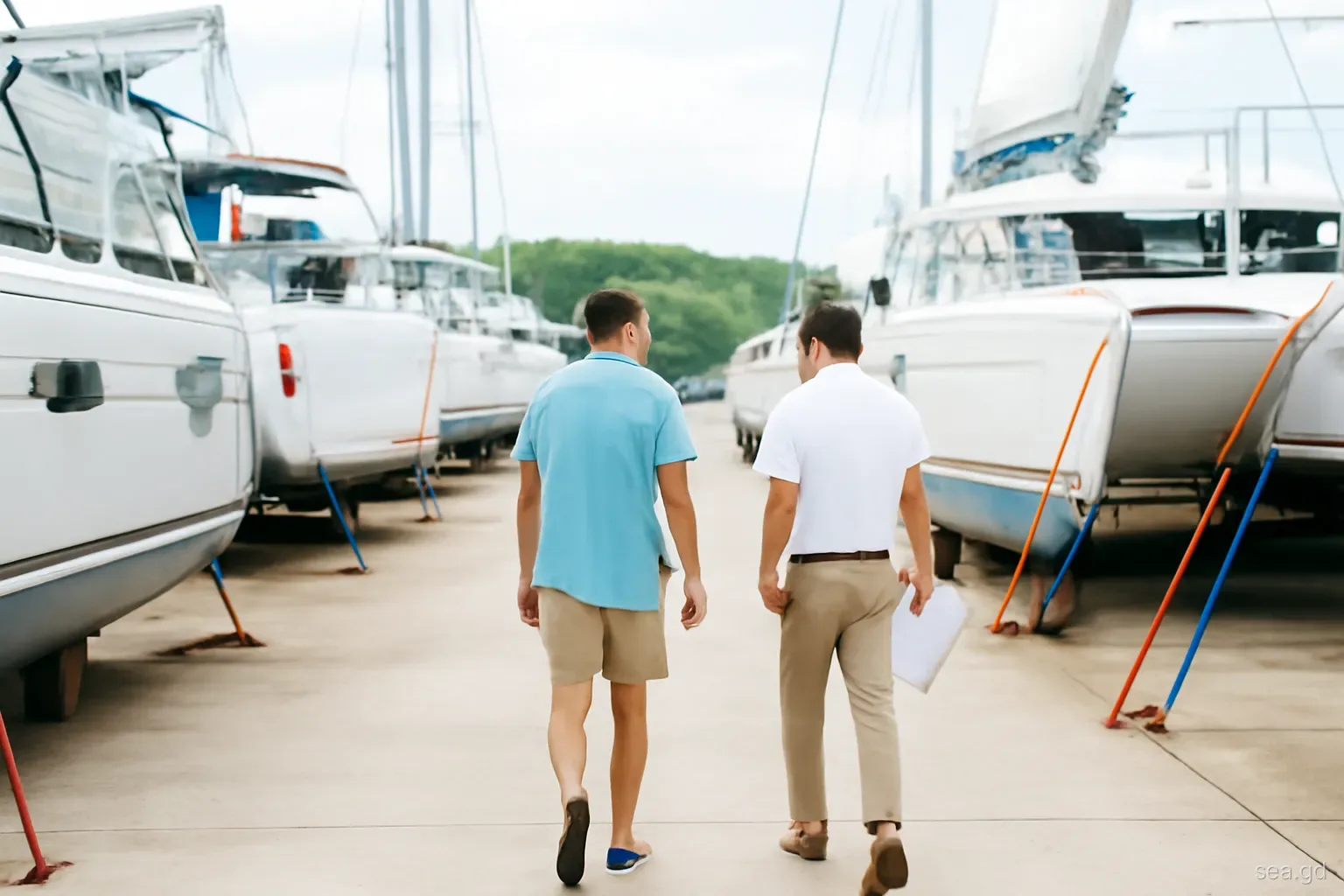
For many owners the choice of where to spend hurricane season is made by the insurance policy, not the skipper. Grenada became a summer base largely because insurers drew their hurricane boundaries just to the north of it, and a boat south of the line could keep full cover. After Ivan in 2004 and Beryl in 2024, those terms have shifted, and an owner who assumes last year's conditions still apply may discover the gap only when making a claim.
This page explains the clauses that matter for a boat in Grenada between June and November, the questions to put to your insurer or broker, and how to keep a claim straightforward if the worst happens. Policies differ widely, and nothing here replaces reading your own wording and getting your insurer's answers in writing.
The hurricane box and latitude limits
Most yacht policies with Caribbean cover define a geographic area, often called the hurricane box or named windstorm zone, and dates during which the boat must not be inside it, or may be inside only with reduced cover or a larger deductible. The box is usually defined by latitude and longitude lines, with the southern boundary drawn somewhere around the latitude of Grenada and the Grenadines. Dates commonly run from 1 June or 1 July to 30 November or 1 November, depending on the insurer.
Because the main island sits at about 12 degrees north and Carriacou at about 12.5 degrees, a boundary at, say, 12 degrees 30 minutes can place Carriacou and the main island on different sides of the line. Read the exact coordinates. Some policies refer instead to named locations, such as Grenada or south of Grenada, which removes ambiguity but needs equal care.
If your boat will be inside the box, the policy may still cover it, but typically with conditions: an approved hurricane plan, haul-out with tie-downs, crew aboard, or a higher deductible for named storms. Some policies exclude named windstorm damage altogether inside the box.
Clauses to find in your policy
Named windstorm or named storm deductible. Damage caused by a storm named by a recognised meteorological authority often carries a separate deductible, frequently a percentage of the insured hull value rather than a fixed sum. On a valuable boat, a small percentage is a large figure.
Haul-out warranty. Some insurers require the boat to be hauled out during the season, sometimes specifying tie-downs to ground anchors, a particular cradle, or the removal of sails and canvas. Failing to comply can void cover for storm damage.
Hurricane plan requirement. Many insurers ask for a written plan naming the yard or shelter, how the boat will be secured and who will do the work. Once approved, the plan becomes part of the deal: departing from it without telling the insurer is risky.
Crew or caretaker conditions. Policies may require that an unattended boat be checked regularly by a named person, or conversely that a boat in a hurricane hole have crew available to tend it.
Wreck removal and pollution liability. If a storm sinks or strands the boat, the authorities may require it to be removed and any pollution cleaned up. Check that both are covered and the limits are realistic; after a major hurricane, salvage and removal costs are high.
Agreed value or market value. An agreed value policy pays the sum stated in the schedule for a total loss; a market or actual cash value policy pays what the boat was worth at the time, which can be much less after depreciation. After a storm that writes off many boats at once, the difference matters, and arguments over market value are slow.
Navigation limits outside the season. Some policies restrict where you may sail even outside the box dates. Check limits for the Grenadines and Trinidad if you plan to move.
Getting your season approved in writing
The best time to sort out cover is before you book the yard or berth. A typical sequence:
- Tell your broker or insurer where the boat will be during the season, with dates and the exact location, such as a named yard in Prickly Bay, Woburn Bay or St David's.
- Ask whether that location falls inside their named windstorm area, and what conditions apply.
- Ask specifically about the treatment of Carriacou and Petite Martinique if you may be there.
- Prepare a hurricane plan: haul-out with tie-downs, berth with storm procedures, or a named hurricane hole with your ground tackle, and who will act if you are away.
- Send the plan and any yard contract to the insurer and ask for written confirmation that it is acceptable.
- Ask what the named storm deductible will be in money terms, not just as a percentage.
- Keep the insurer's reply with the boat's papers, and update the insurer if your plan changes, for example if you decide to run to Trinidad.
What changed after Beryl
Ivan in 2004 caused many insurers to move their boundaries and tighten conditions for Grenada. Beryl in 2024, coming early in the season and destroying a large part of the fleet in Carriacou's Tyrrel Bay, has had a similar effect, though the details vary between insurers and continue to evolve. Owners have reported higher premiums, larger deductibles, new haul-out requirements and fewer insurers willing to write cover for older boats in the southern Caribbean during the season.
The practical lesson is to renew early and ask directly whether anything has changed for the coming season. Do not rely on cruising forums or what a neighbour's insurer accepts; one company's policy says nothing about another's. If your insurer will no longer cover the boat afloat in Grenada, the realistic options are hauling out under their conditions, moving to a location they accept, or finding an insurer whose terms fit your plan.
Beryl also showed the importance of wreck removal cover. Boats sunk or stranded in mangroves and on shorelines had to be removed, and owners without adequate cover faced large bills or legal obligations.
If you need to claim
A claim after a storm goes better with preparation done before it. Experienced owners and yard managers recommend the same steps.
- Before the season, photograph the boat inside and out, record serial numbers of equipment, and keep an inventory with receipts, stored off the boat.
- Keep the yard contract, tie-down details and insurer's plan approval with copies in the cloud.
- After a storm, notify the insurer as soon as communications allow, even before you can see the boat.
- Do not authorise major salvage or removal without the insurer's agreement unless there is an immediate risk; take reasonable steps to prevent further damage, such as pumping out or covering openings.
- Photograph the damage before anything is moved, if safe to do so.
- Expect delays: surveyors, salvors and yards are overwhelmed after a big storm, and claims can take months.
- Keep records of all expenses, including travel and storage, in case they are claimable.
- Ask the yard or marina for a written incident report, including what they did to secure or recover the boat; insurers often request one.
Mistakes that undermine cover
Changing plan without telling the insurer. Leaving the approved yard for a hurricane hole, or sailing to Carriacou in August, may put the boat outside the agreed terms.
Assuming hauled out means covered. If the policy requires tie-downs or specific supports and the yard does not provide them, cover may be compromised. Check the yard's method against the policy wording.
Ignoring the deductible. A percentage-based named storm deductible can mean the first large sum of any loss falls on the owner.
Under-insuring wreck removal. Low limits for removal and pollution can leave the owner liable for costs after the hull claim is paid.
Letting the policy lapse while away. Renewal dates that fall mid-season while the owner is abroad are a common trap. Renew early.
Frequently asked questions
Is Grenada inside the hurricane box?
It depends on the insurer. Many policies have drawn the southern boundary around Grenada's latitude, so the main island may fall outside while Carriacou, slightly further north, falls inside. Boundaries have moved after major storms. Check the exact coordinates and wording in your own policy.
What is a named storm deductible?
It is a separate, usually larger deductible that applies when damage is caused by a storm named by a recognised meteorological authority. It is often expressed as a percentage of the insured hull value. On a valuable yacht, the owner may carry a substantial share of any storm loss.
Do insurers require boats in Grenada to haul out for the season?
Some do, sometimes with specific requirements for tie-downs, cradles and removal of sails. Others accept a berth or a hurricane hole with an approved plan. Requirements vary between insurers and have tightened for some after Hurricane Beryl. Ask your insurer directly and get their answer in writing.
Does yacht insurance cover wreck removal?
Many policies include wreck removal and pollution liability, but limits vary. After a major hurricane, removing sunken or stranded boats is costly, and authorities may require it. Check the limit in your policy and whether it is in addition to the hull sum insured or part of it.
Can you stay in Carriacou during hurricane season and stay insured?
Possibly, but check carefully. Carriacou sits slightly north of the main island and may fall inside an insurer's named windstorm area even when Grenada does not. Beryl's impact there in 2024 has made some insurers more cautious. Confirm in writing before planning to be there in the season.
How quickly should you notify the insurer after a storm?
As soon as communications allow, even before you know the extent of damage. Most policies require prompt notice. Take reasonable steps to prevent further damage, photograph the boat before anything is moved if safe, and agree major salvage or repair work with the insurer first.