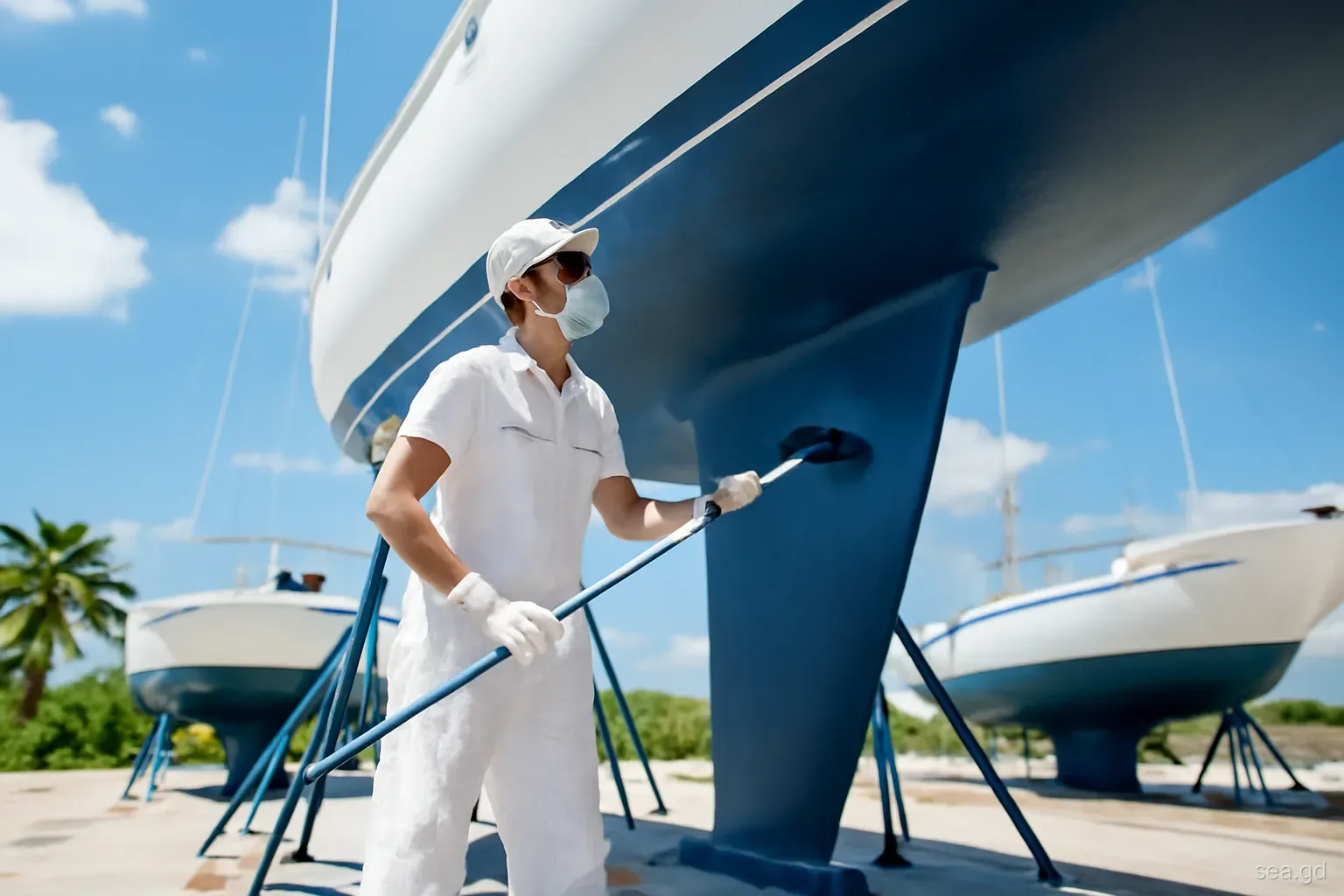
A hull left in Grenada's water for a summer grows a garden. Sea temperatures around the island sit in the high twenties Celsius for most of the year, the bays are calm and nutrient-rich after rain, and a boat at anchor for months can collect slime within days, weed within weeks and barnacles soon after. Antifouling here is not a cosmetic chore but a performance and fuel issue, and on a neglected boat a seized through-hull or a fouled propeller.
Grenada's south-coast yards do a great many bottom jobs, because hurricane-season lay-ups and relaunches give owners a natural window. This page explains how to plan one: which type of paint suits how you use the boat, how heat and humidity change the job, what else to do while the boat is out, and the mistakes that shorten the life of a new coat. Prices vary with yard and season, so get written quotes.
Why fouling is so fast here
Fouling organisms grow faster in warm water, and Grenada's sea rarely drops below about 26°C. Calm, sheltered anchorages, which are exactly where cruisers spend months, give larvae time to settle on a hull that is not moving. After heavy rain, runoff from the land adds nutrients to bays such as Prickly Bay, Clarkes Court Bay and the St George's lagoon, which feeds algal growth.
The result is that the effective life of an antifouling coat is shorter than paint manufacturers' temperate-water claims suggest, particularly on a boat that rarely sails. A coat expected to last two seasons in northern Europe may struggle to last one year on a boat sitting still in a Grenadian bay.
Movement helps. Ablative paints polish away as the boat moves through the water, exposing fresh biocide, so a boat that sails regularly keeps cleaner than one swinging at anchor. For long periods at anchor, regular hull cleaning by a diver or by the crew is part of the routine, and most long-stay boats in Grenada budget for it.
Choosing the paint: ablative, hard or something else
Ablative or self-polishing. These soft paints wear away gradually, releasing biocide as they go. They suit cruising boats that sail between periods at anchor, and they build up less, which makes future preparation easier. They can wear thin on the waterline and leading edges, and scrubbing them too hard removes paint.
Hard antifouling. Hard, contact-leaching paints stay on the hull until the biocide is exhausted. They tolerate scrubbing better, which suits boats that will be cleaned frequently by divers, and they suit faster boats. Over the years they build layers that eventually need stripping.
Compatibility. New paint must be compatible with what is already on the hull. If you do not know the existing paint, a test patch or a barrier coat is safer than a guess. Ask the yard or chandlery for the manufacturer's compatibility guidance.
Copper-free and biocide-free options. Copper-free and foul-release coatings exist and are gaining ground for environmental reasons, but they cost more and some perform best on boats that move regularly. Discuss them with the yard if you sail often.
What is banned. Tributyltin-based antifoulings have been banned internationally for years. Old hulls may still carry them deep in their layers, which is another reason for careful dust control when stripping.
A typical bottom job, in order
Yards differ in what they do themselves and what owners or contractors may do, so agree the division of labour beforehand.
- Haul out and pressure wash immediately, before growth dries hard on the hull. Most yards wash as the boat comes out of the slings.
- Inspect: blisters, damage to the keel or rudder, the condition of through-hulls, the propeller, the shaft, the cutlass bearing and the anodes.
- Scrape off barnacles and sand the old paint, using vacuum sanders and ground sheets as the yard requires. Feather any bare patches.
- Fill and fair damage, and apply a primer or barrier coat to bare areas as the paint system specifies.
- Mask the waterline and apply antifouling in the specified number of coats, typically at least two, with extra coats on the waterline, leading edges of keel and rudder, and the bow.
- Paint under the stands or cradle pads when the boat is lifted for launching, an area often forgotten.
- Treat running gear: clean and coat the propeller with a suitable product, and fit new anodes without painting over them.
- Launch within the time window the paint manufacturer allows, and check for leaks at every through-hull before the slings are released.
Painting in heat, humidity and afternoon showers
Grenada's climate changes how paint behaves. In strong sun, solvents flash off quickly and a roller can drag; in high humidity, especially on still mornings, dew on the hull can trap moisture under a coat. The best painting hours are usually mid-morning, once the hull is dry, until early afternoon, before showers build. In the rainy season, roughly June to December, a sudden downpour can ruin a fresh coat, so keep an eye on the sky and avoid starting a coat late in the day.
Overcoating times on the tin are usually given for temperate conditions. At Grenada temperatures, the minimum time between coats is often shorter, but the maximum before launch may also matter, especially for some hard paints. Read the manufacturer's tropical guidance, not just the headline figures.
Dust and toxicity are real hazards in the heat. Wear a proper respirator, eye protection and coveralls when sanding or spraying antifouling. Drink a lot of water; working under a hull on a hot, still afternoon is harder than it looks.
While the boat is out: jobs worth doing at the same time
Haul-outs cost money, so many owners combine the bottom job with below-waterline work that is difficult or impossible afloat.
- Service or replace seacocks and through-hulls, and check hose clamps on everything below the waterline.
- Check rudder bearings and play in the rudder stock.
- Inspect the stern gland or shaft seal and replace packing if needed.
- Check the cutlass bearing for wear by moving the shaft.
- Inspect the keel-to-hull joint for weeping or cracks, particularly after a grounding.
- Clean and inspect the depth and speed transducers.
- Service the saildrive or outdrive, including the diaphragm seal and gear oil, if fitted; saildrive seals have recommended replacement intervals that are easy to forget.
- Polish and wax the topsides while the staging is up; the gelcoat suffers in the Caribbean sun and a coat of wax slows chalking.
- Check the hull for osmotic blisters while it is dry. Small, scattered blisters are common on older boats; extensive blistering needs specialist advice before you repaint over it.
- Have the rig inspected at the same time if it is due, since many yards can unstep or check a mast while the boat is ashore.
Mistakes that shorten the life of a new coat
Too few coats where it matters. The waterline and leading edges wear first. Skimping there means growth in a band around the boat within months.
Painting over anodes or transducers. Painted anodes do not protect the hull, and antifouling on some transducers degrades performance. Mask them.
Scrubbing ablative paint with a harsh pad. Aggressive cleaning removes the paint you just paid for. Use soft tools and clean little and often.
Leaving the boat motionless for months. Even good paint fouls on a stationary hull in warm water. If the boat will sit, plan for diver cleaning or a short sail now and then.
Ignoring the launch window. Some paints lose effectiveness if left too long before launch, and others need a minimum curing time. A delay on the hard after painting can mean extra work.
Choosing on price alone. The cheapest paint may need recoating sooner. Over two seasons, a better product applied properly often costs less.
Frequently asked questions
How often does a boat in Grenada need antifouling?
Many cruising boats repaint every year or two, depending on paint type, how much they sail and how often the hull is cleaned. A boat sitting still in a warm, sheltered bay fouls faster than one sailing regularly, so long-stay boats at anchor often need more frequent attention.
Is ablative or hard antifouling better for Grenada?
Neither is best for everyone. Ablative paints suit cruising boats that sail between spells at anchor and build up less over time. Hard paints tolerate frequent diver scrubbing and suit faster boats. Match the paint to how the boat is used and to what is already on the hull.
Can a diver clean the hull instead of hauling out?
Divers clean hulls and check anodes in the south-coast anchorages, and regular cleaning extends the life of a coat. It cannot replace antifouling once the paint is exhausted, and aggressive scrubbing of soft paint removes it. Clean gently and often rather than hard and rarely.
When is the best time of year for a bottom job in Grenada?
Most owners do it at haul-out before the hurricane season or before relaunching in late autumn, because the boat is already ashore. Painting in the drier months, roughly January to May, avoids sudden showers, but yards work year round. Book early for the busy weeks around June and November.
Do the yards allow owners to antifoul their own boats?
Many Grenada yards allow owners to do their own preparation and painting, subject to rules on dust control, ground sheets and waste disposal. Some restrict spraying or certain jobs to their own staff or approved contractors. Ask the yard office for its rules before you start.
How much does a bottom job cost in Grenada?
Costs depend on boat length, the condition of the hull, the paint chosen and whether you or the yard do the work, plus haul-out, storage and relaunch fees. Yards charge by the foot for lifting and storage. Get written quotes from more than one yard and check whether VAT is included.