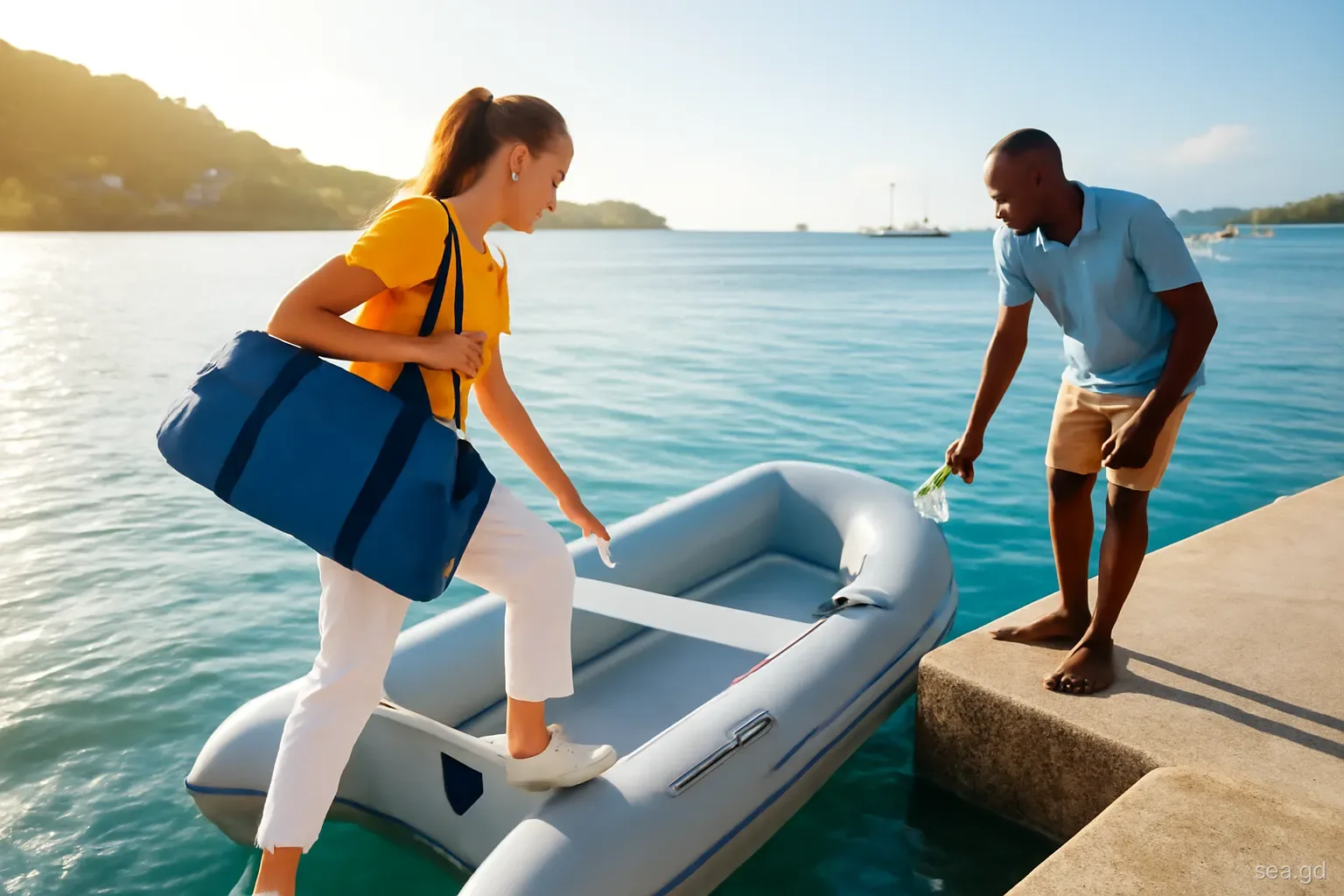
Grenada is a natural place to change crew. It has an international airport with direct flights to North America and Europe, marinas within a short drive of the terminal, and a clearance system that handles crew joining and leaving yachts every day of the season. It is also the departure point for the two most common onward passages: north into the St Vincent Grenadines, and south to Trinidad.
The paperwork is not complicated, but it trips people up in predictable ways: crew refused boarding for lack of a return ticket, a crew member who leaves without being signed off, or a boat that clears out and then lingers. This page sets out how crew changes and departures usually work. Requirements vary by nationality and change from time to time, so confirm with immigration and customs before you rely on any detail.
Flying in to join a yacht
Crew arriving by air land at Maurice Bishop International Airport at Point Salines, on the south-west tip of the main island. Immigration officers expect visitors to show a return or onward ticket and somewhere to stay. Someone joining a yacht and leaving by sea has neither, which can cause problems at the airline check-in desk before departure as well as on arrival.
The usual answer is a letter from the captain or the yacht's agent, stating the yacht's name, flag, registration number and location in Grenada, the crew member's full name and passport number, and confirming that they are joining as crew and will leave the country aboard the vessel. A copy of the yacht's registration and the captain's passport page helps. Airlines vary in how they treat such letters, so the crew member should check with their airline before flying and carry printed copies.
Citizens of many countries do not need a visa to visit Grenada, but some do. Each crew member should check the entry requirements for their own nationality in advance, and make sure their passport is valid for at least six months.
Signing crew on and off
Once the crew member has arrived, or before they leave, the yacht's crew list needs to be brought up to date with the authorities.
- The captain takes the ship's papers, the cruising permit and the passports of anyone joining or leaving to a clearance office, such as those at Port Louis Marina, Prickly Bay or, in Carriacou, Tyrrel Bay and Hillsborough.
- Update the crew list in the SailClear system beforehand if possible, and print a copy.
- Immigration adds joining crew to the yacht and records the details of anyone leaving.
- Crew leaving by air are signed off the vessel so that they can depart as passengers. They should carry a copy of the sign-off with their passport.
- If someone leaves the boat without being signed off, the captain may remain responsible for them in the eyes of immigration. Do it properly every time.
- Keep a copy of every updated crew list. You will need the current one when you clear out and when you clear in at your next port.
Getting crew to Carriacou or the boat's location
By road on the main island. Taxis meet flights at the airport and reach the south-coast marinas quickly. Arrange a pickup in advance if the crew member is arriving late at night.
To Carriacou by sea. A passenger ferry links St George's with Carriacou and Petite Martinique, and the crossing takes a couple of hours depending on the vessel and weather. Schedules and operators have changed over the years, and services were disrupted after Hurricane Beryl, so check the current timetable before booking connections.
To Carriacou by air. Small aircraft have linked Maurice Bishop International with Lauriston Airport on Carriacou. Services are limited and have been affected by the storm damage of 2024; confirm what is flying before relying on it.
Joining in the Grenadines instead. If the boat is heading north, some crews join at Union Island or elsewhere in St Vincent and the Grenadines. Each country has its own immigration rules, so plan which country the crew member enters first.
Clearing out: heading north to the Grenadines
Grenada, Carriacou and Petite Martinique form one country, so sailing between them does not require clearing out. You clear out only when leaving Grenadian waters. For boats heading north, the usual pattern is to cruise to Carriacou, clear out at Tyrrel Bay or Hillsborough, and sail the short distance to Clifton on Union Island, the nearest port of entry in St Vincent and the Grenadines.
The captain visits the clearance office with ship's papers, passports, the current crew list and receipts for fees paid, settles any outstanding cruising permit months and receives departure clearance for the next port. Petite Martinique has no clearance office, so a boat leaving from there must have cleared out in Carriacou first.
Clearance out is normally expected to be followed promptly by departure; the authorities generally allow only a short window, commonly cited as about 24 hours. Plan to clear out on the day you intend to leave, and do not go ashore again for a long evening afterwards. Office hours and overtime charges apply in the same way as for clearing in, so a weekday morning is the cheapest time.
SailClear, the online pre-arrival and departure system used by Grenada and several neighbouring states, lets you file the departure notice and carry the same vessel and crew details forward to your next port. Filing it before you go to the office shortens the visit, and because St Vincent and the Grenadines also uses the system, the details can be reused for clearing in at Union Island. Keep your login details and a printed copy of the latest submission aboard.
Clearing out: south to Trinidad and beyond
Boats bound for Trinidad usually clear out on the main island, at Port Louis or Prickly Bay, and make the passage of roughly 80 nautical miles overnight, arriving at Chaguaramas in daylight. Departure clearance names the next port, and Trinidad and Tobago has its own arrival procedures, so carry the Grenada clearance and every crew list update.
Timing an overnight departure around office hours takes some thought. Many crews clear out during the afternoon, have an early dinner aboard and leave in the evening, staying aboard after clearing. If you plan to depart in the early hours, ask the clearance office whether clearing the afternoon before is acceptable for your timing.
For transatlantic departures or longer passages, the same process applies. Make sure the clearance shows the intended destination, carry plenty of copies of the crew list, and keep receipts; destination authorities may ask to see evidence of your last port clearance.
Mistakes that cause delays at either end
Most problems come from small omissions that are easy to fix in advance and hard to fix later.
- Crew flying in without a captain's letter and being refused boarding by the airline at their home airport, often discovered only at the check-in desk.
- Forgetting to sign crew off before they fly out, which leaves the crew list wrong for the next clearance and the captain answerable for someone who has gone.
- Arriving to clear out with unpaid cruising permit months still outstanding, which turns a short visit into a longer one and may need a trip to a different office.
- Assuming you must clear out to sail from Grenada to Carriacou, which wastes time and fees.
- Clearing out on a Friday afternoon and lingering through the weekend, which breaks the expectation of prompt departure.
- Arriving at the clearance office just before lunch or closing time, then waiting an hour or paying overtime.
- Not carrying printed copies of the crew list and clearance for the next country, where officials may want paper rather than a phone screen.
- Leaving pets, firearms or high-value equipment off the declaration, which can delay departure while officials sort it out, particularly for firearms held ashore since arrival.
Frequently asked questions
Can crew fly to Grenada on a one-way ticket to join a yacht?
Often yes, provided they carry a letter from the captain with the yacht's details and their own, confirming they will leave aboard the vessel. Airlines are the bigger hurdle, since some refuse boarding without onward travel. Crew should check with their airline in advance and carry printed copies of the letter and yacht registration.
Do you clear out of Grenada to sail to Carriacou?
No. Grenada, Carriacou and Petite Martinique are one country, so moving between them is domestic. You clear out only when leaving Grenadian waters, usually at Tyrrel Bay or Hillsborough for boats heading north, or at Port Louis or Prickly Bay for boats heading south.
How long is a Grenada clearance out valid?
The authorities generally expect departure soon after clearance out, commonly within about 24 hours. Plan to clear out on the day you intend to leave and avoid going ashore again afterwards. If your departure time is unusual, ask the clearance office what it will accept.
Where is the nearest port of entry north of Grenada?
Clifton on Union Island, in St Vincent and the Grenadines, is the usual first port of entry for yachts sailing north from Carriacou. It is a short sail from Tyrrel Bay or Hillsborough. Check its current office hours and requirements before you arrive.
What happens if crew leave without being signed off?
Immigration may still regard them as part of the yacht's crew, and the captain can remain responsible for them. That can cause problems on clearing out and with future visits. Always take departing crew members to a clearance office to update the crew list before they fly.
Can crew changes be done in Carriacou?
Yes, at the clearance offices in Tyrrel Bay and Hillsborough. Getting crew there is the harder part, by ferry from St George's or by small aircraft from the main airport, and both have been affected since Hurricane Beryl. Many boats find it easier to change crew on the main island.