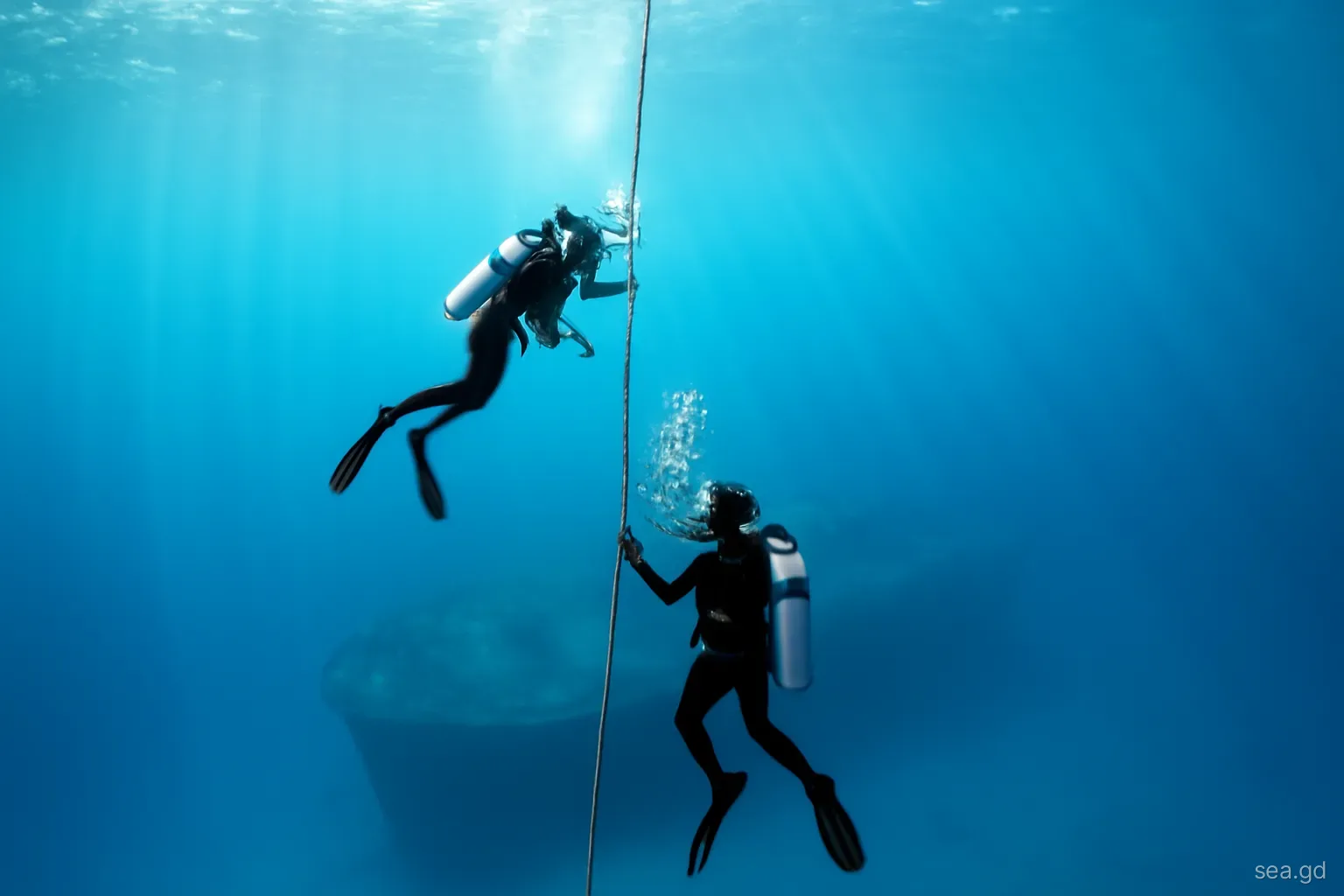
The Bianca C is often called the Titanic of the Caribbean, and its reputation has more to do with numbers than with romance. The Italian liner, close to 180 metres long, sank in 1961 after an engine-room fire while anchored off St George's, and now lies on a sand bottom at around 50 metres off the south-west coast. The highest parts of the wreck sit somewhere around 27 to 30 metres, the well-known swimming pool area deeper, and the current running along this coast can be strong. Depths are approximate and the structure has collapsed in places over the decades.
Those figures put the dive at or beyond the limit of most recreational training. This page does not repeat the history; it works through the planning arithmetic that dive operators use when deciding whether to take you, and that you should understand before you go: depth limits, no-stop times, gas consumption, nitrox, narcosis and the effect of current on all of them.
What depth means for your certification
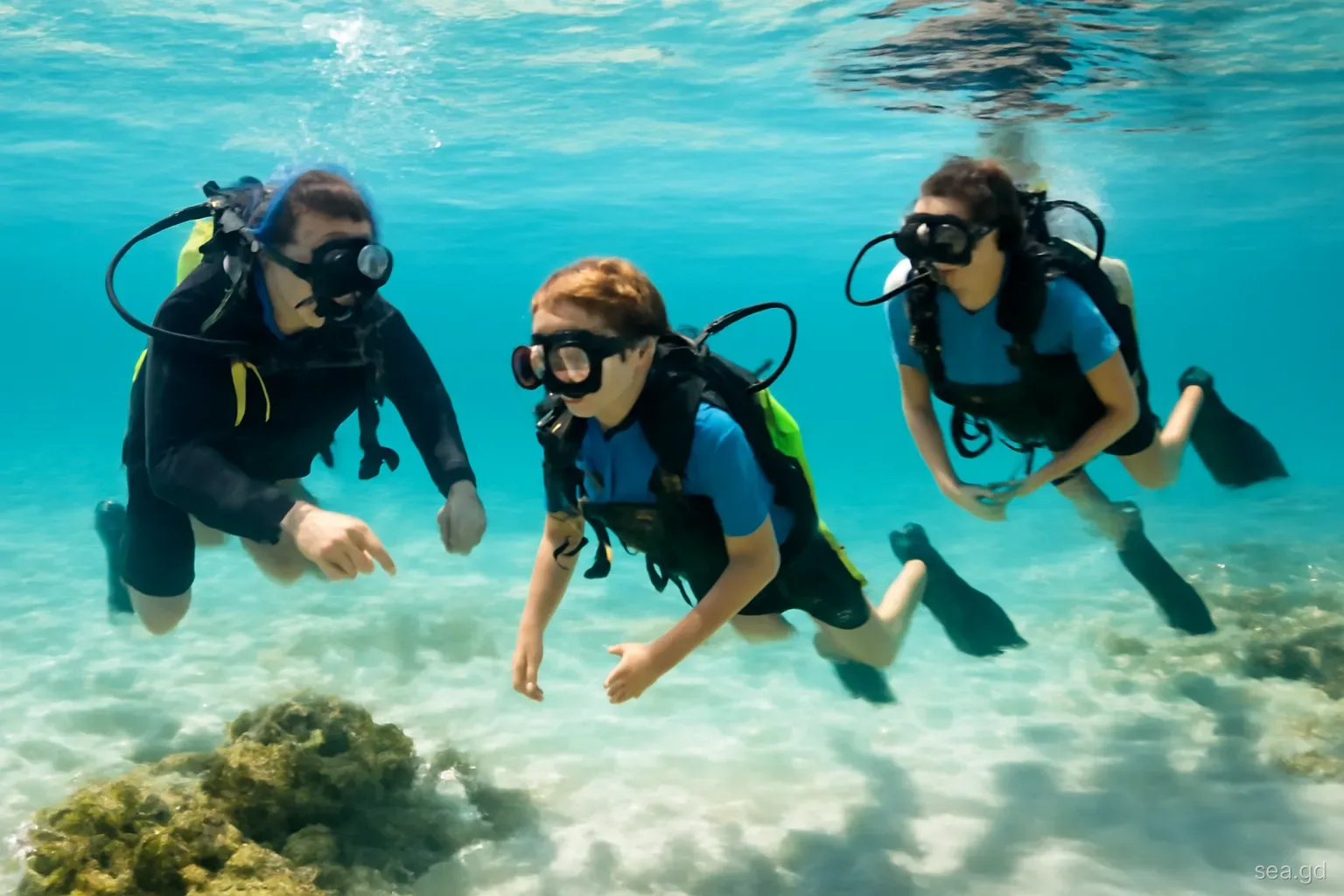
Recreational training agencies set depth limits by certification level. A basic open water certificate with the major agencies generally qualifies divers to about 18 metres, and an advanced certificate to about 30 metres. Deep-diver specialty training typically extends this to 40 metres, which is regarded as the outer boundary of recreational diving.
On the Bianca C, 30 metres puts you around the upper structure. To see more of the ship, divers usually go below 30 metres, into the range where deep training is expected. Dive operators in Grenada therefore commonly ask for advanced certification at a minimum, evidence of recent deep dives in the logbook and, often, a check dive with them first. Some require deep specialty training for the deeper profiles.
The bottom of the wreck, around 50 metres, lies outside recreational limits altogether. Reaching it safely is technical diving, which involves different equipment, gas mixes, decompression planning and training, and is offered only by operators and instructors specifically set up for it.
No-stop limits at Bianca C depths
They are short. Using standard recreational tables such as the PADI Recreational Dive Planner as a reference, the no-stop limit on air is about 20 minutes at 30 metres, about 14 minutes at 35 metres and about 9 minutes at 40 metres. A dive computer will usually allow somewhat more on a multilevel profile, but the order of magnitude is the same.
Descent time counts. Bottom time starts when you leave the surface. A slow descent on a line in current, or a delay sorting out equalisation, eats into the few minutes available at depth.
Computers differ. Different computers use different algorithms and conservatism settings, so two buddies can see different limits on the same profile. Agree in advance to follow the most conservative computer in the group.
Repetitive dives shorten the window. A Bianca C dive is often scheduled as the first dive of the day for this reason. Doing it after a deep morning dive, or on the last day of a week of multiple dives, reduces the no-stop time further.
Gas planning: why tanks empty fast at depth
Gas consumption increases with depth because each breath at depth contains more molecules. At 40 metres the absolute pressure is about five times that at the surface, so a diver uses roughly five times as much gas per minute as on the surface. At 30 metres, it is roughly four times.
A worked example shows the effect. A relaxed diver with a surface consumption of 20 litres per minute uses about 80 litres per minute at 30 metres and about 100 at 40. An aluminium 80 cylinder, common in the Caribbean, holds roughly 2,200 litres of usable gas when full. After keeping a reserve for the ascent, safety stop and any emergency, the time available at 35 to 40 metres can be under 20 minutes, and less for a diver who is working against current or anxious.
This is why operators watch air consumption closely on check dives, and why turning the dive on gas, not just on time, is part of the plan. Agree a turn pressure and an ascent pressure with your buddy before descending.
Enriched air and narcosis
Enriched air nitrox extends no-stop times at moderate depths, but its benefit on the Bianca C is limited by oxygen toxicity. Each mix has a maximum operating depth. With a commonly used oxygen partial pressure limit of 1.4 bar, a 32 per cent mix is limited to about 34 metres, and a 28 per cent mix to about 40 metres. A diver on 32 per cent who drops to the deeper parts of the ship is exceeding the safe limit for that mix. Many divers use air or a weaker nitrox on this wreck; whatever you breathe, confirm the mix, analyse it yourself and set your computer accordingly.
Nitrogen narcosis is the other depth effect. Below about 30 metres, most divers experience some impairment: slower thinking, fixation, overconfidence or anxiety. It varies between people and from day to day, and it is reversed simply by ascending. The danger on a large wreck is that narcosis combines with the excitement of the site, leading divers to drift deeper than planned or ignore gauges. Experience at depth, a simple plan and a buddy who checks on you reduce the risk.
How current changes the plan
Descending in current. The coast off the south-west can carry a strong current. Operators often use a descent line or mooring and ask divers to descend quickly and together. A diver who lingers at the surface in current may end up far from the line.
Working at depth. Swimming against current at 35 metres multiplies gas consumption and fatigue. Plan to shelter in the lee of the structure and to move with the current where the guide indicates.
Ascent in open water. If the current is strong, the ascent may be made away from the wreck, drifting in open water. Every diver should carry and know how to deploy a delayed surface marker buoy so that the boat can follow and pick up the group.
Dive cancelled. On some days the operator will cancel or switch sites because the current is too strong. That is a safety decision, not a commercial inconvenience; accept it and rebook.
Ascent, safety stop and the hours after
The ascent from a deep wreck is where planning pays off. Recreational guidance calls for a slow ascent, commonly no faster than about 9 to 10 metres per minute, and most computers alarm if you exceed their limit. From 35 metres that means three to four minutes of controlled ascent, which needs gas in reserve. A safety stop of three to five minutes at around 5 metres is standard after any deep dive, and some divers add a brief pause at mid-depth.
In current, holding a stop in open water without a reference takes practice. A delayed surface marker buoy gives both a reference line and a signal to the boat, and buddies who stay face to face find it easier to hold depth together.
After surfacing, keep the rest of the day gentle. Avoid strenuous exercise, hot tubs and alcohol, stay hydrated, and plan any second dive shallower with a generous surface interval. Report unusual fatigue, joint pain, tingling or dizziness to the operator immediately rather than waiting to see if it passes.
Preparation checklist and common mistakes
Divers who are turned away or who end the dive early usually make one of these errors. Use the list to prepare:
- Turning up without a logbook or with no recent deep dives. Bring proof of experience, and consider a refresher deep dive before attempting the wreck.
- Booking the Bianca C on the first day of a trip. Most operators want to see you dive first; schedule it mid-week after a couple of easier dives.
- Skipping the briefing details. The plan, maximum depth, turn pressure and ascent procedure are specific to the day's conditions.
- Poor buoyancy and weighting. Over-weighting leads to fast descents and high gas consumption; under-weighting makes the safety stop a struggle.
- Flying too soon. Allow the full recommended interval before flying, at least 18 hours after multiple dives or multiple days of diving and longer after any decompression dive.
- Ignoring personal limits. Ears, health, sleep and alcohol the night before all affect how you cope at depth; it is better to postpone than to go unwell.
Frequently asked questions
How deep is the Bianca C wreck?
The ship rests on the seabed at roughly 50 metres, with the shallowest structure around 27 to 30 metres and much of the most-visited area between about 30 and 40 metres. Exact figures vary with the part of the wreck and the collapse of structure over time.
Can open water divers dive the Bianca C?
Generally not. An open water certificate usually covers diving to about 18 metres, well short of the wreck. Operators commonly ask for advanced certification with recent deep experience, and some require deep specialty training and a check dive before taking divers to the Bianca C.
Is nitrox useful on the Bianca C?
Only within limits. Nitrox extends no-stop time, but its maximum operating depth is shallow enough to matter here: about 34 metres for a 32 per cent mix at 1.4 bar. Many divers use air or a lower-oxygen mix. Always analyse your gas and set your computer to match.
How long is a dive on the Bianca C?
Time at depth is short, often around 15 to 20 minutes, set by no-stop limits and gas supply. With descent, ascent and a safety stop, the whole dive may last 30 to 40 minutes. Operators set the exact plan according to depth, conditions and divers' experience.
Can you go inside the Bianca C?
Penetration is not part of standard recreational dives on the wreck. The structure has collapsed in places, silt reduces visibility and overhead environments require specific training and equipment. Divers stay outside on recreational dives; any penetration requires proper wreck and technical training.