Across the Caribbean, the branching corals that once built the shallow reef crest have largely disappeared. Elkhorn and staghorn coral, which formed dense thickets in water a few metres deep, declined dramatically from the late 1970s onwards, mainly because of disease, and both are now listed as critically endangered. Grenada and Carriacou were part of that regional story, and storms, warming seas and pollution have added to the pressure since.
Coral restoration, sometimes called coral gardening, is one response: growing coral fragments in underwater nurseries and transplanting them back onto degraded reefs. Restoration work has been carried out in Grenada and Carriacou by different combinations of dive centres, conservation groups, marine protected area staff and university researchers, and interest grew after Hurricane Beryl damaged reefs around Carriacou in 2024. This guide explains how the work is done, what it can and cannot achieve, and how visitors can contribute without doing harm.
Why branching corals matter so much
Elkhorn coral grows in broad, flattened branches near the surface, where waves break, and staghorn coral grows in thinner, antler-like branches a little deeper. Both grow quickly by coral standards, and together they once formed the three-dimensional framework of many Caribbean reefs: shelter for fish, a barrier that breaks waves before they reach the shore and a structure that kept reefs growing upwards.
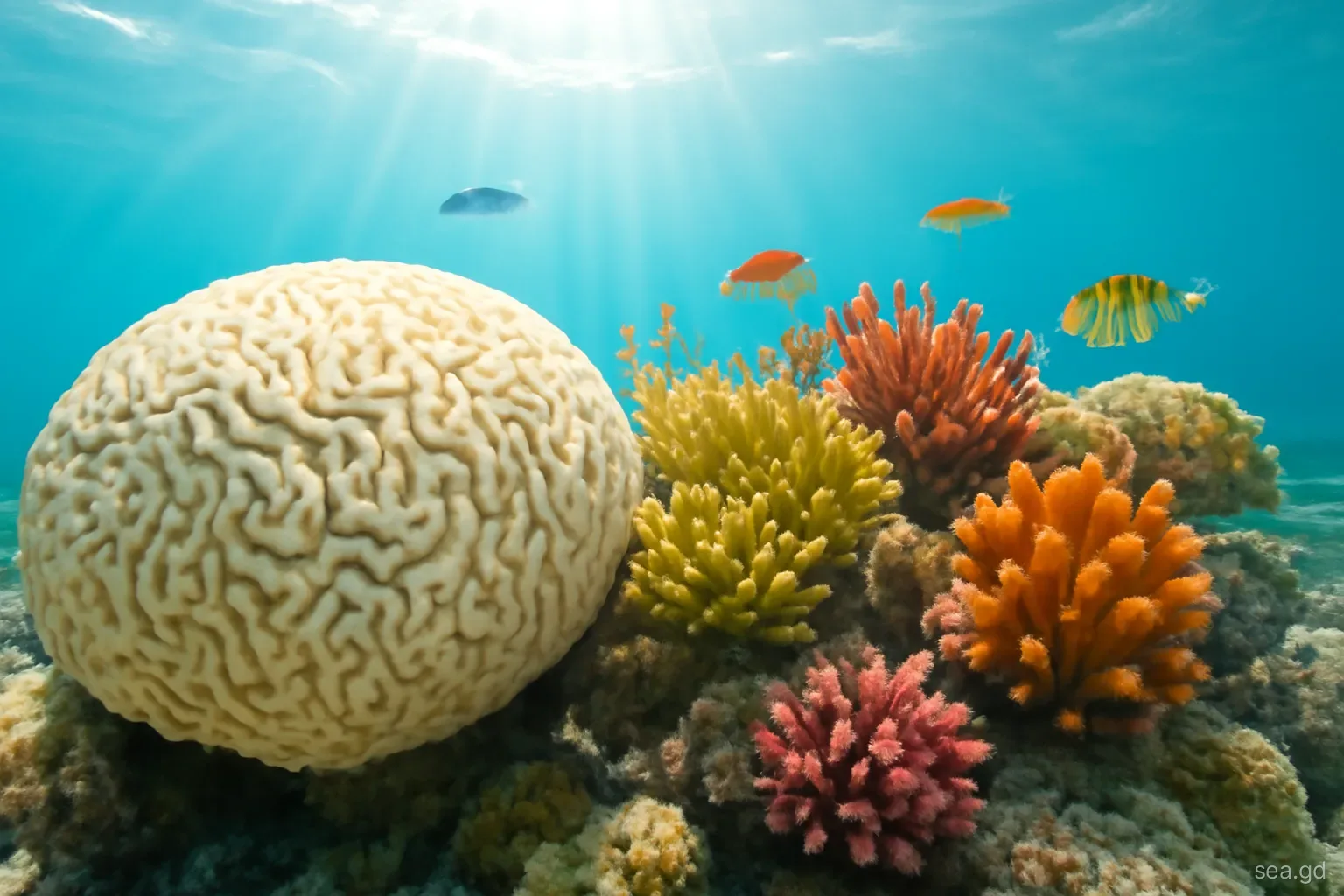
When disease swept through these species, many reefs lost much of their height and complexity. Massive corals such as brain and star corals, which grow far more slowly, could not fill the gap. Reefs flattened, fish lost shelter and coastlines lost some of their natural protection, which is a serious matter for low-lying areas and for islands facing more intense storms.
Restoration focuses on branching corals partly because of their ecological importance and partly because their speed of growth makes nursery work practical. More recent techniques are extending restoration to slower-growing massive corals as well.
How a coral nursery works, step by step
The basic method is similar across the Caribbean, with local variations in materials and species.
- Divers collect small fragments from healthy donor colonies or from pieces broken naturally by storms, taking care not to damage the parent coral.
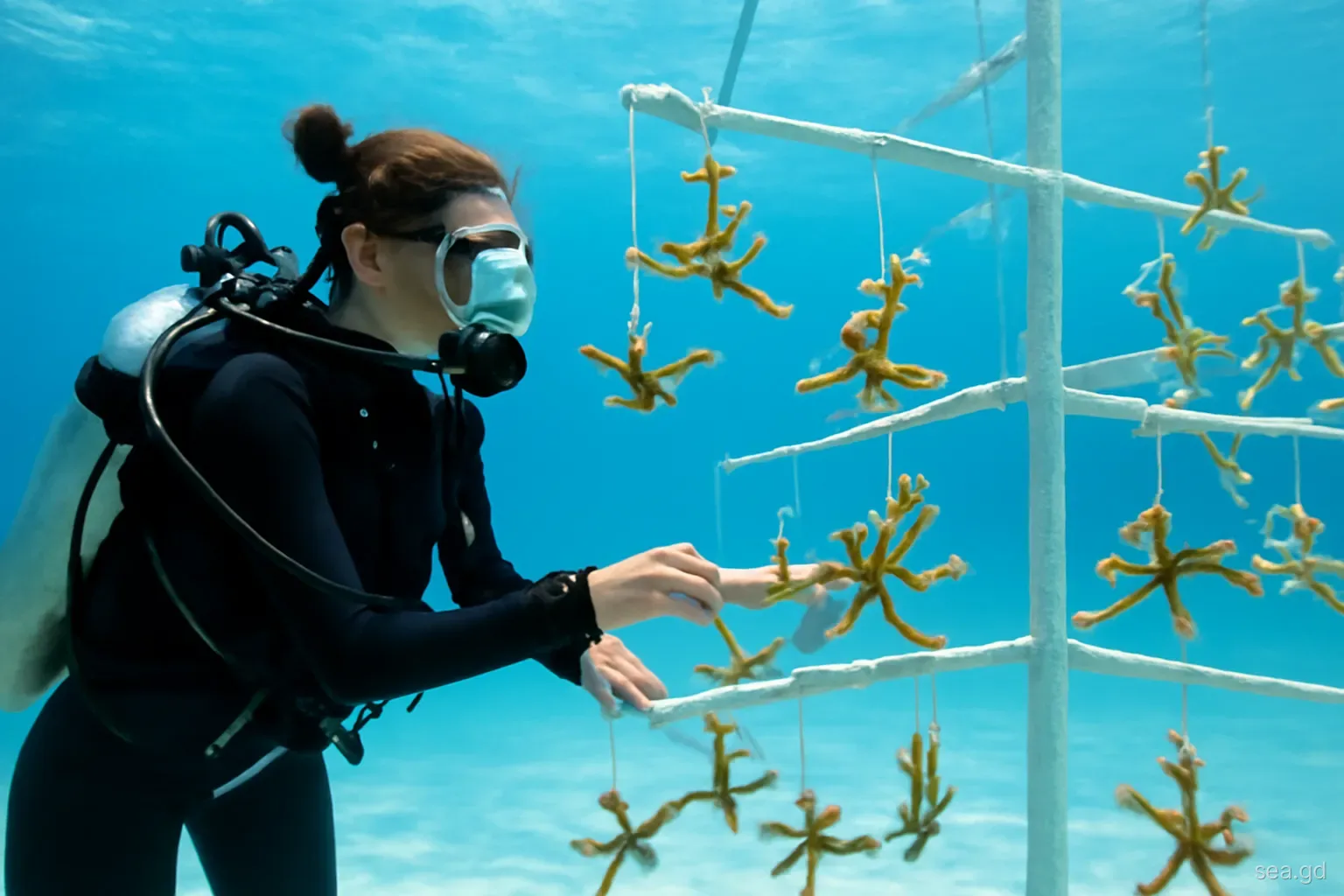
- Fragments are hung on nursery structures, often frames shaped like trees made of pipe and line, suspended in the water column above the sand and anchored to the bottom. Some nurseries use tables or ropes instead.
- In the nursery, fragments grow away from sediment and many grazers, and divers clean algae, snails and fireworms from them regularly.
- As fragments grow, they are cut into new pieces, multiplying the stock. A single fragment can become several in a year.
- Once large enough, corals are transplanted, or outplanted, onto a degraded reef, attached with marine epoxy, cement, nails or cable ties.
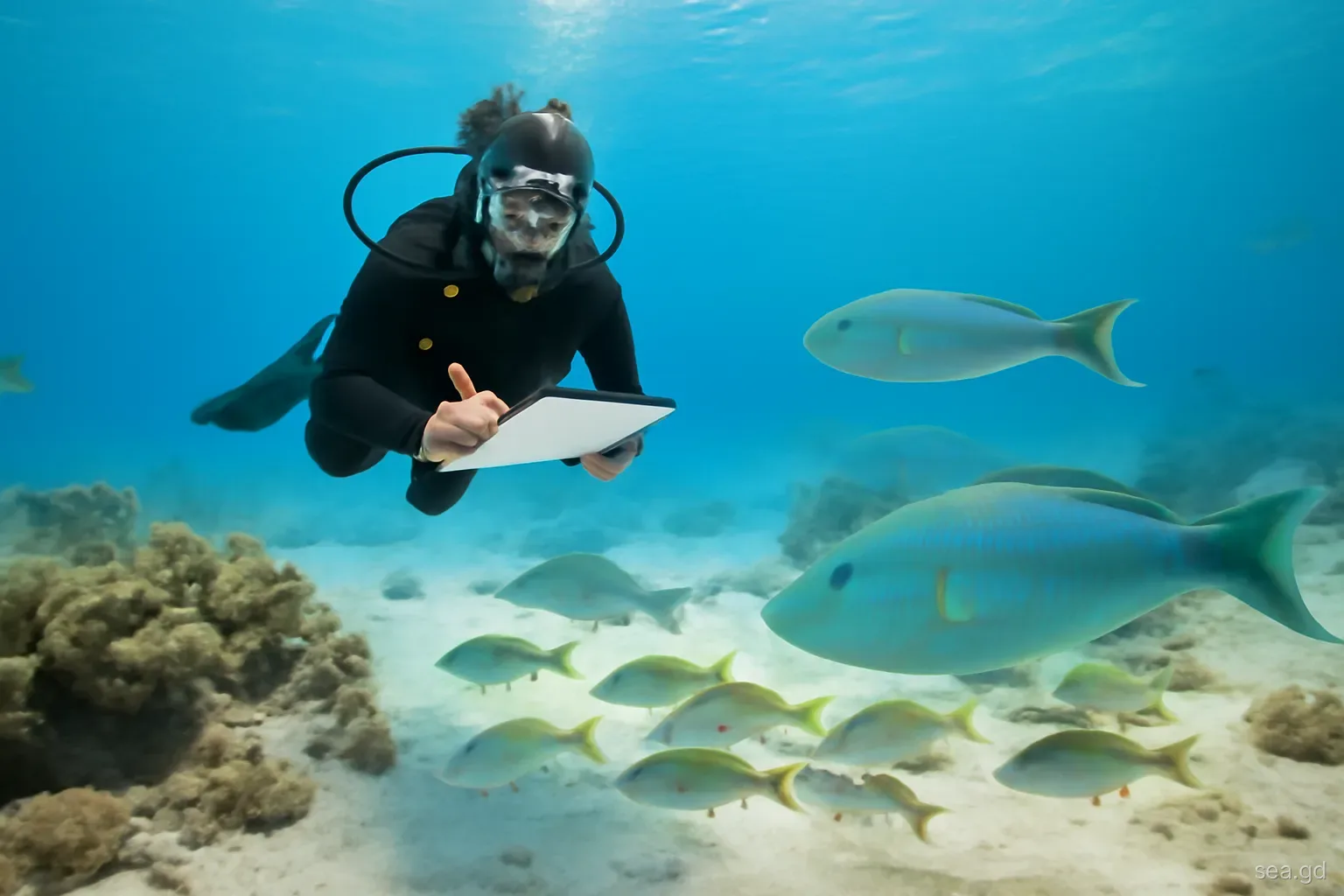
- Teams monitor survival, growth, bleaching and disease at the nursery and outplant sites, and use the results to improve methods.
- Genetic diversity is managed by growing fragments from many different donor colonies, so that the restored population is not a set of identical clones vulnerable to the same stress.
What restoration can and cannot do
It can restore patches of reef. At the scale of a bay or a reef section, well-run restoration can bring back living coral cover, fish habitat and some of the reef's structure.
It can keep genetic stock alive. Nurseries act as living gene banks for corals that might otherwise disappear locally, including colonies that survived bleaching and may be more heat tolerant.
It cannot replace whole reefs. Even large programmes outplant thousands of corals, while natural reefs cover vast areas. Restoration is a supplement to protection, not a substitute for it.
It cannot fix the causes. If water is too warm, too polluted or full of sediment, transplanted corals will suffer the same fate as the originals. Restoration works best alongside reduced pollution, controlled runoff, sensible fishing rules and effective marine protected areas.
It needs long-term commitment. Nurseries need regular maintenance and outplants need years of monitoring. Projects that end when a grant runs out often leave little behind.
How divers and visitors can help
The most useful thing most visitors can do is support the conditions that let corals survive: dive with operators who follow reef etiquette and pay marine park fees, avoid touching coral, cover up rather than using heavy sunscreen and choose accommodation and businesses that handle wastewater responsibly. These actions matter more than any single restoration dive.
Certified divers with good buoyancy can sometimes take part directly. Some dive centres in Grenada and Carriacou have offered coral restoration courses or volunteer dives, in which participants learn to clean nursery structures, prepare fragments and monitor outplants under supervision. Expect to need solid buoyancy skills, because nursery work involves hovering precisely in mid-water close to fragile coral.
If you are interested, ask dive shops before you travel whether they run restoration activities, how they are linked to the marine protected area or recognised conservation organisations, and what the money you pay supports. Programmes come and go, and some were disrupted by Hurricane Beryl, so check what is active at the time of your visit.
Newer techniques beyond the nursery tree
Coral gardening with branching corals is the most familiar method, but restoration science in the Caribbean has moved on. Microfragmentation involves cutting slow-growing massive corals, such as brain and star corals, into very small pieces. Small fragments grow surprisingly quickly at first, and when several pieces from the same colony are placed close together, they fuse into a larger colony far faster than a single coral would grow.
Another approach works with coral reproduction. Many Caribbean corals spawn on predictable nights a few days after a full moon in late summer. Researchers collect eggs and sperm, rear the larvae in tanks or floating pools and settle them onto small substrates, which are then placed on the reef. This produces genetically diverse offspring rather than clones, which may help reefs adapt to warmer seas.
These methods need specialist skills and equipment, and they are mainly carried out by research institutions and well-established programmes. For visitors, the practical point is that restoration is evolving, and programmes that track and publish their results are the ones driving it forward.
Pitfalls and red flags
Coral restoration is popular, and not every activity that uses the name does much good. Some points to watch for:
- Restoration as a sales add-on. A brief "plant a coral" dive that ends with a photo but has no monitoring behind it may do little for the reef.
- Poor buoyancy among participants. Inexperienced divers working near nurseries can break more coral than they help grow. A responsible programme will check skills first.
- No link to local management. Restoration on a reef should be coordinated with the marine protected area authorities and the Fisheries Division, which oversee work in Grenadian waters.
- Taking coral without permission. Collecting coral fragments, even broken ones, is regulated. Visitors should never collect or move coral themselves.
- Ignoring the results. Good projects can tell you how many corals they have outplanted, what proportion survive and what they have learned. Vague answers deserve follow-up questions.
Restoration after Hurricane Beryl
When Hurricane Beryl struck Carriacou and Petite Martinique in July 2024, wave action broke coral, shifted sand and piled debris onto reefs and mangroves. Storm damage of this kind is part of the natural history of Caribbean reefs, which have recovered from hurricanes for thousands of years, but recovery is slower when reefs are already stressed by warm water and pollution.
After major storms, restoration teams often begin with triage: reattaching large broken coral fragments that are still alive, clearing debris and assessing which areas are worth active restoration and which should be left to recover naturally. Nurseries themselves can be damaged and may need rebuilding.
For visitors to Carriacou, this means reefs may look different from older photographs and descriptions. Local dive centres and the Sandy Island Oyster Bed MPA rangers are the best sources of current information on which sites are recovering well and where restoration work is taking place.
Frequently asked questions
Does coral restoration actually work?
At a local scale, yes: well-managed projects have restored living coral to patches of reef across the Caribbean. It cannot replace large areas of reef or solve warming and pollution, so it works best alongside strong marine protection and reduced land-based pollution.
Which corals are restored in Grenada?
Most Caribbean restoration focuses on fast-growing branching corals such as staghorn and elkhorn, both critically endangered. Some projects also work with slower-growing massive corals. Ask individual programmes which species they grow.
Can tourists take part in coral restoration in Grenada?
Certified divers with good buoyancy can sometimes join volunteer dives or restoration courses run by dive centres. Availability changes, so ask operators before travelling and check that their work is linked to the marine protected area or recognised conservation bodies.
How long does it take for restored coral to grow?
Branching corals can add several centimetres of growth or more in a year under good conditions, which is why nurseries can multiply fragments quickly. Building a mature reef structure still takes many years, and survival depends on water conditions.
Is it legal to collect broken coral as a souvenir?
No. Taking coral, living or dead, is prohibited in Grenada's marine protected areas and regulated elsewhere, and exporting coral without permits breaches international wildlife trade rules. Leave all coral where you find it.