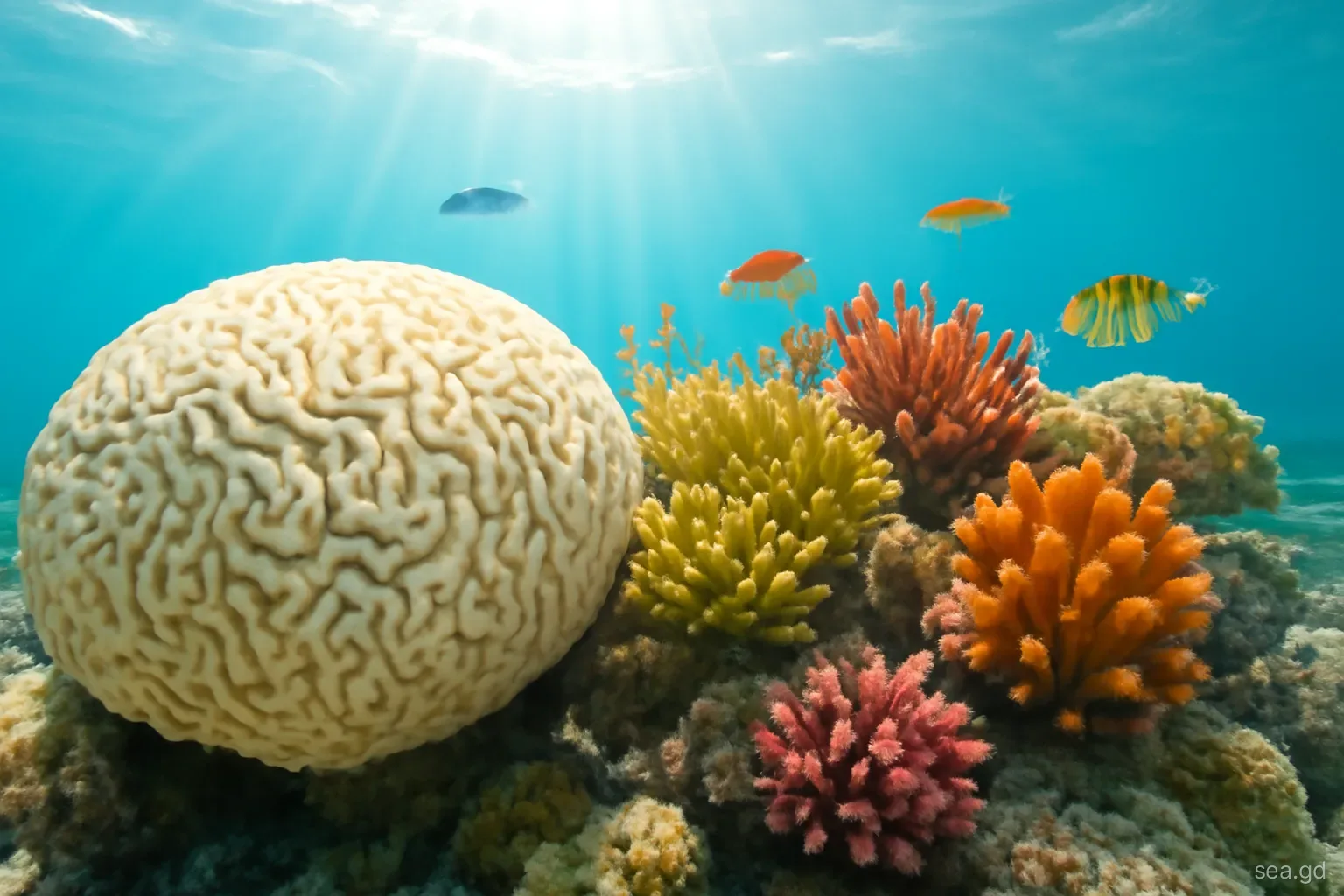
Divers who knew Grenada's reefs decades ago often describe them as having changed: less living coral, more algae, fewer large fish. That pattern is shared across the Caribbean, where average living coral cover has fallen sharply since the 1970s. Grenada's reefs still hold a great deal of life, from colourful sponges and sea fans to turtles, rays and schools of reef fish, but they are under pressure from several directions at once.
This article sets out the main threats as they apply to Grenada and Carriacou, explains how they interact, and describes what is being done, from marine protected areas to restoration and better management of the land. It aims to be honest without being hopeless, because reefs can recover when given the chance.
Warming seas and bleaching
What bleaching is. Corals depend on microscopic algae living in their tissues for much of their food and colour. When the water stays too warm for too long, the partnership breaks down, the algae are expelled and the coral turns pale or white. Bleached coral is not yet dead, but it is starving and vulnerable.
Repeated events. Caribbean reefs have experienced several major bleaching events, including severe ones in 2005 and in 2023, when record sea temperatures affected reefs across the region. In 2024, scientists declared a global bleaching event, the fourth on record.
Recovery time. If temperatures fall in time, corals can regain their algae and recover over weeks to months. Repeated events with little time between them leave less chance for recovery and lead to coral death.
What it looks like. Bleaching usually peaks late in the summer and early autumn, when the sea is warmest. Divers visiting at that time may see pale or white patches on otherwise healthy reefs.
Disease and the loss of key grazers
Coral disease has shaped Caribbean reefs for decades. White-band disease devastated elkhorn and staghorn corals from the late 1970s onwards. More recently, stony coral tissue loss disease, first identified off Florida in 2014, has spread through much of the Caribbean, killing many species of brain, star and pillar coral. Its spread around the eastern Caribbean has been tracked island by island, and dive operators and the Fisheries Division are the best sources for its current status in Grenadian waters.
Grazers matter too. Long-spined sea urchins once kept algae in check on Caribbean reefs until a mass die-off in 1983 removed most of them; their slow recovery suffered another setback when a new die-off swept through much of the eastern Caribbean in 2022. Parrotfish and surgeonfish also graze algae, and where they are heavily fished, seaweeds can smother coral and prevent young corals from settling.
Without grazers, a reef weakened by bleaching or disease can shift towards one dominated by algae, which is harder to reverse.
Hurricanes and storms
Grenada lies towards the southern edge of the main Atlantic hurricane belt, and for decades major storms were rare enough that many residents considered the island safe. Hurricane Ivan in September 2004 ended that belief, causing enormous damage on land and breaking and burying coral in shallow water. Hurricane Emily followed the next year. In July 2024, Hurricane Beryl struck Carriacou and Petite Martinique with devastating force, damaging reefs, seagrass and mangroves as well as homes and infrastructure.
Healthy reefs have always recovered from storms over time, as broken coral regrows and new colonies settle. The problem today is that storms combine with bleaching, disease and pollution, leaving less resilience. Sediment and debris washed off the land after storms can smother reefs for months.
Reefs also protect coastlines from storms, absorbing much of the energy of waves before they reach the shore. Damaged reefs offer less protection, which is one reason coastal communities and planners in Grenada pay increasing attention to reef health.
Pressures from the land and the sea surface
Many of the threats to Grenada's reefs start on land or arrive on the surface. The main ones are:
- Sediment runoff. Grenada's steep slopes, heavy rains and construction or farming on hillsides send soil into rivers and onto reefs, clouding the water and smothering coral.
- Nutrients and sewage. Inadequately treated wastewater and fertiliser runoff feed algae that compete with coral, particularly in bays with limited flushing.
- Sargassum. Since 2011, huge mats of floating sargassum seaweed have periodically reached the eastern Caribbean, piling up on Grenada's Atlantic coast. Rotting mats in shallow water reduce oxygen and light for seagrass and coral.
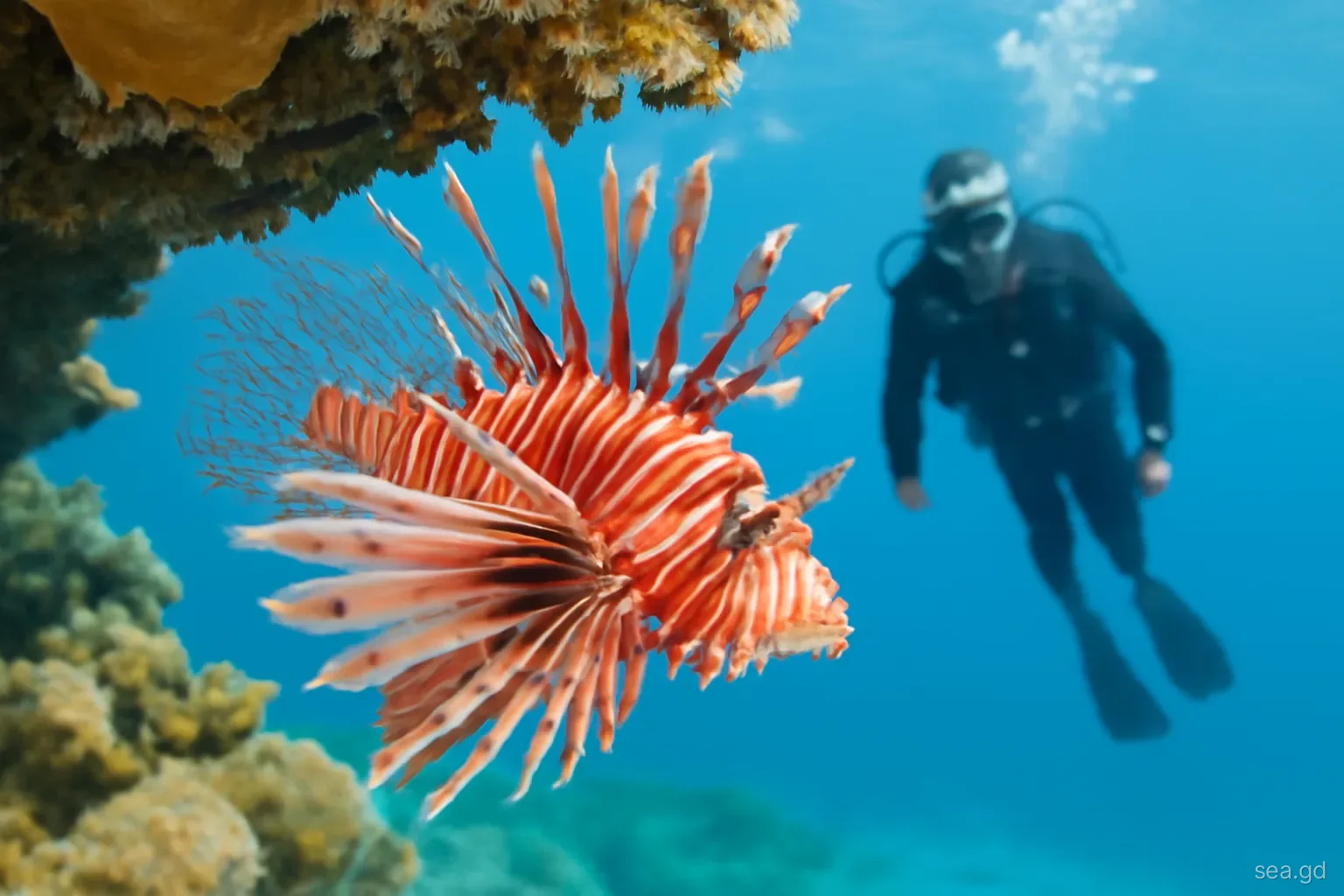
- Lionfish. This invasive predator from the Indo-Pacific, established in Grenadian waters since the early 2010s, eats large numbers of small reef fish, including grazers and the young of commercially important species.
- Physical damage. Anchors, groundings, careless divers and snorkellers break coral, particularly at busy sites.
- Plastic and litter. Debris snags on coral, entangles animals and carries pollutants.
Reading a reef's health on your own dive
Look at what covers the bottom. A healthy reef shows plenty of living coral in many shapes and colours, with some bare rock and sand. A reef in trouble is often carpeted by fuzzy turf algae or larger brown seaweeds that grow over dead coral.
Count the grazers. Parrotfish, surgeonfish and, where they have returned, long-spined sea urchins keep algae down. Plenty of grazers is a good sign.
Notice the young corals. Small coral colonies the size of a coin or a fist growing on hard surfaces show that new corals are settling, which is how reefs recover.
Watch for pale or white patches. Uniformly pale colonies late in the summer suggest heat stress; sharp white bands of bare skeleton next to living tissue suggest disease. Both are worth reporting to your guide.
Look for big fish. Groupers, snappers and larger predators are sensitive to fishing pressure. Seeing them, especially in protected zones, indicates that protection is working.
What is being done
Grenada's marine protected areas at Moliniere-Beausejour, Sandy Island Oyster Bed and Woburn Clarke's Court Bay restrict anchoring, fishing and collecting, provide moorings and fund rangers through user fees. Their aim is to give reefs and fish populations the best chance to recover. The Underwater Sculpture Park was created partly to draw divers and snorkellers away from fragile natural reefs, and the sculptures themselves have become encrusted with life.
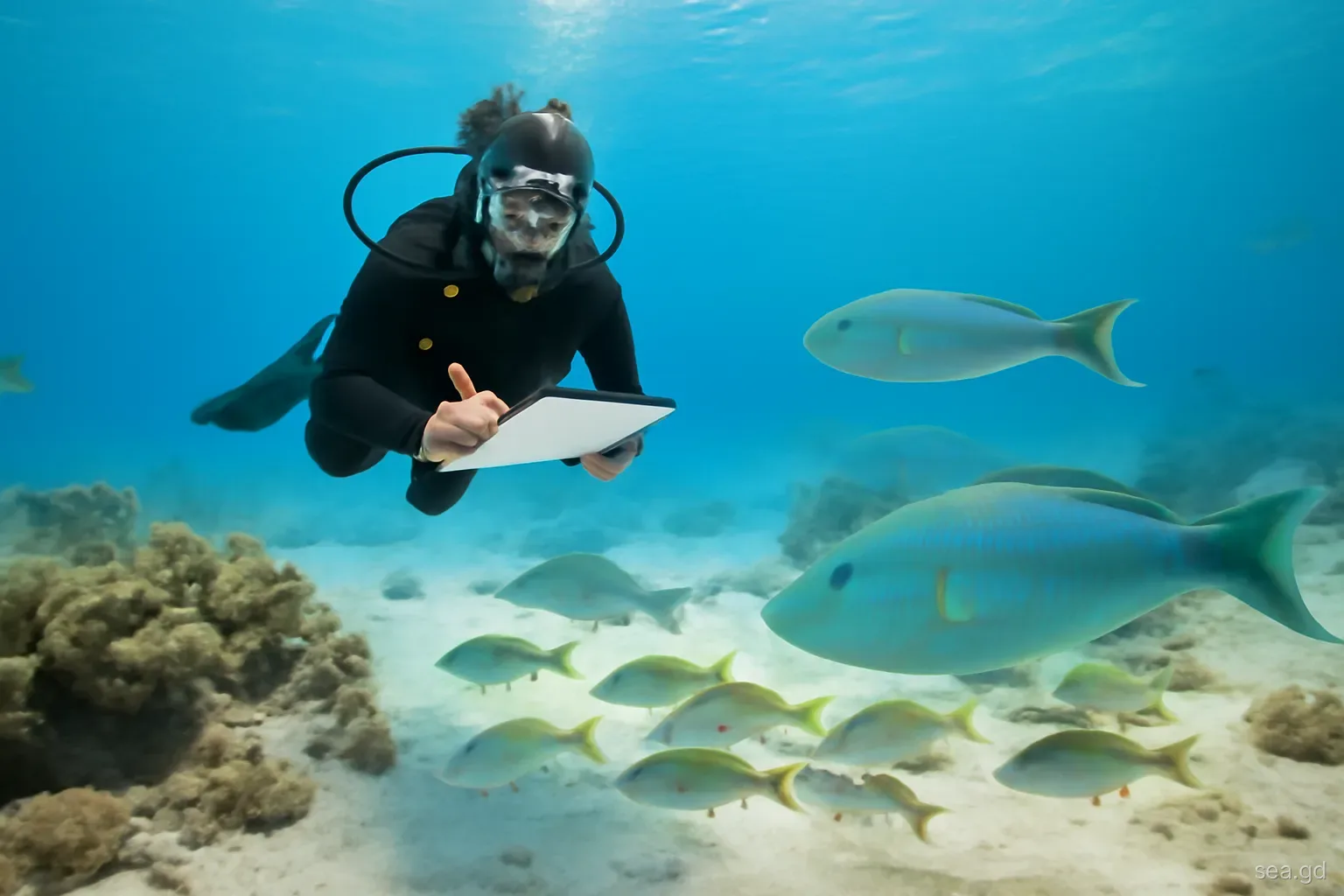
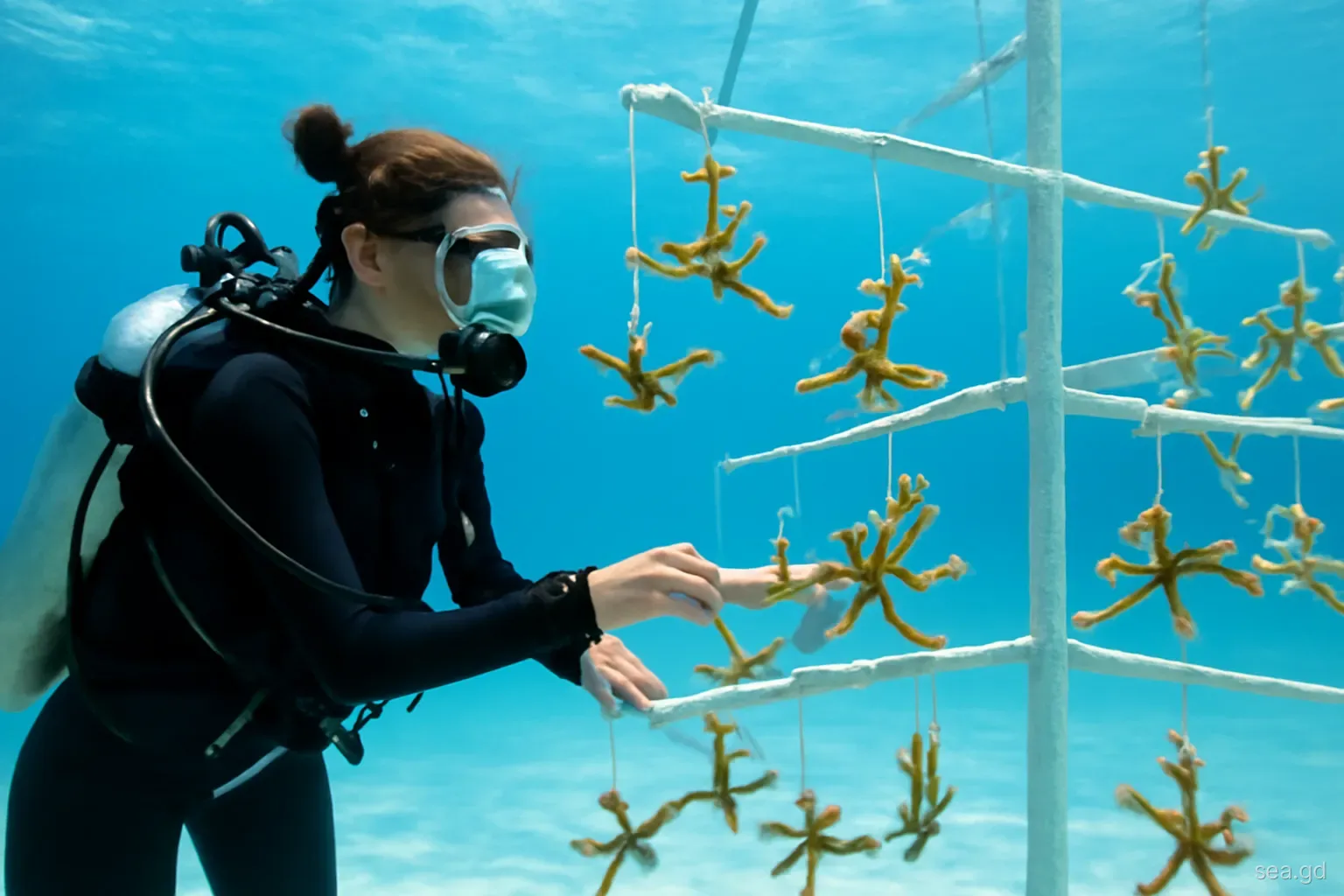
Restoration projects have grown coral in nurseries and transplanted it onto reefs, and monitoring by the Fisheries Division, St George's University researchers, conservation groups and trained volunteers tracks changes over time. Along the Atlantic coast, projects have explored the use of reef structures to reduce coastal erosion, including work in Grenville Bay involving The Nature Conservancy and local partners.
Measures on land matter as much as those at sea: controlling erosion on building sites, improving wastewater treatment, managing farm runoff and restricting single-use plastics. These are slower and less visible than restoration dives, but they address the root causes.
Signs of hope, and how visitors fit in
Despite the pressures, Grenada's reefs remain worth seeing and worth protecting. Some corals have survived repeated bleaching, suggesting a degree of tolerance that restoration programmes try to build on. Fish populations can rebound quickly in well-protected zones. Young corals settle on hard surfaces, including the sculptures and wrecks, wherever conditions allow.
Visitors influence reef health more than they may realise. Paying marine park fees, choosing operators who use moorings and brief guests on etiquette, covering up instead of using heavy sunscreen, eating lionfish rather than overfished species and supporting businesses that treat their wastewater all help. So does reporting what you see: unusual bleaching, disease or damage noticed by divers is valuable information.
The honest picture is of reefs under strain but not lost. Their future depends on decisions made in Grenada and far beyond it, from local planning rules to global emissions.
For those who want to follow developments, the marine protected area managers, the Fisheries Division and conservation organisations working in Grenada periodically share monitoring results and news of restoration and protection efforts. Dive centres that take part in monitoring are often happy to explain what they have seen change on their regular sites over the years.
Frequently asked questions
Are Grenada's coral reefs dying?
They are under serious pressure from warming seas, disease, storms and pollution, and living coral cover has declined, as across the Caribbean. They still support abundant marine life, and protection and restoration efforts aim to help them recover.
When does coral bleaching happen in Grenada?
Bleaching usually peaks in late summer and early autumn, when sea temperatures are highest. The severity varies greatly from year to year; 2023 brought one of the most severe events on record across the Caribbean.
Did Hurricane Beryl damage Carriacou's reefs?
Yes. Beryl's waves broke coral, moved sand and debris and damaged seagrass and mangroves around Carriacou and Petite Martinique in July 2024. Monitoring and restoration have followed. Local dive centres and rangers can describe current conditions at specific sites.
What is sargassum and does it harm reefs?
Sargassum is a floating seaweed that has arrived in large quantities in the Caribbean since 2011. Most of it accumulates on Grenada's Atlantic coast. Large rotting mats in shallow water reduce light and oxygen, harming seagrass and coral nearby.
How can visitors help Grenada's reefs?
Pay marine park fees, choose responsible operators, never touch or stand on coral, cover up instead of heavy sunscreen use, avoid single-use plastics and eat lionfish when it is offered. Reporting unusual bleaching or damage to operators or rangers also helps.