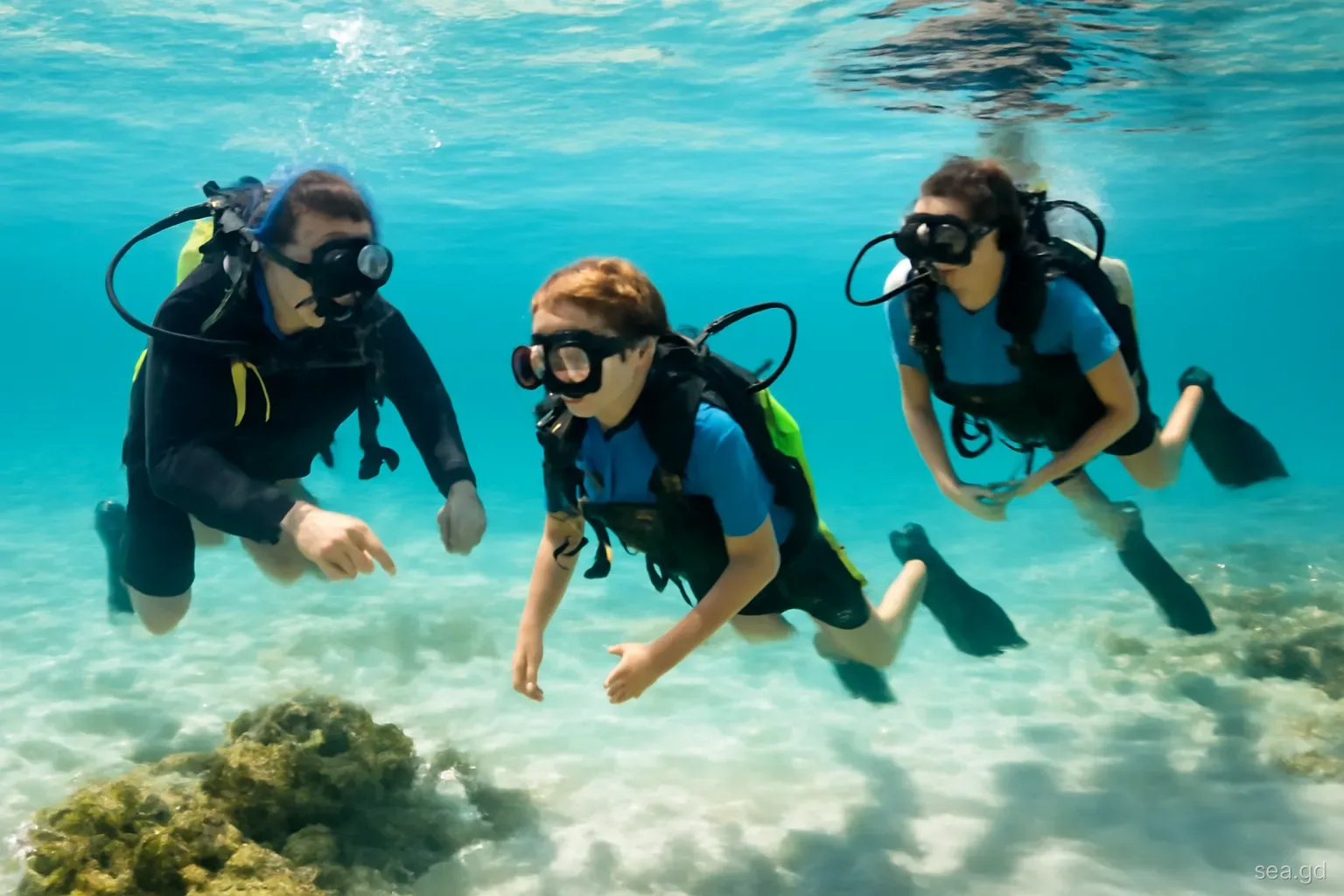
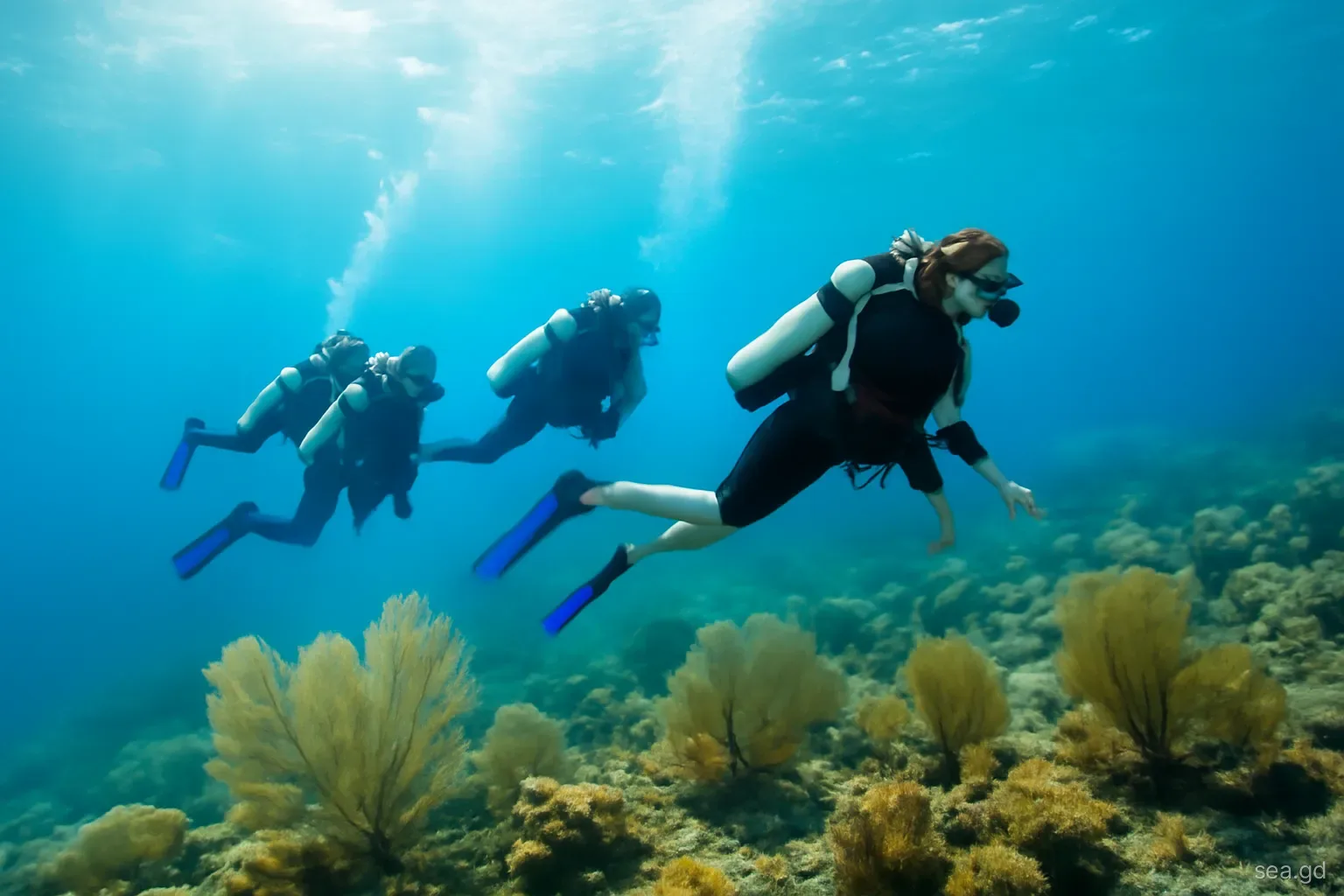
Current is part of diving in Grenada. On many sites, especially along the south-west coast, around the southern points, on the Atlantic side and off Carriacou's rocks and islets, the water is moving. Dive operators often plan around that movement, dropping divers up-current and letting them glide along the reef while the boat follows. Done well, drift diving is effortless and exhilarating; done badly, it leaves divers exhausted, separated or surfacing far from the boat.
This page explains why the currents run, how drift dives are organised, what equipment and skills you need, and the habits that keep a group together. It applies whether you are on a gentle drift along a west-coast reef or a stronger ride around Carriacou's exposed pinnacles.
Why the water moves around Grenada
Grenada sits in the path of a broad westward flow of ocean water that moves from the Atlantic into the Caribbean between the islands of the Lesser Antilles. Around the island's southern and western coasts, that flow is shaped by the coastline, headlands and the shape of the seabed, and modified by tides. Even though the tidal range is small, tidal flows can strengthen, weaken or occasionally reverse the current along the coast.
Headlands and points concentrate the flow. Divers often find the strongest current where the reef bends around a point or where water squeezes between an island and the mainland. Sheltered bays are calmer, which is why many training dives are done in the lee of headlands.
Conditions change through the day and from day to day. A site that was a gentle drift in the morning can be strong by afternoon, and a reef that ran north yesterday may run south today. Operators read the current at the site before deciding where to drop divers, sometimes by watching surface movement or a dropped line, and the plan can change at the last minute.
Where drift diving is common
The south-west reefs. Reefs along the coast between Grand Anse and the area beyond St George's, including sites within the Moliniere-Beausejour Marine Protected Area such as Flamingo Bay, are often dived as drifts along a sloping reef, usually at a relaxed pace.
Around the southern points. Sites near Point Salines and along the south coast can carry more current, and some are dived only on suitable days.
The Atlantic side. Open-ocean sites to the south-east, including wrecks such as the King Mitch and Hema 1, frequently involve strong current and are treated as advanced dives.
Carriacou's rocks and islets. Around Carriacou, exposed sites such as Sisters Rocks and the rocks and islets around the island are known for currents and are often dived as drifts, sometimes only near slack water. Carriacou was badly hit by Hurricane Beryl in July 2024; check which operators and sites are currently running.
How a drift dive is organised
The details vary by operator and site, but a typical drift dive follows these stages:
- Briefing: the guide explains the expected direction and strength of the current, the depth range, how long the dive will last, the signals to be used, and what to do if you are separated.
- Entry: divers enter together, often with a negative or quick descent, so the group stays together rather than spreading out on the surface.
- Descent: the group descends to the planned depth and settles into the current, keeping close to the guide and to buddies.
- Drift: divers move with the current along the reef, staying neutrally buoyant and avoiding contact with coral. The guide sets the pace and chooses the depth.
- Ascent: at the agreed time or gas pressure, the guide or each buddy pair deploys a delayed surface marker buoy, and the group ascends together, making a safety stop while drifting.
- Pick-up: the boat, which has followed the bubbles or buoys, approaches the divers once they surface. Divers stay together, inflate their BCDs and follow the crew's instructions for climbing aboard.
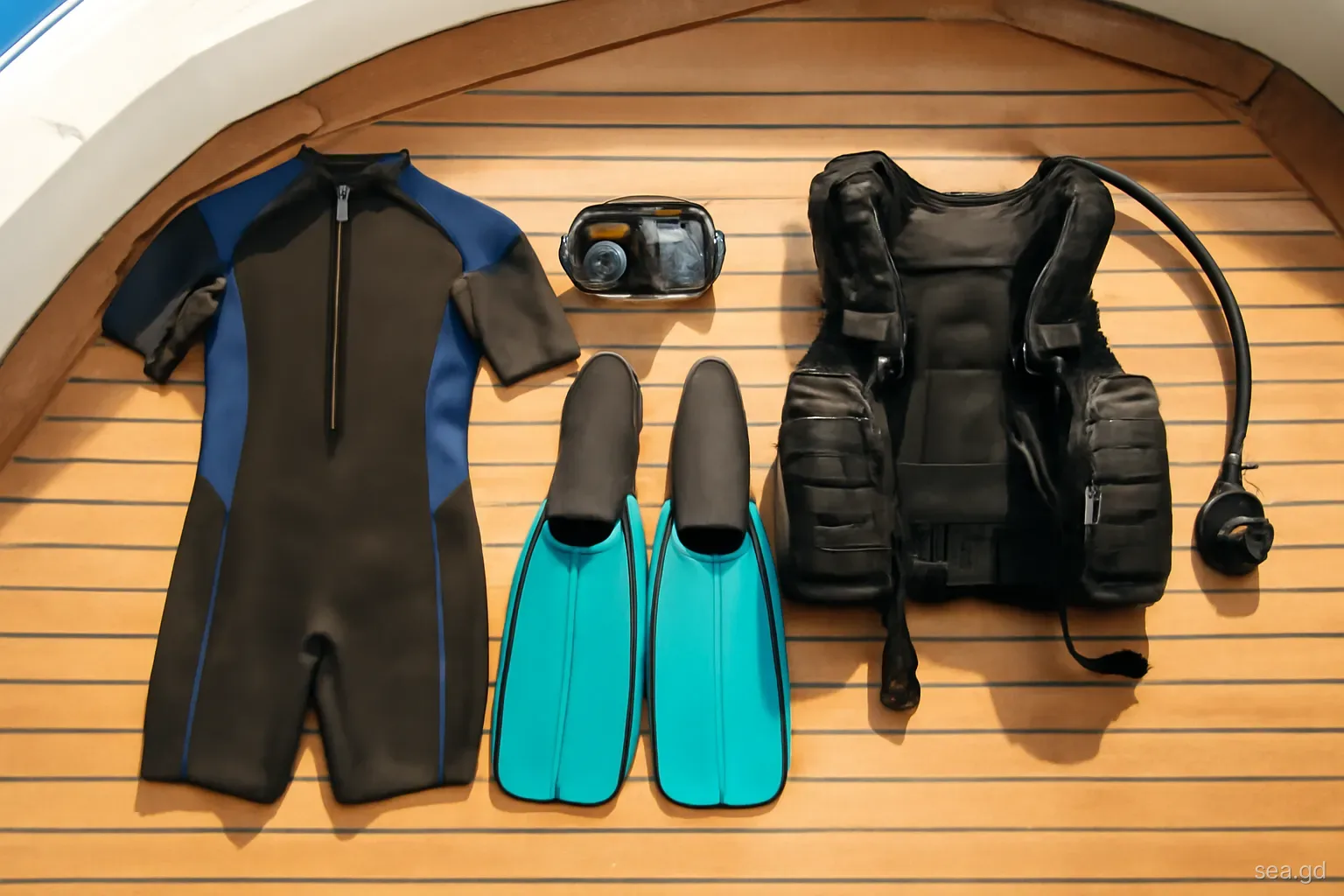
Equipment every drift diver should carry
Some operators provide signalling devices; others expect divers to bring their own. On any drift dive, the following are strongly recommended:
- A delayed surface marker buoy, ideally in a high-visibility colour, with a reel or spool long enough to deploy from your planned depth.
- An audible signal, such as a whistle on the BCD inflator or an air-powered horn, for attracting attention at the surface.
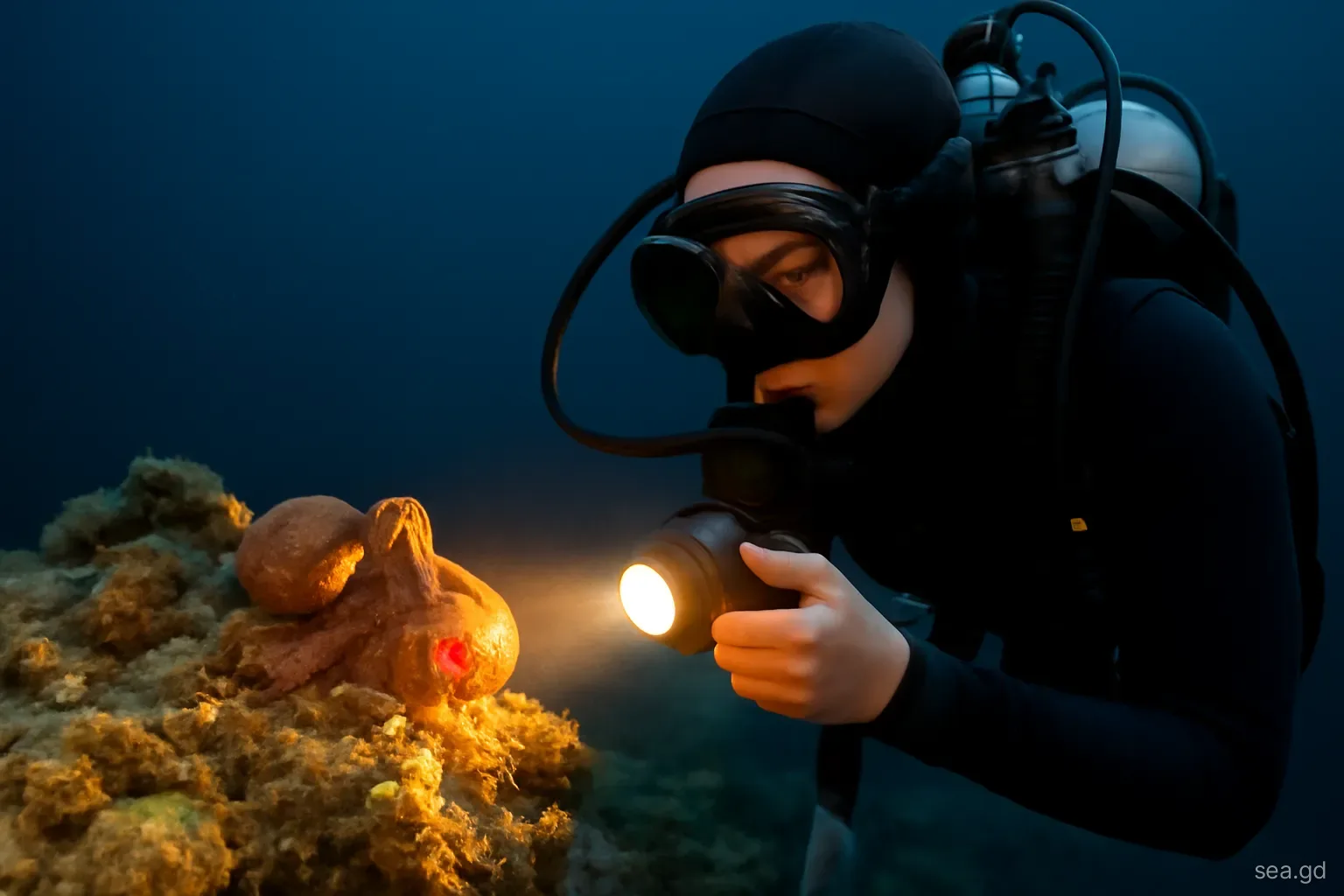
- A torch or small strobe if dives are late in the day or in low light, to make you visible to the boat.
- A dive computer you know how to read quickly, so you can monitor depth and no-stop time while concentrating on staying with the group.
- Properly fitted fins and well-tuned weighting, because a drift dive punishes poor trim.
- A reef hook only if the operator allows it and only for use on dead rock; in protected areas or on living reef, hooks may be prohibited.
Skills that make drifting easy
Good buoyancy is the foundation. In current, divers who are over-weighted tend to sink onto the reef and grab it, damaging coral and risking cuts and stings, while under-weighted divers struggle to stay down during the safety stop. A short refresher or buoyancy-focused dive before a trip with drifts pays off.
Streamlining reduces effort. Tuck hoses and gauges close to the body, keep your arms in, and adopt a horizontal position. In current, every dangling item increases drag and every vertical position increases effort.
Use the reef. Dropping slightly deeper or tucking into the lee of a coral formation can give a break from the strongest flow. Turning to face the current to hover in one spot is possible for a short time, but swimming against a strong current is rarely sustainable. If the group is stopping to look at something, find a spot behind a rock or structure rather than kicking to hold position.
Drift etiquette and protecting the reef
Drifting puts divers close to coral at speed, and contact is easy. A fin kick on a slope breaks branching coral, a hand grabbed onto a sea fan tears it, and a dangling gauge or octopus regulator drags across living tissue. Coral damaged this way recovers slowly, if at all, and reefs around Grenada are already under pressure from warming water, disease and storms.
Keep a little more height above the reef than you would on a still-water dive, so that a sudden change in current does not push you onto it. If you need to stop, choose bare rock or sand, or simply ascend a metre and let the reef pass below.
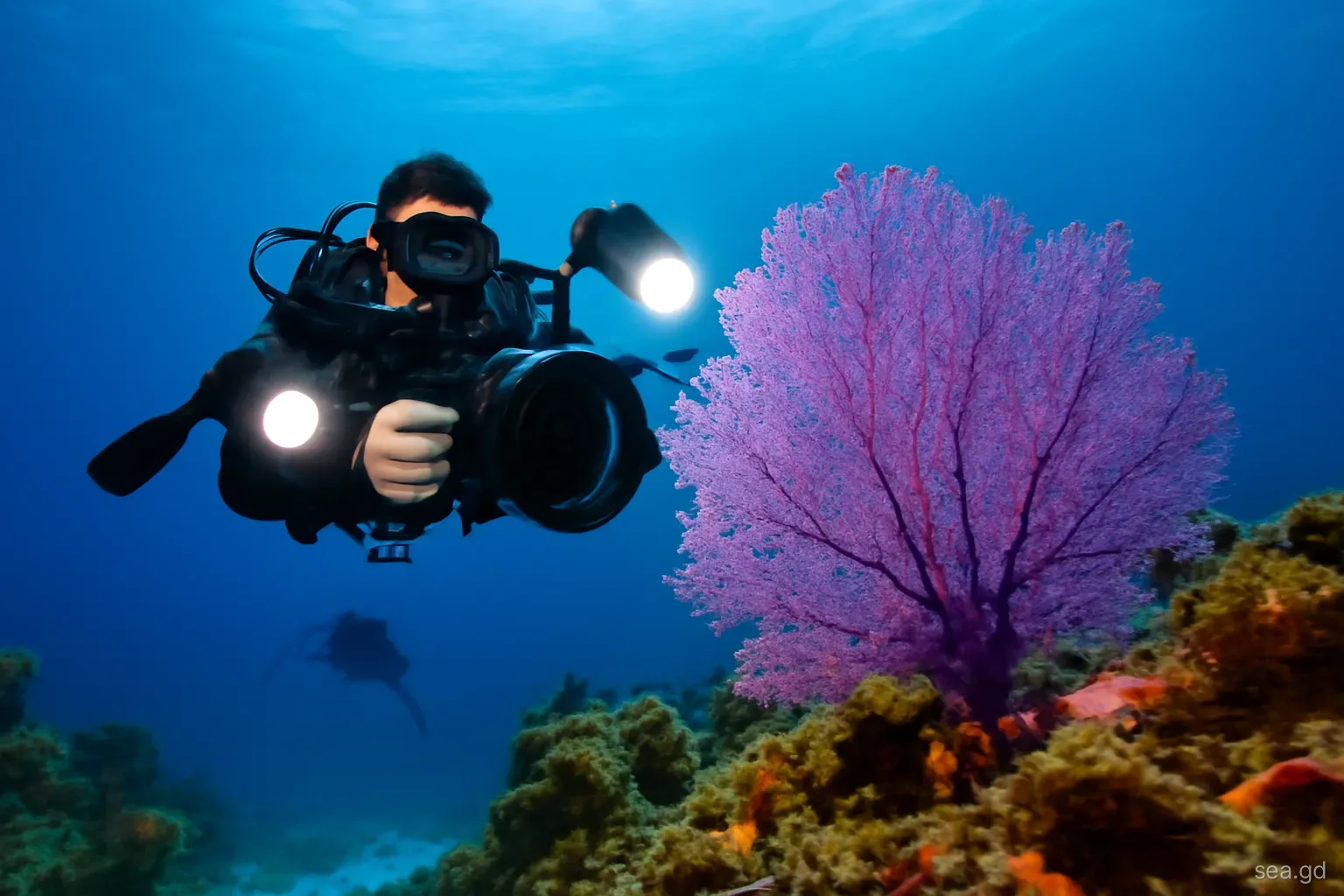
Within the group, keep to your place and do not overtake the guide; the guide chooses the line to avoid shallow coral heads and to keep everyone within reach of the boat. Photographers should accept that a drift is not the dive for lingering over a subject. If you want time with macro life, ask for a calmer site on another dive.
Mistakes and what to do if separated
The most common drift-diving mistakes are predictable. Divers lose sight of the guide while looking at something interesting, descend slowly and lose the group, or drift upwards gradually without noticing until they are well above the planned depth. Others forget to check gas pressure in the excitement and run low earlier than expected.
If you lose the group, the standard procedure is to search briefly, usually for about a minute, then ascend slowly while deploying your marker buoy and making a safety stop. At the surface, inflate your BCD, stay with your buddy, use your audible signal and wait for the boat. Do not try to swim against the current to return to where you started; the boat will follow the current, not fight it.
Finally, be honest about your experience. If you have never done a drift dive, tell the operator so they can start you on a gentle site. Most drift-diving incidents involve divers who were unprepared for the conditions.
Frequently asked questions
Is drift diving in Grenada difficult?
Many drift dives in Grenada are gentle and suitable for divers with good basic skills, especially on the south-west reefs. Stronger drifts on the Atlantic side, around the southern points and off Carriacou demand more experience. Tell your operator your level so they can choose suitable sites.
Do you need a surface marker buoy for diving in Grenada?
For drift dives a delayed surface marker buoy is strongly recommended and some operators expect each buddy pair to carry one. It allows the boat to track you during the ascent and find you at the surface. Practise deploying it before relying on it in current.
What should you do if you are swept away from your dive group?
Search briefly, then ascend slowly with your buddy, deploy your surface marker buoy and complete a safety stop. At the surface, inflate your BCD, use a whistle or horn and wait for the boat, which will follow the current. Avoid exhausting yourself by swimming against it.
Can you use a reef hook in Grenada?
Reef hooks may be allowed on some exposed sites, but only on dead rock and only where the operator and local rules permit. In marine protected areas and on living coral, hooks can be prohibited. Ask your guide before using one, and never hook onto live coral.
Why does the current change direction on Grenada dive sites?
The background westward ocean flow interacts with tides, headlands and the seabed, so the current along a site can strengthen, weaken or reverse. Operators check conditions on the day and may change the plan or the entry point at short notice.