An anchor and chain dropped on a reef can destroy in seconds coral colonies that took decades or centuries to grow, and a chain swinging across a seagrass bed scours a bare circle that may take years to fill in. Around Grenada and Carriacou, that is why the marine protected areas provide mooring buoys and prohibit anchoring on coral and seagrass, and why rangers check what boats are doing.
This guide is for skippers, whether you are on a charter yacht for a week or a long-term cruiser. It covers how to pick up and secure a mooring correctly, where anchoring is restricted, how to read the bottom before dropping a hook elsewhere and the mistakes that most often damage reefs or lead to a conversation with a ranger.
Where moorings and anchoring restrictions apply
The main concentrations of reef moorings are in the Sandy Island Oyster Bed MPA in Carriacou, particularly around Sandy Island and off L'Esterre and Paradise Beach, and in the Moliniere-Beausejour MPA on the main island's west coast. In both, anchoring on coral and seagrass is prohibited, and visiting yachts are expected to use the moorings and pay the user fee to rangers. On the south coast, the Woburn Clarke's Court Bay MPA covers bays where many yachts anchor, so care about where the anchor goes is especially important there.
Outside the MPAs, Grenada's popular anchorages such as Prickly Bay, Mount Hartman Bay, Hog Island and Tyrrel Bay have mainly sand or mud bottoms, but patches of seagrass and scattered coral occur in many of them. The general rule throughout Grenadian waters is that anchoring on coral is damaging and should be avoided, whether or not a sign or ranger is present.
Some moorings, particularly on the west coast, are intended for day use by dive and snorkel boats. Overnight use, if allowed, may be limited to certain buoys. Ask the rangers or check current cruising guides before assuming a buoy is available.
Reef moorings are typically fixed to the seabed with heavy blocks or pins drilled into rock, with a rope or chain riser to the surface buoy. Each is designed for a certain size and weight of boat, and the system depends on users not overloading it. Where moorings are missing or full, the alternative is to anchor further out in clear sand, not to edge closer to the reef.
Picking up a reef mooring correctly
A mooring is only as safe as the way you attach to it. The technique below suits most monohulls and catamarans; adapt it to your boat and conditions.
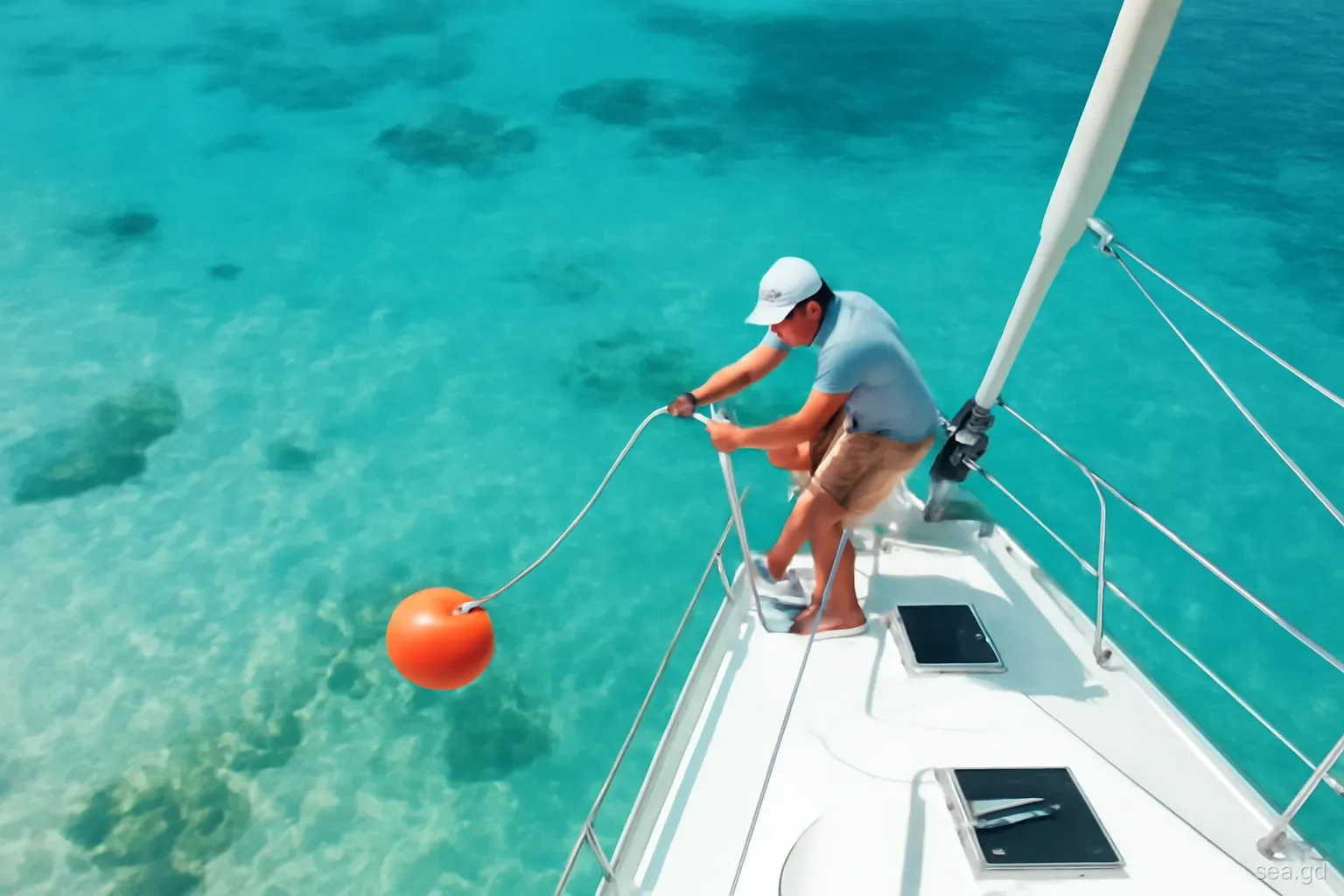
- Approach slowly into the wind or current, whichever is stronger, with a crew member on the bow holding a boat hook and a prepared line.
- Check the buoy and its pennant (the line or loop attached to it) for obvious wear before relying on it. If it looks frayed or the buoy is damaged, move on and report it to the rangers.
- Pass your own line through the pennant eye and bring both ends back to the same side of your boat, or rig a bridle with one line to each bow cleat on a catamaran.
- Never tie the mooring pennant directly to a cleat in a way that makes it chafe on your bow roller or hull, and never use your anchor chain to attach to a mooring.
- Allow enough scope in your lines that the buoy is not pulled under or snatching as the boat moves, but not so much that you swing into neighbouring boats.
- Check your lines for chafe regularly, especially if wind or swell picks up.
- When leaving, release the line from the boat so it runs freely through the pennant; do not drive over the buoy or let lines tangle in your propeller.
Reading the bottom before you anchor elsewhere
Colour is the first clue. In clear water, pale turquoise usually means sand, dark green or brown patches mean seagrass or algae, and darker, mottled patches are coral or rock. Good light, ideally with the sun high and behind you, makes the difference obvious; polarised sunglasses help.
Look before the anchor goes down. A crew member at the bow can guide the helm to a clear sand patch. In deeper or murkier water, a look with a mask and snorkel from the dinghy is the surest method.
Think about the swing circle. The anchor may land in sand, but if the chain sweeps across coral or seagrass as the boat swings, it still causes damage. Allow for wind shifts and choose a spot with sand all round.
Dive the anchor once set. Snorkelling over your anchor confirms it is dug into sand and not hooked on coral, and it is the best check on holding too.
Mind the depth and the chain. Using more chain than needed in a crowded anchorage increases the area of seabed it disturbs. Use appropriate scope for the conditions, and consider a snubber to reduce chain movement.
Rangers, fees and the paperwork side
In the marine protected areas, rangers usually approach visiting yachts by boat to collect the user fee and explain the rules. The fee is charged per boat and per period, and the amounts are revised from time to time, so expect to pay in cash and confirm the current rate. Ask for a receipt: it shows other rangers you have paid and helps the MPA track income.
The fee is separate from customs and immigration clearance, cruising permits and port charges, which every visiting yacht must deal with on arrival in Grenada. Clearing in happens at an official port of entry, such as St George's, Prickly Bay, Port Louis or Hillsborough in Carriacou. The MPA fee is a local conservation charge, not part of clearance.
Rangers are also a good source of local knowledge about which moorings are in good condition, where turtles are feeding, how the reef is recovering from storm damage and any temporary restrictions. A friendly conversation usually goes further than a hurried handover of cash.
Mistakes that damage reefs or cause trouble
Most reef damage from yachts is accidental, caused by haste, unfamiliarity or overconfidence. These are the errors seen most often.
- Dropping anchor on the reef edge to reach a snorkel site faster, rather than using a mooring or anchoring in sand further off.
- Rafting several boats on one mooring, overloading a buoy designed for a single vessel.
- Using a mooring meant for a smaller boat, which can drag the mooring block and damage the bottom.
- Leaving the dinghy anchor on coral while snorkelling. Use dinghy moorings or tie off to the yacht and swim.
- Running the generator or engine with exhaust over shallow reef for long periods, or discharging grey water near swimmers and coral.
- Ignoring wake when passing snorkellers and divers, who may be hard to see at the surface.
- Assuming the absence of a ranger means the rules do not apply; the reef is damaged either way.
Dinghies, tenders and shore landings
Much reef damage around popular anchorages comes not from yachts but from their dinghies. A small grapnel anchor dropped casually on a reef to snorkel, or a tender dragged up over coral to reach a beach, does real harm. Where dinghy moorings or tie-up lines are provided, use them. Where they are not, anchor the dinghy in sand well away from coral, or leave it with the yacht and swim.
Landing on beaches such as Sandy Island needs care too. Approach slowly over sand, lift the outboard early, and look out for swimmers in the water near the shore. Do not run the engine through shallow seagrass, where propellers churn up the bottom and can injure turtles feeding there. Turtles surface to breathe and are hard to see; slow speeds in shallow bays protect them.
Finally, keep rubbish aboard until you reach proper disposal ashore. Small islands such as Sandy Island have no bins, and anything left on the beach blows into the sea. Carry a bag for your own waste and, if there is room, for any plastic you find on the shore.
Frequently asked questions
Can you anchor at Sandy Island in Carriacou?
Anchoring on coral and seagrass is prohibited within the Sandy Island Oyster Bed Marine Protected Area, and yachts are expected to use the moorings provided and pay the user fee to rangers. Check current arrangements locally, as moorings may have been affected by Hurricane Beryl.
How do you attach to a mooring buoy safely?
Pass your own line through the mooring pennant and bring both ends back to the boat, or use a bridle to both bows on a catamaran. Never use your anchor chain, and check regularly for chafe, especially if wind or swell increases.
Are there mooring fees in Grenada's marine parks?
Yes. Yachts in the marine protected areas pay a user fee, usually collected in cash by rangers. It is separate from customs clearance and port charges. Rates are revised periodically, so confirm the current amount and ask for a receipt.
Is anchoring on seagrass harmful?
Yes. Anchors and swinging chains tear up seagrass, leaving bare patches that take years to recover. Seagrass beds feed turtles and shelter young fish, so anchor in clear sand wherever possible.
Where are the main reef moorings in Grenada?
The main concentrations are in the Sandy Island Oyster Bed MPA in Carriacou and the Moliniere-Beausejour MPA on the main island's west coast. Some are intended for day use by dive and snorkel boats, so ask rangers before staying overnight.
What should a skipper do if a mooring looks damaged?
Do not use it. Move on to another buoy or a sand anchorage, and tell the rangers or the MPA office which buoy is damaged so it can be inspected and repaired before someone relies on it.