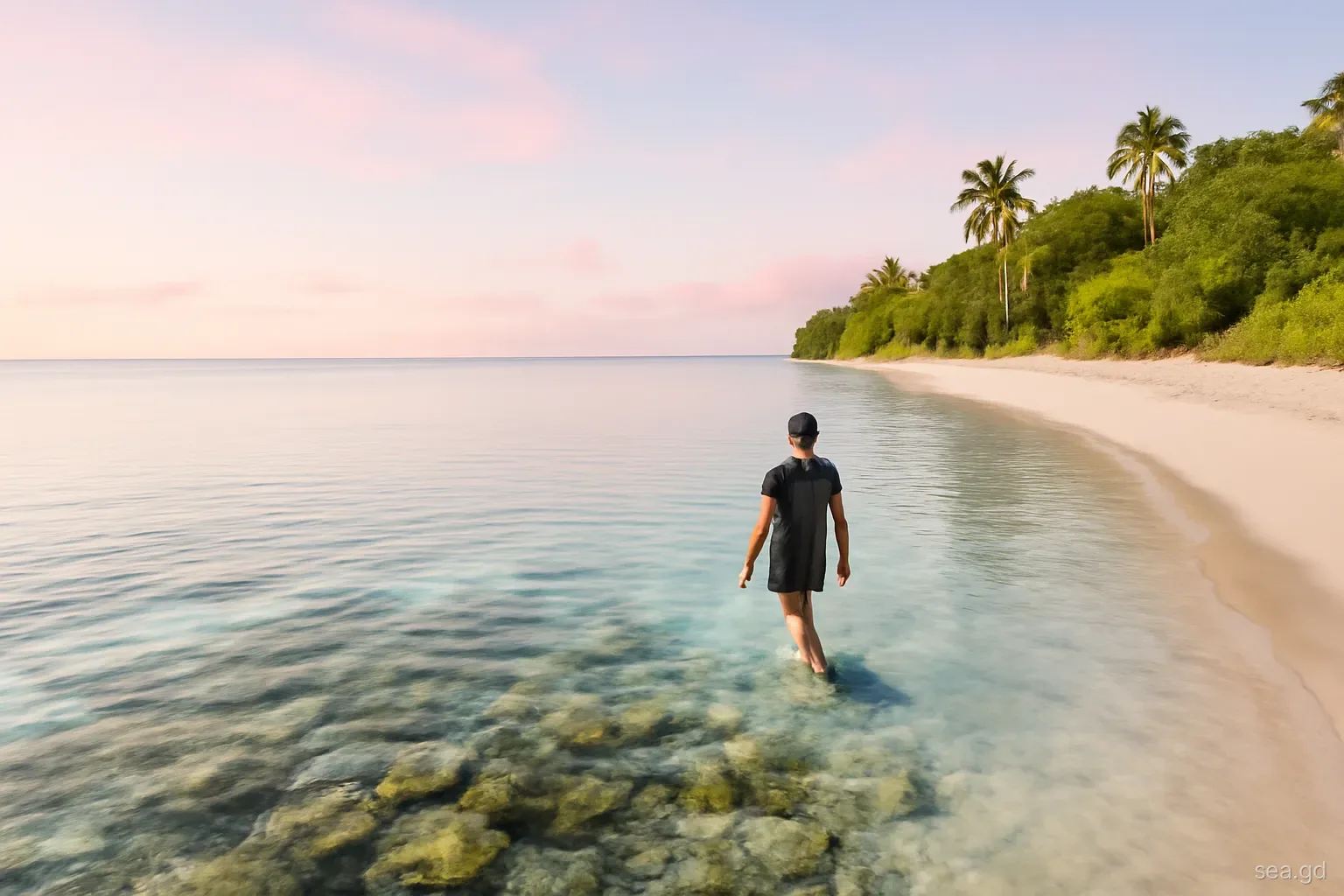
Two snorkellers can visit the same Grenada bay a week apart and come away with completely different impressions. One floats over sharp, sunlit coral in water that seems to stretch forever; the other sees a green haze and a few shapes at arm's length. The reef has not changed. What changed was rain, wind, swell or plankton, and most of those can be anticipated.
Grenada has no bad month for snorkelling in the sense that colder destinations do, and the leeward coast is workable most of the year. But visibility and comfort vary with the seasons and, even more, with the last few days of weather. This page explains what drives conditions, how they typically shift through the year, and how to choose the right day and hour once you are on the island.
The five things that decide a snorkelling day
Rain and runoff. Grenada is mountainous and green, and heavy rain sends rivers and roadside drains full of silt and organic matter into the sea. Inshore water near river mouths, St George's harbour and enclosed bays can stay murky for a day or more after a downpour. This is the single biggest cause of poor visibility close to shore.
Wind direction and strength. The prevailing north-east to east trade winds keep the west and south-west coasts sheltered. When the trades blow hard, chop builds at exposed points and spills around headlands; when the wind swings south-east, the south-facing bays from Prickly Bay to Clarkes Court take more wave action.
Swell. Long-period swell from distant storms travels hundreds of kilometres and arrives on a calm, sunny day. Winter northerly swell is the main concern for the west coast, where it surges against rocks and stirs up sand even when the local wind is light.
Plankton and the Orinoco plume. At times, particularly in the rainy season, water carried north from South America's great rivers reaches the waters around Grenada with a greenish tint and reduced clarity. Plankton blooms have a similar effect. Neither is dangerous, but both soften the view.
Sun angle and time of day. Underwater colour depends on light. From mid-morning to early afternoon the sun is high enough to penetrate well; early and late in the day the reef looks dimmer and bluer, even when the water is clear.
How conditions usually shift through the year
January to May, the dry season. Less rain means less runoff, so this is generally the period of most consistent visibility close to shore. The trade winds blow steadily and are often strongest from December into the early months of the year, a period locally associated with the "Christmas winds". The leeward coast stays sheltered, but boat rides to Carriacou's islets or around exposed points can be bumpy. Water temperature is at its coolest, typically in the mid-twenties Celsius, which still feels warm to most visitors.
June to November, the rainy season. Rain usually comes in heavy showers rather than all-day downpours, and there are many clear, calm days. Winds are often lighter, which can make the sea glassy and very pleasant in the mornings. The trade-off is more frequent runoff after storms and a greater chance of plankton-tinted water. Sea temperatures climb toward the high twenties and sometimes above thirty degrees, the conditions in which corals are most at risk of bleaching. This is also hurricane season; Grenada lies toward the southern edge of the main hurricane belt but has been struck, most recently by Beryl in 2024, so watch forecasts.
Winter swell season. Roughly from November to March, North Atlantic storms can send swell into the Caribbean. Swell events last a day or several days, and their timing is unpredictable from one year to the next, but marine forecasts usually flag them in advance.
Sargassum and the east coast
Since around 2011, large mats of floating sargassum seaweed have arrived periodically on Atlantic-facing Caribbean coasts. In Grenada the windward east coast takes the brunt, with heavier arrivals in some years than others and a tendency to peak in the warmer months. Beaches such as Bathway, Levera and the bays around Grenville can see thick deposits, and decomposing piles on the shore release a strong sulphur smell.
For snorkellers, sargassum matters in two ways. Floating mats block light and make entries unpleasant, and rotting weed in the shallows reduces water quality. The west and south-west coasts, where most snorkelling happens, are sheltered from most arrivals because the prevailing winds and currents push the weed onto the windward side. If a seaweed season is in full swing, plan snorkels on the leeward coast and treat the east coast as a scenery drive rather than a swim.
Floating sargassum offshore is not all bad: young fish, crabs and other small creatures shelter beneath the mats, and anglers often troll along weed lines. Close to shore, though, it is a nuisance to avoid.
Carriacou's windward side can also receive weed in heavy years, while its leeward reefs around Sandy Island and White Island are usually less affected. Because arrivals vary so much from year to year, the most reliable information comes from recent local reports rather than from photographs or reviews written in a previous season. Boat crews and guest house owners will generally say plainly whether the weed is in.
Choosing the day and hour once you are on the island
Long-range seasonal patterns help with trip planning, but the decision that matters is made the day before or that morning. A simple routine works well:
- Think back over the last 48 hours. If there has been heavy rain, skip spots near river mouths and St George's and favour rocky points away from drains.
- Check a marine forecast for wind and swell. Light winds and a small, short swell are ideal; any mention of northerly or north-westerly swell means the west coast rocks may be rough.
- Look at the sea from a high point if you can. Whitecaps at the points or lines of breaking waves on a normally calm beach tell you more than any forecast.
- Plan the snorkel for mid-morning, after the sun has climbed but before afternoon breezes build and tour boats crowd the most popular bays.
- Have a fallback. If one bay is murky or surging, a sheltered sandy beach a few minutes away may still be pleasant for a gentler swim. On the south-west coast, Grand Anse, Morne Rouge and Magazine Beach are close enough to compare in a single morning.
- Ask locally. Dive centre staff and boat crews are on the water every day and usually know exactly which bays are clear.
Common misreadings of Grenada's sea
The first misreading is assuming a sunny sky means good snorkelling. A bright, still morning after a night of heavy rain in the hills often brings the cloudiest water of the week, because the runoff has only just reached the coast. Conversely, an overcast day after a dry spell can have excellent clarity, even if colours look muted.
The second is treating the leeward coast as permanently calm. Most of the time it is, which makes the exceptions dangerous: visitors used to flat water at Morne Rouge or Grand Anse can be caught out by surge around rocks on a swell day. If waves are breaking where they normally do not, choose sand over rocks.
The third is relying on monthly averages. A dry-season week can bring a tropical wave and three days of rain; a wet-season week can be dry and glassy throughout. Seasonal patterns describe tendencies, and the sea on the day is what counts. Allowing two or three possible snorkel days in an itinerary, rather than pinning everything to one boat trip, is the simplest protection against an unlucky forecast.
Frequently asked questions
What is the best month to snorkel in Grenada?
There is no single best month. The dry season from roughly January to May usually brings the most consistent visibility because there is less rain and runoff, while the calmer winds of some summer months can produce glassy mornings. Recent weather matters more than the calendar, so build some flexibility into your plans.
How warm is the sea in Grenada?
Sea temperatures typically range from around 26°C in the coolest months, about February and March, to around 29°C or a little higher in late summer and early autumn. Most snorkellers are comfortable with just a swimsuit or rash guard, though long sessions on breezy days can feel cool.
Does rain ruin snorkelling in Grenada?
Heavy rain reduces visibility near shore, especially close to river mouths, drains and harbours, sometimes for a day or more. Short showers have little effect. After a downpour, choose rocky points away from runoff, go a bit farther from shore on a boat trip, or wait a day for the water to clear.
Is sargassum a problem for snorkelling in Grenada?
Sargassum mainly affects the windward east coast, and in heavy years it can make those beaches unpleasant for swimming. The leeward west and south-west coasts, where most snorkelling takes place, are generally sheltered from it. If seaweed is a concern, plan to snorkel on the Caribbean side.
Can you snorkel in Grenada during hurricane season?
Yes. Most days between June and November are perfectly suitable, and many are calm and clear. The risk lies in tropical storms and hurricanes, which are forecast days in advance. Keep an eye on official forecasts, take local advice seriously and stay out of the sea when a storm or its swell is approaching.