Most snorkellers come back from a Grenadian reef able to name half a dozen fish and none of the things the fish were swimming around. Yet the corals, sea fans and sponges are the reef: they build the structure, provide the shelter and set the character of each site. Learning to read them turns a swim over 'some rocks and plants' into a much richer view, and it also tells you what is safe to be near and what stings.
The basic division is simple. Hard corals build limestone skeletons and form the reef framework. Soft corals bend and sway. Sponges are filter-feeding animals with no coral skeleton at all. Within each group a handful of common types cover most of what you will see off Grenada's south and west coasts and around Carriacou.
Hard corals: the reef builders
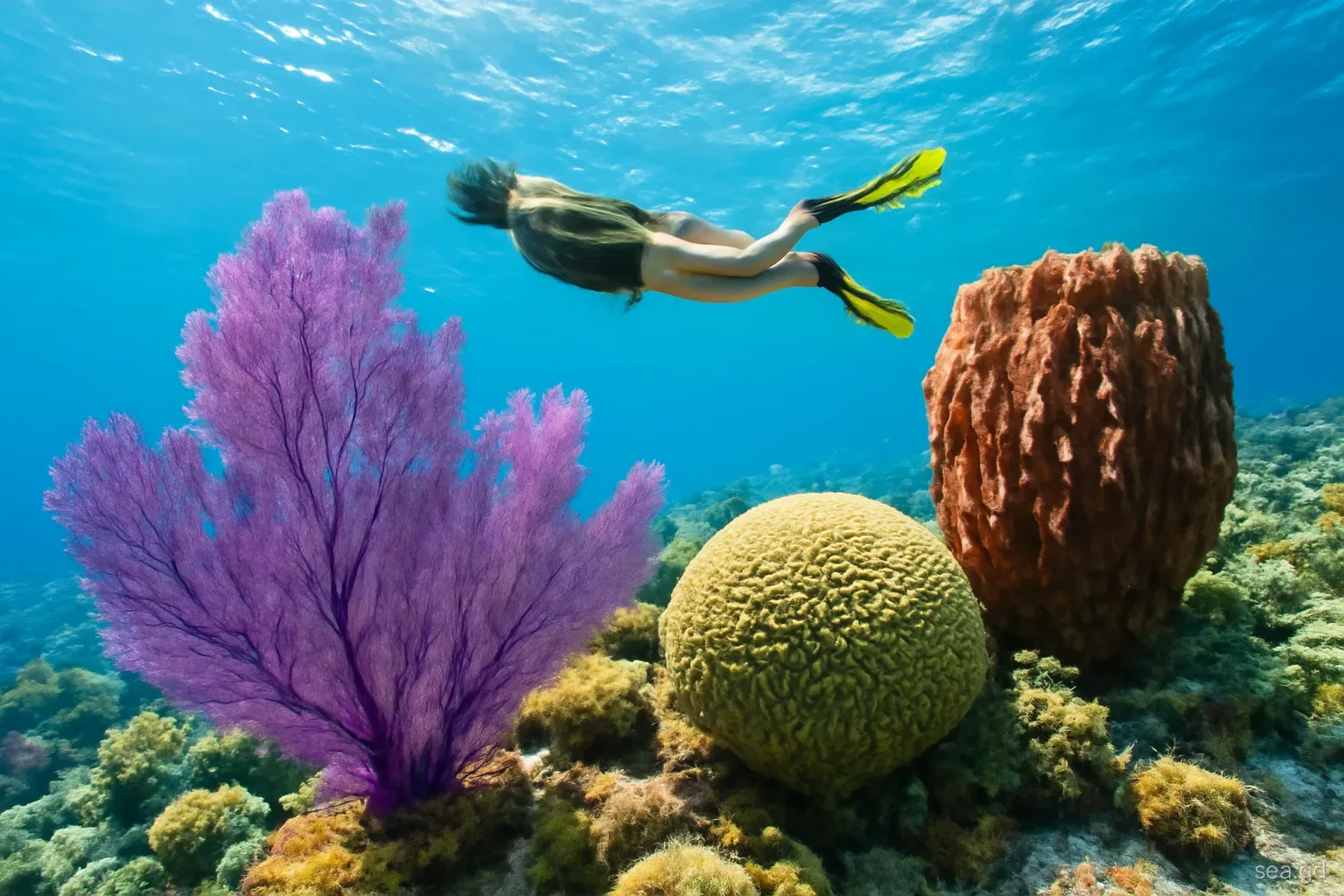
Brain corals. Rounded domes covered in winding grooves and ridges that look exactly like a brain. Symmetrical brain coral has a neat, even pattern; grooved and boulder brain corals vary in ridge width and colour. Big brain corals can be centuries old and are some of the most robust colonies on Grenadian reefs.
Star corals. Boulder and mound shapes covered in small star-shaped cups, each housing a polyp. The great star coral has large, distinct cups; the boulder and mountainous star corals form massive heads or lobes and were for a long time the dominant builders on many Caribbean reefs. In deeper or shaded water some grow as flattened plates to catch more light.
Finger and mustard hill corals. Finger coral grows in clumps of thick, blunt branches like stubby fingers, often in shallow lagoons; mustard hill coral forms yellow-brown lumpy mounds. Both are common in the shallow water where most snorkelling happens.
Leaf and lettuce corals. Thin, wavy plates with ridges, growing in tiers or rosettes, usually brown or tan. They are typical of slopes and shaded areas.
Elkhorn and staghorn. Branching corals with broad antler-like or narrow stick-like branches. They once formed dense thickets on shallow Caribbean reefs, but disease from the late 1970s onwards wiped out the vast majority across the region. Surviving and restored colonies are now treasured; never stand on or touch them.
Pillar coral. Upright columns rising from the bottom, fuzzy with polyps extended even by day. It has always been uncommon and has suffered badly from disease in recent years, so any healthy colony is a significant find.
Fire coral: the one that bites back
Fire coral is the most important thing on the reef to recognise, because it is what most often hurts snorkellers. Despite its name it is not a true coral but a hydrozoan, related to jellyfish, which builds a hard skeleton. It is mustard-yellow to brown with paler, whitish tips, and grows as upright blades, branching fingers or as a smooth crust overgrowing other things, including sea fans, rocks, mooring blocks and wrecks.
Its surface is covered in tiny stinging cells. Brushing against it leaves a burning, itching welt that can last for days. It grows in shallow, sunlit water exactly where people stand up to fix a mask or where waves push a swimmer onto the reef, which is why so many stings happen in the first few metres from a boat or beach.
The fix is buoyancy and awareness. Do not stand on the reef, do not hold on to rocks to steady yourself without looking, and wear a rash vest and, where you are diving rather than snorkelling, a thin full-length suit. If you are stung, rinse with sea water rather than fresh water, avoid rubbing, and seek advice if the reaction is severe or spreads.
Soft corals: sea fans, sea rods and plumes
Grenada's reefs carry a rich population of octocorals, the flexible relatives of hard corals that give many sites their swaying, forest-like look. Each polyp has eight feathery tentacles, which is where the name comes from. These are the types you will see most:
- Sea fans: flat, lacy fans that grow at right angles to the prevailing current so the water flows through them. The common sea fan is purple to lavender; others are yellow or brown. Watch for flamingo tongue snails, small cream-and-orange shells grazing on them.
- Sea rods: stiff, branching stems like small bushes, covered in polyps that make them look furry when feeding. Trumpetfish hide among them.
- Sea plumes: feathery, tall branches that sway in surge and can reach well over a metre.
- Sea whips: long, unbranched or sparsely branched strands.
- Encrusting gorgonians: soft coral growing as a flat purple or brown crust over rock, easy to overlook.
- Black coral: found deeper, usually below recreational snorkelling depth, as bushy or wiry colonies. It has been collected for jewellery around the Caribbean and is protected under international trade rules; do not buy it.
Sponges: the filter feeders
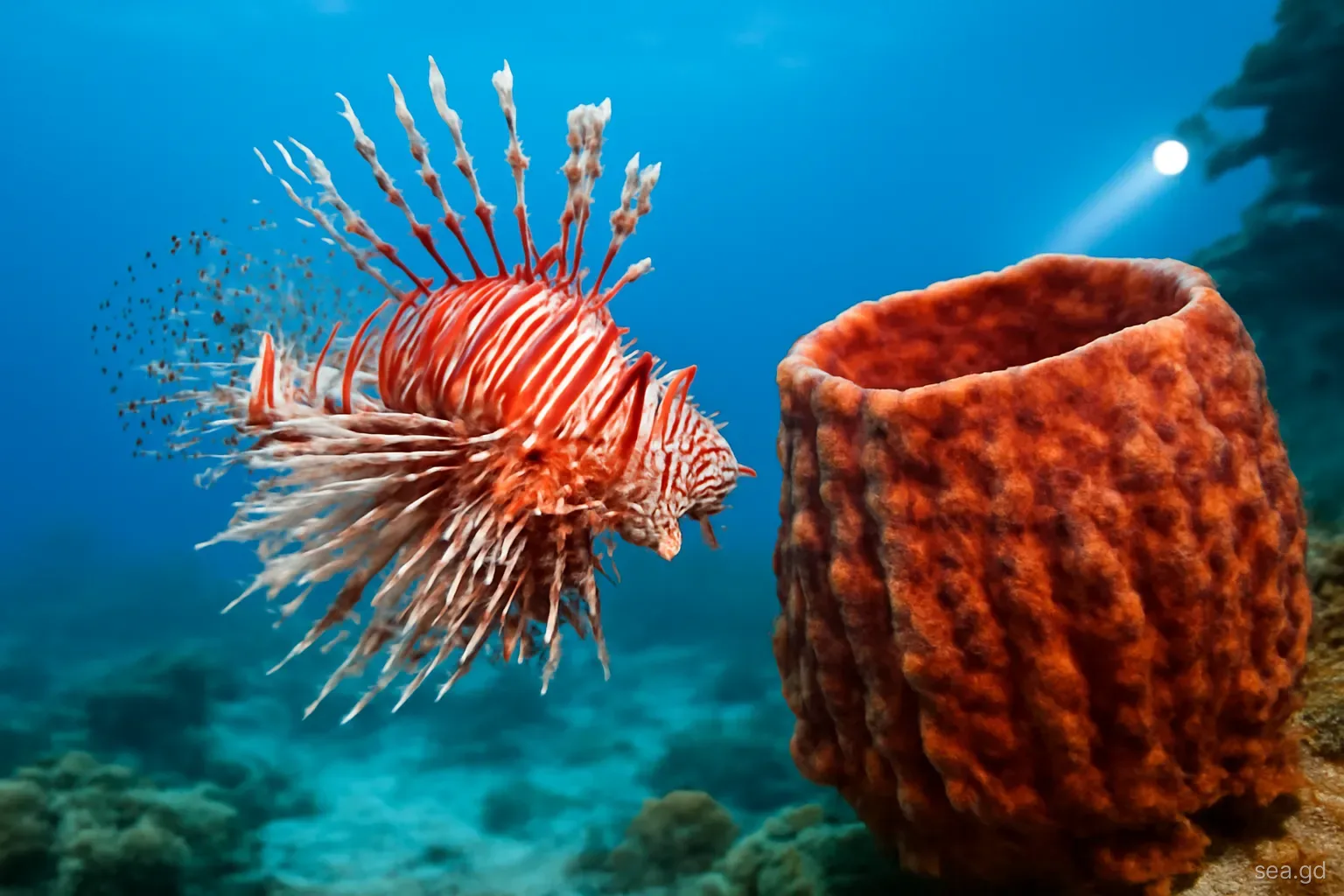
Barrel sponges. Huge, rough-sided barrels or vases that can grow taller than a diver and live for a very long time. They pump enormous volumes of water through their walls. Divers sometimes climb inside for photos; it damages them and should never be done.
Tube and stove-pipe sponges. Clusters of upright tubes in yellow, purple or grey. Yellow tube sponges are particularly striking against blue water and attract small gobies and brittle stars.
Vase sponges. Open cups or vases, including the azure vase sponge, a vivid blue-violet that photographs beautifully.
Rope and encrusting sponges. Long, branching ropes in red, purple or orange draped across the reef, and flat sheets of colour coating rock surfaces, often in bright orange and red.
Touch-me-not sponge. A brown, lumpy sponge that causes painful skin irritation on contact, as its name suggests. It is one more reason to keep hands off the reef.
Other animals that look like plants
Anemones. The giant Caribbean anemone has thick tentacles tipped in pink or purple and often shelters cleaner shrimps; the corkscrew anemone has thin, spiralling tentacles and is a favourite home for Pederson cleaner shrimp. Both sting small prey, though rarely enough for people to feel.
Zoanthids. Mats of small, flower-like polyps, often green or brown, carpeting rocks in shallow water. They resemble tiny anemones packed together.
Hydroids. Delicate, feathery growths that look like ferns or fine plumes on rock and wrecks. Some species sting sharply, so treat anything feathery and pale with caution.
Tube worms. Christmas tree worms spiral out of coral heads in red, blue, yellow and white, while feather dusters open larger plumes. Both snap back into their tubes at the slightest disturbance, so approach gently.
Algae. Real plants do grow on the reef. Calcareous green algae with stacked coin-like segments add sand when they die, and turf algae coats dead surfaces. A little algae is normal; thick seaweed blanketing coral is a warning sign.
Reading reef health as you swim
Once you can recognise the main groups, you can start to read the condition of a reef. Healthy hard coral has colour, from browns and greens to yellows and purples, with intact tissue. Bleached coral is stark white but still alive, the tissue clear because the coral has expelled the algae that live inside it, usually under heat stress. Bleaching is not death, and corals can recover if temperatures drop in time.
Freshly dead coral shows a clean white skeleton with no tissue, which within weeks becomes fuzzed over with turf algae. Patches of white with a sharp edge advancing across a colony can indicate disease. Large areas of seaweed smothering dead coral suggest too few grazers, too many nutrients from land, or both.
Grenada's reefs, like reefs across the Caribbean, carry the marks of hurricanes, disease outbreaks and the severe regional bleaching of recent hot years. Many still show strong soft coral growth, big sponges and resilient brain and star corals, especially in protected areas. Recording what you see, even informally, and joining citizen-science programmes run by local conservation groups helps build a picture of how they are changing.
Frequently asked questions
How can you tell coral from rock?
Living hard coral has texture: cups, ridges or polyps, and usually some colour. Rock tends to be featureless or covered in algae turf. Soft corals and sponges are softer-looking and often brightly coloured. Look closely and you will see structure in almost every living surface.
Is it bad to touch coral?
Yes. Touching removes the protective mucus layer, can transfer bacteria and breaks fragile growth. Some reef animals, such as fire coral and touch-me-not sponge, also sting or irritate skin. Good buoyancy and keeping hands to yourself protect both you and the reef.
Why are some corals white?
White coral is either bleached, meaning alive but stressed and lacking its symbiotic algae, or dead with a bare skeleton. Bleached coral keeps its tissue and structure; dead coral quickly becomes covered in algae. Heat stress is the main cause of bleaching.
Are sponges plants or animals?
Sponges are animals, among the simplest on Earth. They have no organs or nervous system but filter vast amounts of water to feed on bacteria and particles. Sea fans and other soft corals are also animals, not plants.
What should you do if fire coral stings you?
Get out of the water if it is painful, rinse with sea water, and avoid rubbing or applying fresh water, which can trigger more stinging cells. Vinegar is sometimes used. Seek medical advice for severe pain, widespread rash or signs of infection.