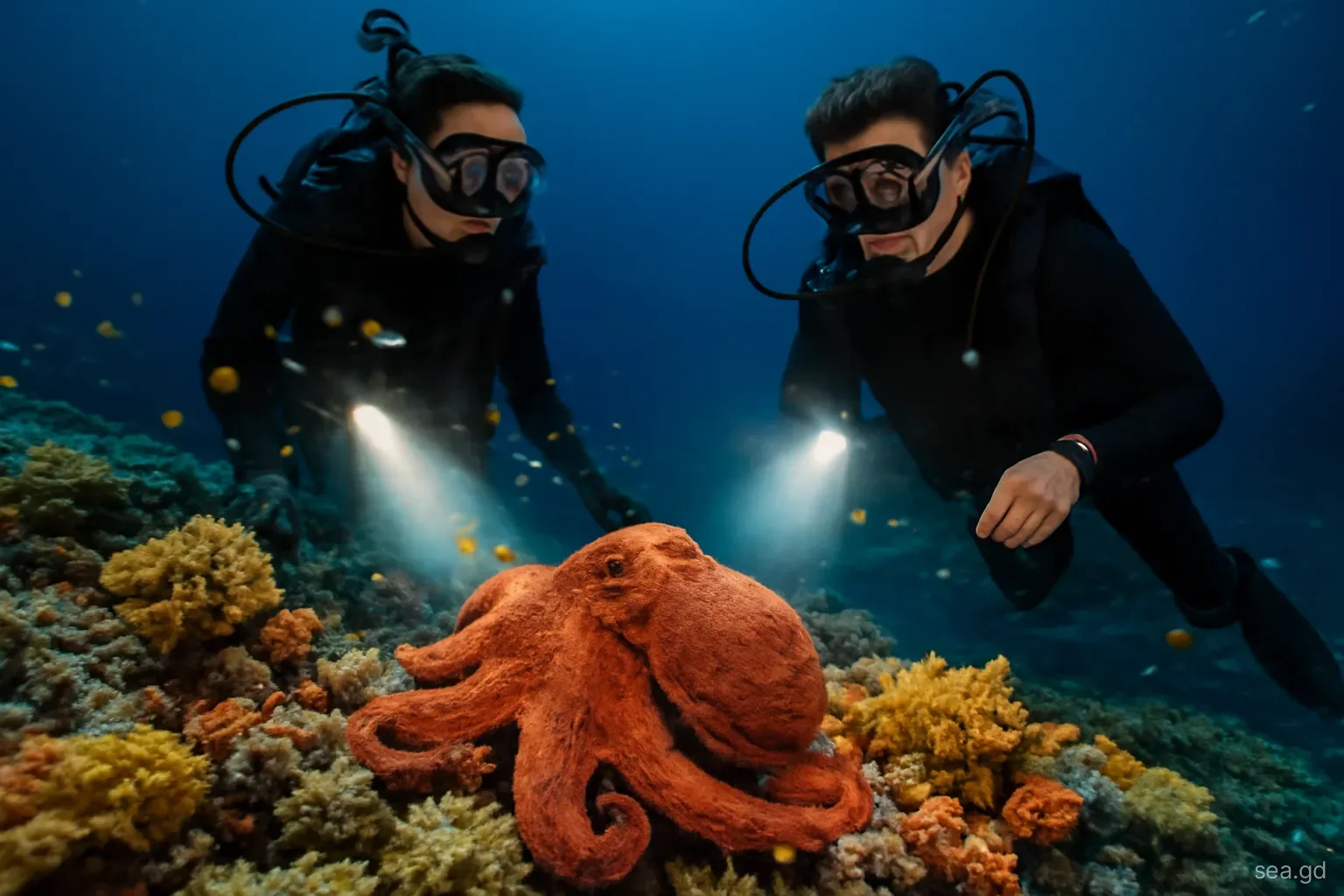
At dusk the reef changes shift. The parrotfish, tangs and damsels that dominate the day tuck into crevices or settle on the bottom, and a whole second community comes out: octopus hunting across the coral, lobsters marching in the open, basket stars unfurling their arms into the current, and coral polyps extending to feed. A site you dived at ten in the morning can be unrecognisable at eight at night.
Several Grenadian dive operators run night dives, usually on shallow, familiar reefs close to the south and west coasts, and some snorkel trips go out at dusk too. Night diving is not difficult for a certified diver comfortable with buoyancy, but it does need the right lights, a good briefing and a slower pace. Here is what to look for and how to do it well.
The animals that make a night dive
Octopus. The Caribbean reef octopus is the star of most night dives: by day hidden, by night out in the open, flowing over coral and flashing through colours from blue-green to mottled brown as it hunts crabs and small fish. Approach slowly and keep your torch beam off its eyes; a startled octopus jets away in an ink cloud.
Lobsters and crabs. Caribbean spiny lobsters, spotted spiny lobsters and flattened slipper lobsters leave their holes to forage. Arrow crabs, decorator crabs disguised with sponge and algae, and channel clinging crabs pick through the reef. Their eyes reflect torchlight as tiny glowing dots, which helps you find them.
Basket stars and brittle stars. Basket stars spend the day balled up inside sea rods and sponges. At night they climb to a high point and spread their branching arms into a lattice to catch plankton, sometimes a metre across. They curl up if light stays on them, so give them a brief look and move on.
Sleeping parrotfish. Many parrotfish secrete a transparent mucus cocoon around themselves before sleeping, thought to mask their scent from predators. Finding one tucked under a ledge in its bubble is a highlight; do not touch or wake it.
Caribbean reef squid. Small groups hover near the surface and over the reef, changing colour and pattern rapidly. They are curious and may hang in your light for a while.
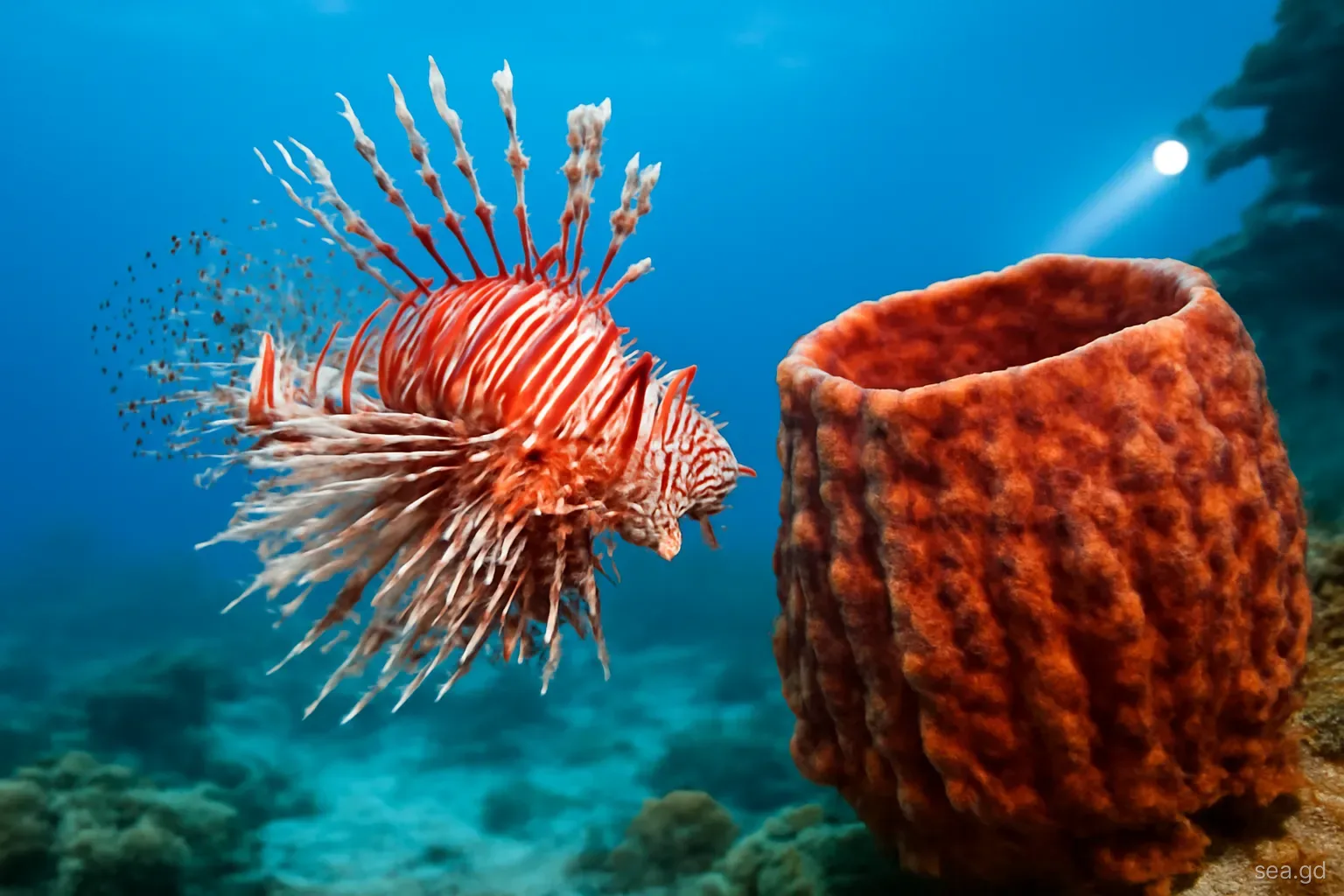
Hunters. Squirrelfish, soldierfish, cardinalfish and big-eyed bigeyes leave their daytime shelters to feed. Nurse sharks and morays are more active, and lionfish use the darkness to ambush small fish.
The reef itself looks different
Hard corals are colonies of tiny animals, and many species keep their tentacles retracted by day and extend them at night to catch plankton. Under a torch, star corals and brain corals that looked like rock in daylight appear soft and fuzzy with feeding polyps. Tube coral, an orange species that grows under overhangs and in wrecks, opens into clusters of bright flower-like polyps that are among the most photographed sights after dark.
Sea cucumbers, worms and snails come out of the sand. Feather duster worms open their plumes, Christmas tree worms spiral out of coral heads, and flamingo tongue snails creep along sea fans. Feeding plankton gathers in your torch beam and attracts tiny predators, so a light held still for a few seconds becomes a miniature food chain.
Colours are the other surprise. Water absorbs red light within a few metres, which is why reefs look blue and green by day. A torch brings back the full colour of sponges, corals and fish at close range, so many divers find night photography and observation more colourful than daytime diving.
Bioluminescence and glowing plankton
Turn your torch off for a minute at the end of a dive, ideally with your group's agreement and while holding position near the guide, and wave your hand in the water. Sparks of blue-green light trail through your fingers. These are bioluminescent plankton, including dinoflagellates and tiny crustaceans, which glow when disturbed. On some nights the effect is faint, on others striking.
In parts of the Caribbean, small ostracod crustaceans also put on courtship displays shortly after dark, releasing vertical strings of glowing dots in the water column. These are most visible on dark nights away from the full moon and need complete darkness to see. Ask the guide whether recent dives have seen them.
Moonlight makes a difference. Around the full moon the water is brighter, which some divers enjoy, but bioluminescence shows best on dark, moonless nights. Weather and swell on a given evening matter more than the lunar calendar, so stay flexible.
What to bring and wear
A night dive asks for a little more kit and a little more warmth than a day dive. Operators supply the basics, but checking these before you leave the dock avoids a cold or frustrating hour.
- Exposure protection: even in water of 26 to 29 degrees, a slow night dive after a day in the sun feels cooler. A 3 mm wetsuit or at least a full-length skin suit is more comfortable than a rash vest.
- Lights: a primary torch with a fairly wide beam, a small backup that fits in a pocket, and a marker light. A torch with a red or dim mode is kinder to wildlife.
- A warm layer for the boat: a dry fleece or windproof top for the ride back, when wet skin and the breeze combine.
- Seasickness prevention: the horizon disappears at night and some people who are fine by day feel queasy. Take tablets in advance if you are prone.
- Mask and fins you know: fiddling with an unfamiliar strap in the dark is harder than in daylight, so bring your own if you have them.
- Something to eat and drink: a light meal before the dive and water afterwards; a heavy dinner beforehand is a common reason for feeling unwell on the boat.
How to plan and dive it safely
Night diving uses the same skills as day diving, applied more carefully. A good operator runs a thorough briefing; make sure you understand it before you go in.
- Do the site in daylight first if you can. Knowing the layout of a reef makes navigation at night much easier and less stressful.
- Carry a primary torch and a backup torch, both fully charged. Operators can usually rent lights, but check they work before the boat leaves.
- Attach a marker light or glow stick to your tank or first stage so your buddy and guide can see you from behind.
- Agree on light signals: a slow circle means OK, a rapid side-to-side wave means attention or a problem. Never shine a torch into someone's face to get their attention.
- Enter at or just after dusk, keep the dive shallow and slow, and stay closer to your buddy than you would by day.
- Keep buoyancy tight. Unseen fire coral, urchins and scorpionfish are easier to bump in the dark, and sediment kicked up in a torch beam ruins visibility for everyone.
Common mistakes after dark
Dazzling the wildlife. Holding a powerful beam on an animal stresses it, sends octopus and squid fleeing and makes basket stars curl up. Light the edge of the subject, or use a red or dimmer setting where your torch allows.
Moving too fast. The best night finds are small and still. Divers who cover distance see less than those who search one coral head carefully.
Ignoring the boat lights. Know what the boat's lights look like and where it will be moored. Surfacing far from the boat at night is a real problem, which is why most operators stay on a mooring.
Diving tired. A night dive after a full day of diving, sun and a late dinner is a recipe for mistakes. Keep it as the only dive of the evening and check your no-decompression limits after the day's earlier dives.
Frequently asked questions
Do you need special certification to night dive in Grenada?
Most operators accept certified Open Water divers on guided night dives at shallow sites, though some prefer a minimum number of logged dives. A night diving specialty course is useful but not usually required. Check the operator's requirements when booking.
What is the best time for a night dive?
Dives normally start at or just after dusk, when day species are settling and night species emerging. The changeover period is especially interesting. Dark, moonless nights are best for bioluminescence.
Can you snorkel at night in Grenada?
Night snorkelling is possible in calm, shallow water, but go with a guide, carry a torch and stay close to a boat or beach. Boat traffic and poor visibility make solo night snorkelling unwise.
Is night diving dangerous?
Not inherently, if you are trained and comfortable in the water. The risks are losing your group, disorientation and accidental contact with stinging or spiny animals. Good lights, a clear briefing and slow diving manage those risks.
What camera settings work for night dives?
Use a strobe or video light rather than relying on a torch alone, set a fast enough shutter speed to freeze small movement, and get close to reduce backscatter. Shoot small subjects such as crabs and polyps rather than wide scenes.