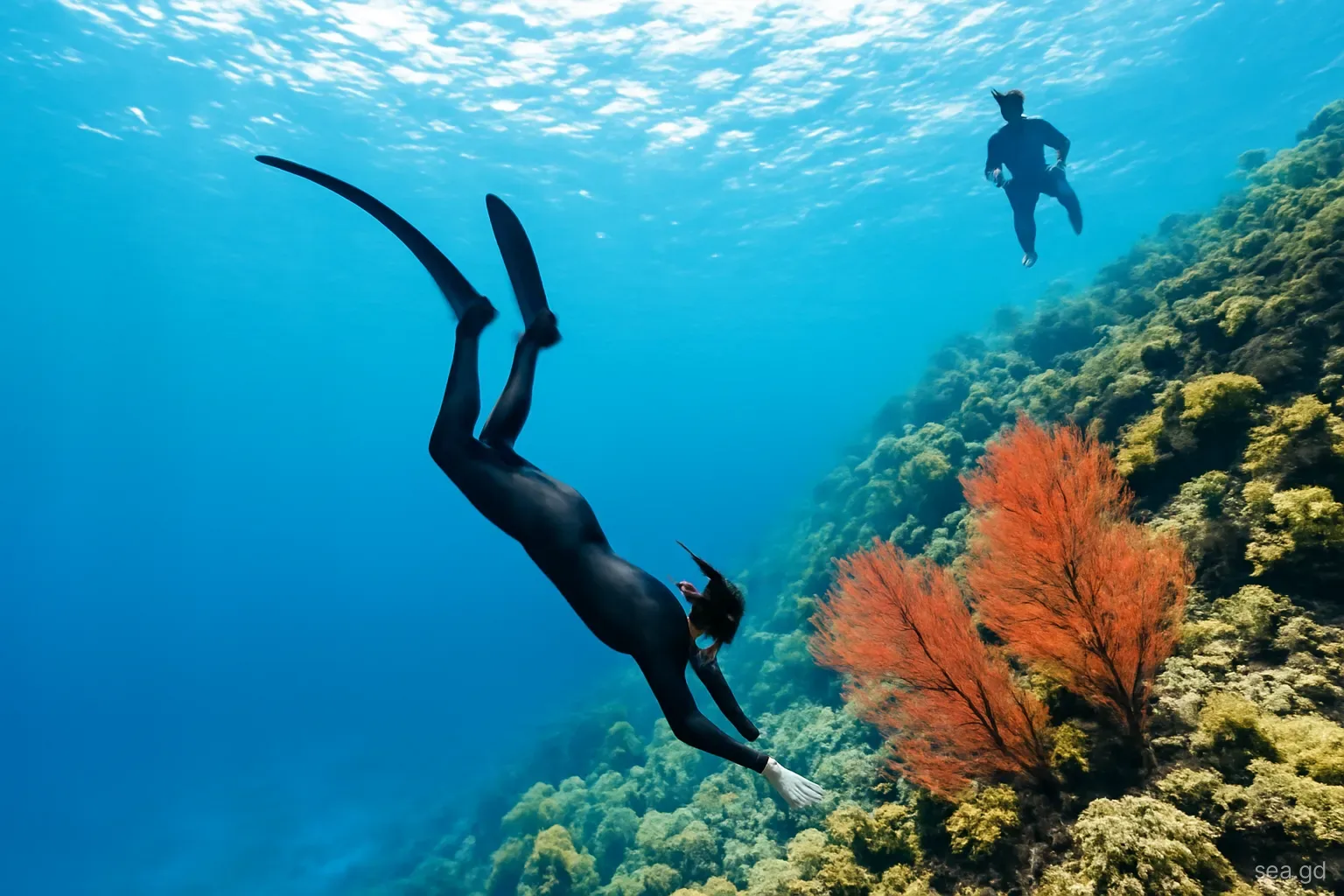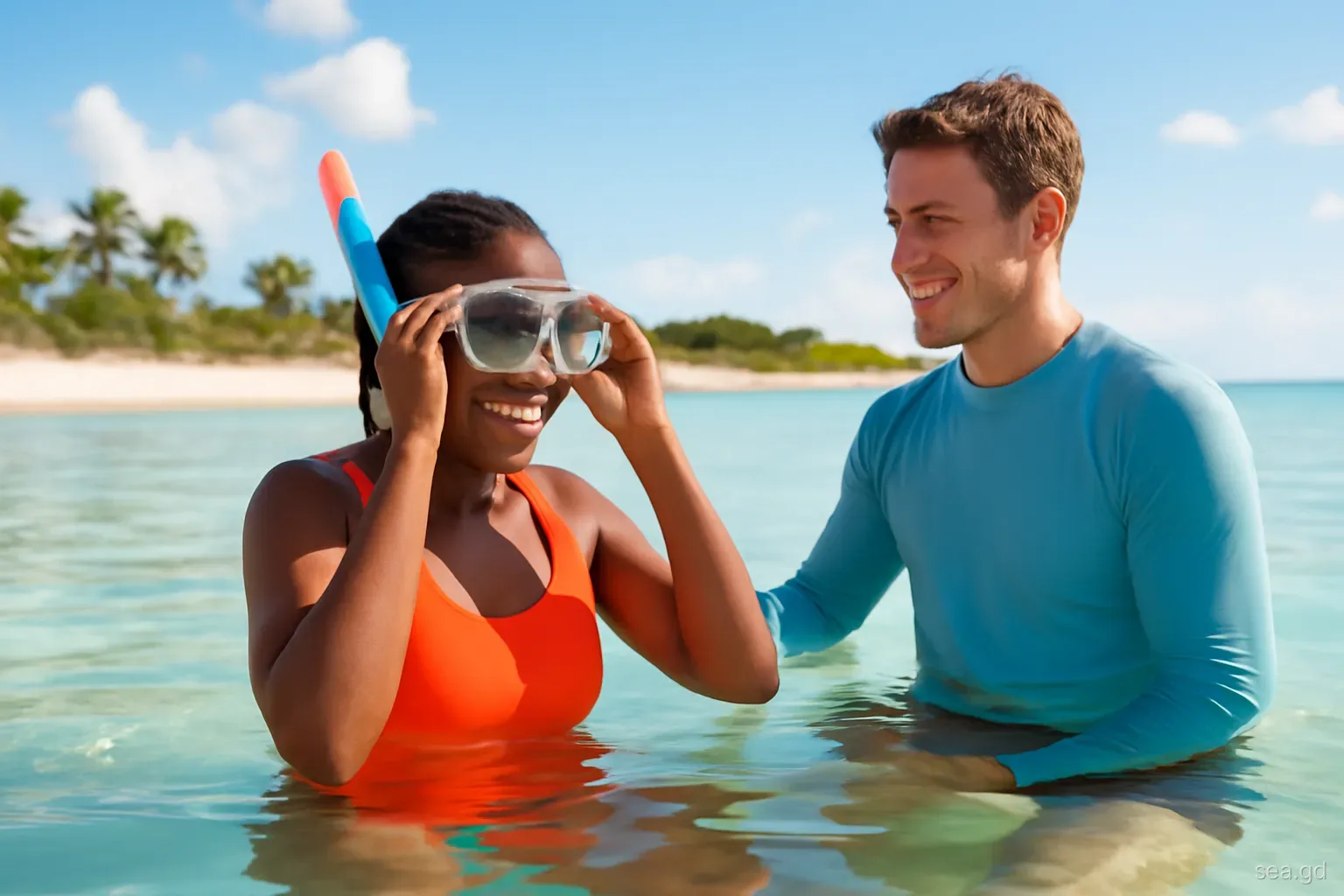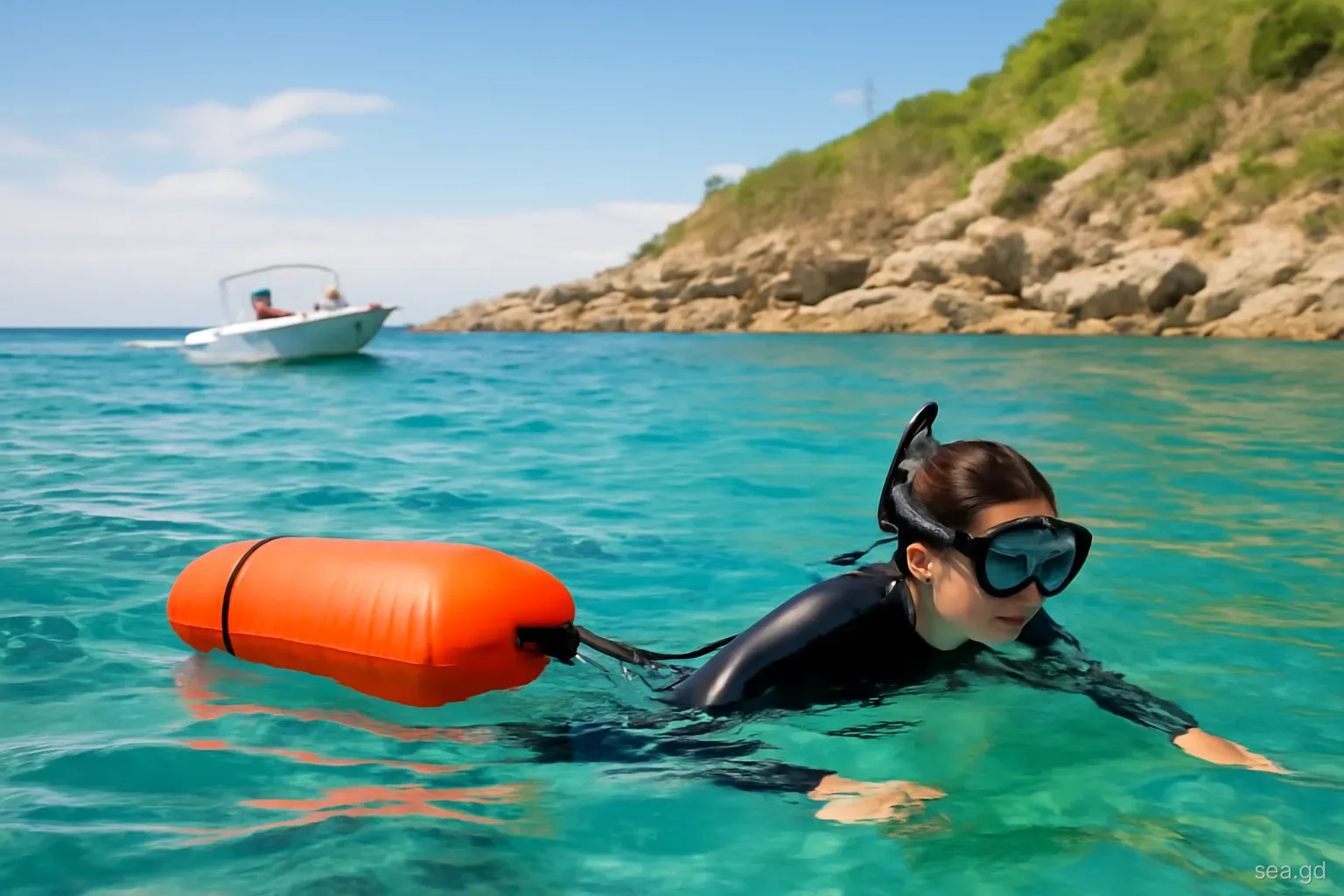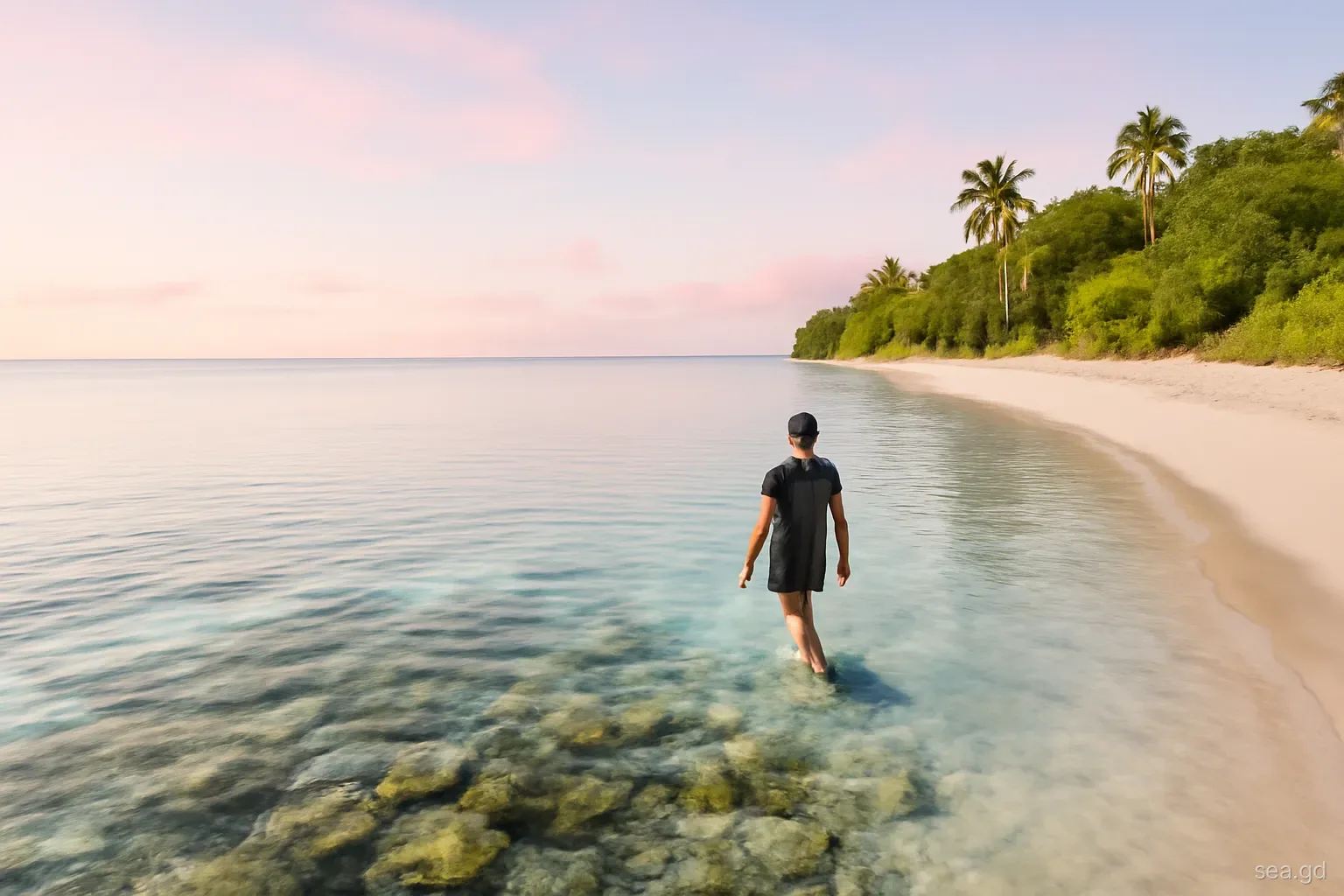
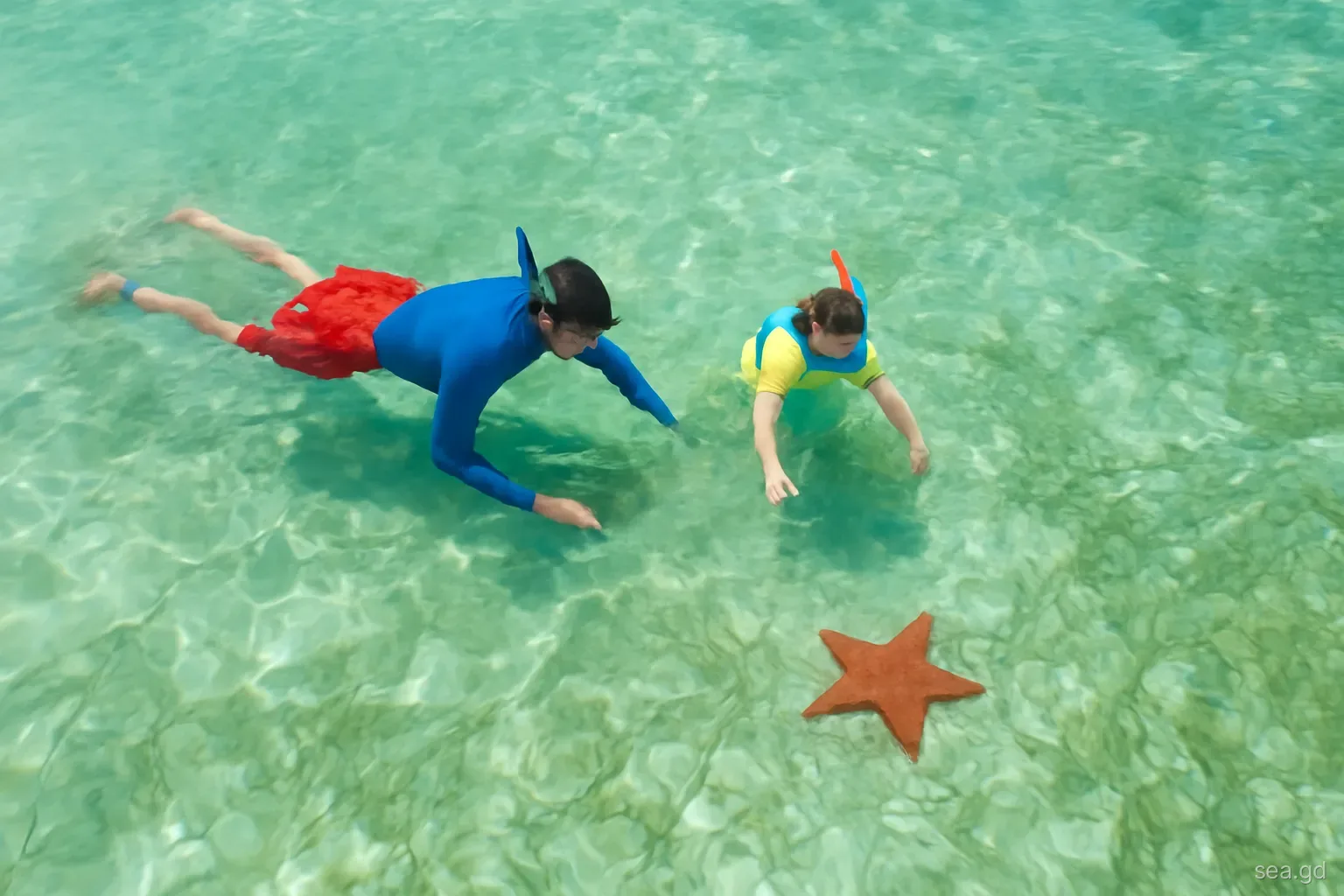
Most visitors to Grenada sleep within a few kilometres of Point Salines, so the south-west and south coasts are where most snorkels actually happen. The water here is calm for much of the year, the beaches are easy to reach, and you can be in the sea ten minutes after breakfast. What the area does not offer is a continuous reef you can swim out to from anywhere. Good snorkelling on this coast is concentrated at rocky ends, headlands and a few small islands, separated by long stretches of sand and seagrass.
That makes choosing the right spot, and the right corner of it, the whole game. This comparison works through the main south coast options from Grand Anse round to Hog Island, explaining what lives at each, how they differ in shelter, depth and boat traffic, and which suit beginners, families or stronger swimmers.
Grand Anse: snorkelling a seagrass beach
Grand Anse is Grenada's showpiece beach, but most of its seabed is sand and seagrass rather than reef. Snorkellers expecting coral are disappointed; snorkellers who know what to look for in seagrass have a quietly rewarding swim. Seagrass meadows are nurseries for reef fish, and you can find juvenile parrotfish and wrasse, flounders flattened against the sand, cushion sea stars, pipefish and, with luck, a green turtle or a southern stingray feeding on the bottom.
The best approach is to swim slowly a short distance offshore, along the beach rather than out to sea, and look closely at the bottom rather than scanning for big scenery. The rocky areas toward either end of the beach have more structure and more fish. The main hazard is traffic: water taxis, jet skis and dive boats run along Grand Anse, and the buoyed swimming areas are there for a reason. Stay inside them, or wear a bright cap and keep close to shore if you snorkel outside them. Grand Anse is excellent for children taking their first look underwater, because the water is shallow and the bottom is soft.
Getting around between these south coast spots is simple. Route buses run along the main road between St George's, Grand Anse and the Point Salines area, taxis wait near the larger hotels, and Morne Rouge is a short walk over the hill from the southern end of Grand Anse. Because the spots are close together, it is easy to check the water at one beach and move to another if it is choppy or cloudy, which is a real advantage over boat-only reefs.
Morne Rouge, Quarantine Point and Magazine Beach
Morne Rouge Bay. Just south of Grand Anse, behind Quarantine Point, Morne Rouge is a small horseshoe bay that is usually calmer than its neighbour. Rocky edges at both ends hold sea fans, small coral heads, sergeant majors, squirrelfish and the occasional moray tucked into crevices. It is the south coast spot most often recommended to first-time snorkellers, because the entry is from sand, the water stays fairly shallow along the rocks and there is less boat traffic than at Grand Anse.
Quarantine Point. The headland between Grand Anse and Morne Rouge has more rock and more fish around its base than either beach, but it is more exposed. Any swell from the north-west in winter breaks against the point, and boats pass close by. It is for confident swimmers on calm days only, ideally reached by swimming along the rocks from the Morne Rouge side rather than across open water.
Magazine Beach and Pink Gin Beach. Close to the airport at Point Salines, these beaches face west and are sheltered most of the year. The rocks at the north end of Magazine Beach are one of the better shore snorkels on the island, with a mix of boulders, coral heads and schooling fish in water that clears quickly when the sea is calm. Pink Gin Beach to the south is more open. Point Salines itself, at the very tip of the island, is exposed to currents where the Caribbean meets the Atlantic, and is not a place for casual snorkelling.
Lance aux Épines and Hog Island: the yachting coast
East of Point Salines the south coast changes character. Instead of long beaches facing west, it becomes a sequence of deep inlets and headlands facing south toward the open sea: True Blue, Prickly Bay, Mount Hartman, Woburn and Clarkes Court. These bays are full of anchored and moored yachts, which tells you they are sheltered, but also means the water inside them is not ideal for snorkelling. Anchorages mean outboard traffic, anchor chains, and sometimes greywater, and visibility near the head of a busy bay is usually poor.
The snorkelling on this coast is on the outer edges. Hog Island, near Woburn, is the best known: a low island with mangroves on one side and a fringing reef along its seaward side, inside the Woburn and Clarkes Court Bay marine protected area. Sailors anchored in the area often dinghy over to snorkel the reef, and visitors can reach it with a local boat. The reef nearest the open sea is the richest but also catches the swell and current, so stay on the sheltered side unless conditions are flat and you are with someone who knows the reef.
Around Lance aux Épines, the rocky points between bays hold fish and some coral, and some of the hotels and guest houses in the area overlook small coves where a calm-day snorkel is possible. As anywhere on this coast, the rule is to snorkel the rocks at the mouth of a bay, not the middle of an anchorage.
Which spot suits whom
Matching the spot to the people in the water matters more than chasing the "best" reef. As a rough guide for calm conditions:
- Young children and first-timers: Grand Anse inside the swimming buoys, or the sandy middle of Morne Rouge Bay, moving to the rocks once they are comfortable.
- Families with confident older children: the rocky ends of Morne Rouge, or the north end of Magazine Beach on a flat morning.
- Strong swimmers wanting more fish: Quarantine Point from the Morne Rouge side on calm days, or Hog Island's reef with local guidance.
- People staying on a yacht: Hog Island and the rocky points at the mouths of the southern bays, reached by dinghy, tying off well clear of the reef.
- Anyone after coral rather than fish: the south coast is not the strongest choice; a boat trip to the west coast reserve north of St George's will show more reef structure.
What can go wrong on south coast snorkels
The most common problem is simply poor visibility. After heavy rain, rivers and gullies carry silt into the sea and the inshore water turns cloudy for a day or two, especially near St George's and in the enclosed southern bays. In the dry season, roughly January to May, the water is usually clearer. Visibility also drops when the wind turns south-east and pushes chop onto the south-facing bays.
Winter swells are the second issue. Between roughly November and March, distant North Atlantic storms send long-period swell into the Caribbean. On the west-facing beaches such as Grand Anse, Morne Rouge and Magazine, those swells can produce shore break and surge around the rocks, which makes rock snorkelling unpleasant and potentially dangerous. On those days, stay on the sand.
The third is the reef itself. Sea urchins are common in rocky shallows and fire coral grows on some rocks; entering from sand and keeping your hands to yourself avoids almost all injuries. Finally, the south coast is busy. Leave valuables at your accommodation rather than on the sand, and let someone ashore know where you are swimming.
Frequently asked questions
Is there coral at Grand Anse Beach?
Not much close to shore. Grand Anse is mainly sand and seagrass, with some rocky patches toward the ends of the beach. The seagrass is worth exploring for juvenile fish, sea stars and occasional turtles and rays. Larger reefs lie farther offshore in water too deep for snorkelling and are visited by dive boats.
Where is the easiest shore snorkelling near Grand Anse?
Morne Rouge Bay is usually the easiest. It is a short drive or a walk over the hill from the southern end of Grand Anse, the entry is from sand, the bay is often calm, and the rocky edges at either end have reef fish in shallow water. Go in the morning for the calmest sea.
Can you snorkel at Hog Island without a boat?
Hog Island is reached by water in practice. Visitors typically arrive by local boat, dinghy from a yacht or on a guided trip. The island sits inside a marine protected area, so fishing and collecting are not allowed, and you should stay off the reef and avoid standing on coral in the shallows.
Is it safe to snorkel at Point Salines?
The very tip of Point Salines is exposed to stronger currents and waves where the Caribbean and Atlantic meet, so it is not recommended for casual snorkelling. The nearby west-facing beaches, especially the north end of Magazine Beach, are more sheltered and better choices on calm days.
When is visibility best on the south coast?
Generally during the dry season, from about January to May, and on calm mornings after several days without heavy rain. Visibility drops after downpours, when silt washes into the bays, and when wind or swell stirs up the bottom. Enclosed yacht anchorages are usually murkier than open beaches.