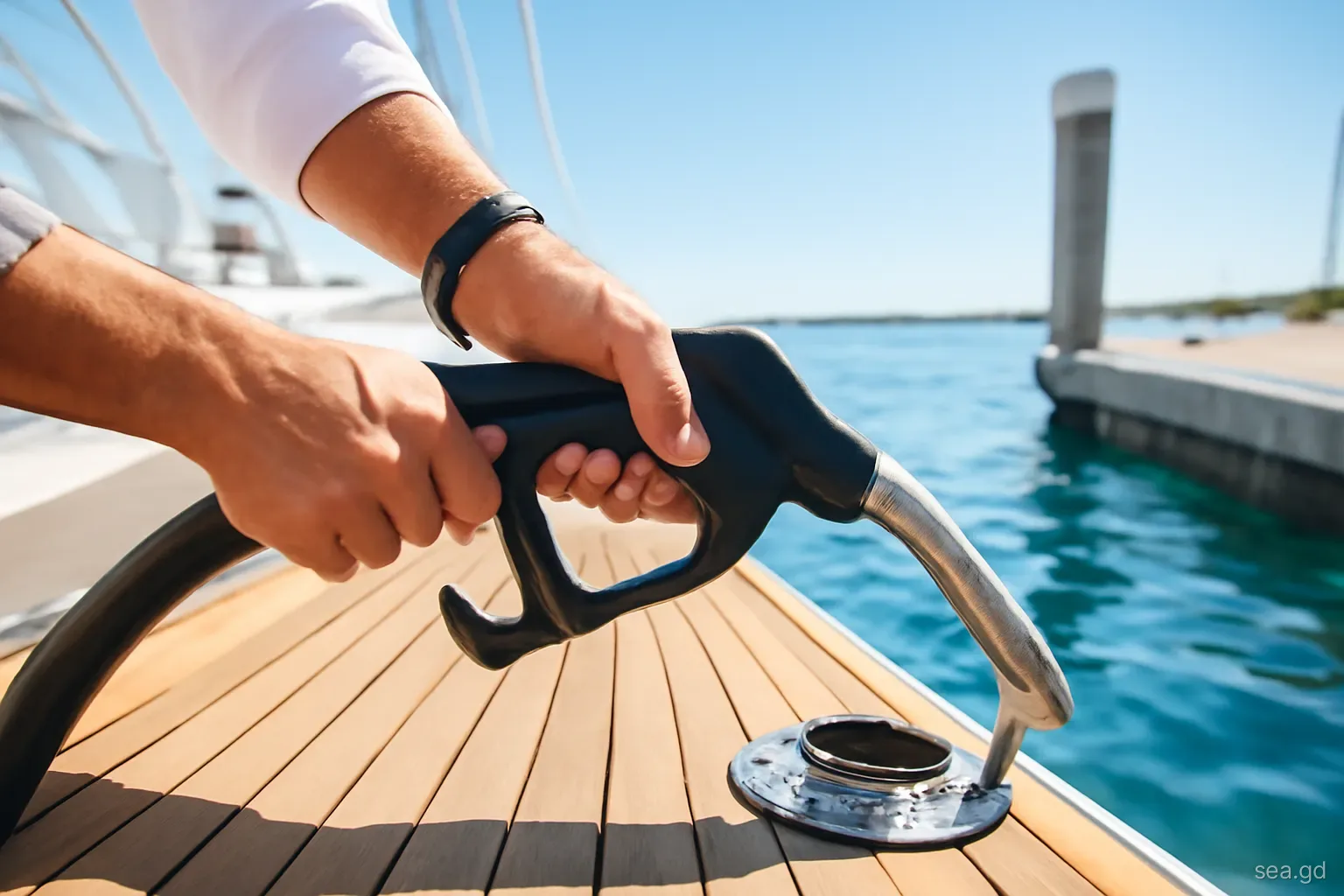
The consumables that keep a cruising boat running, diesel, petrol for the outboard, fresh water, cooking gas and electricity, are all available in Grenada, but each comes with its own local quirk. Fuel docks are fewer than the number of marinas suggests, Grenada's mains electricity is not what American boats are wired for, and gas bottle fittings are a perennial source of confusion.
This page sets out how each one works for a visiting yacht, the questions to ask before committing, and the mistakes that send crews back and forth with jerry cans. Fuel prices are set nationally and change regularly, and marina tariffs are revised every season, so check current figures locally rather than relying on anything printed.
Diesel and petrol: where boats fill up
Marina fuel docks. Several of the larger marinas operate fuel docks, notably in the St George's lagoon and on the south coast, and in Carriacou the yard at Tyrrel Bay has historically sold fuel. Not every marina has one, and a fuel dock that existed a few seasons ago may have closed or changed hands, so check before planning a route around it.
Depth and approach. Fuel docks are generally built for yachts, but depths alongside vary. If you draw more than about two metres, ask about the depth at the dock and approach at the state of tide, although Grenada's tidal range is small, typically well under a metre.
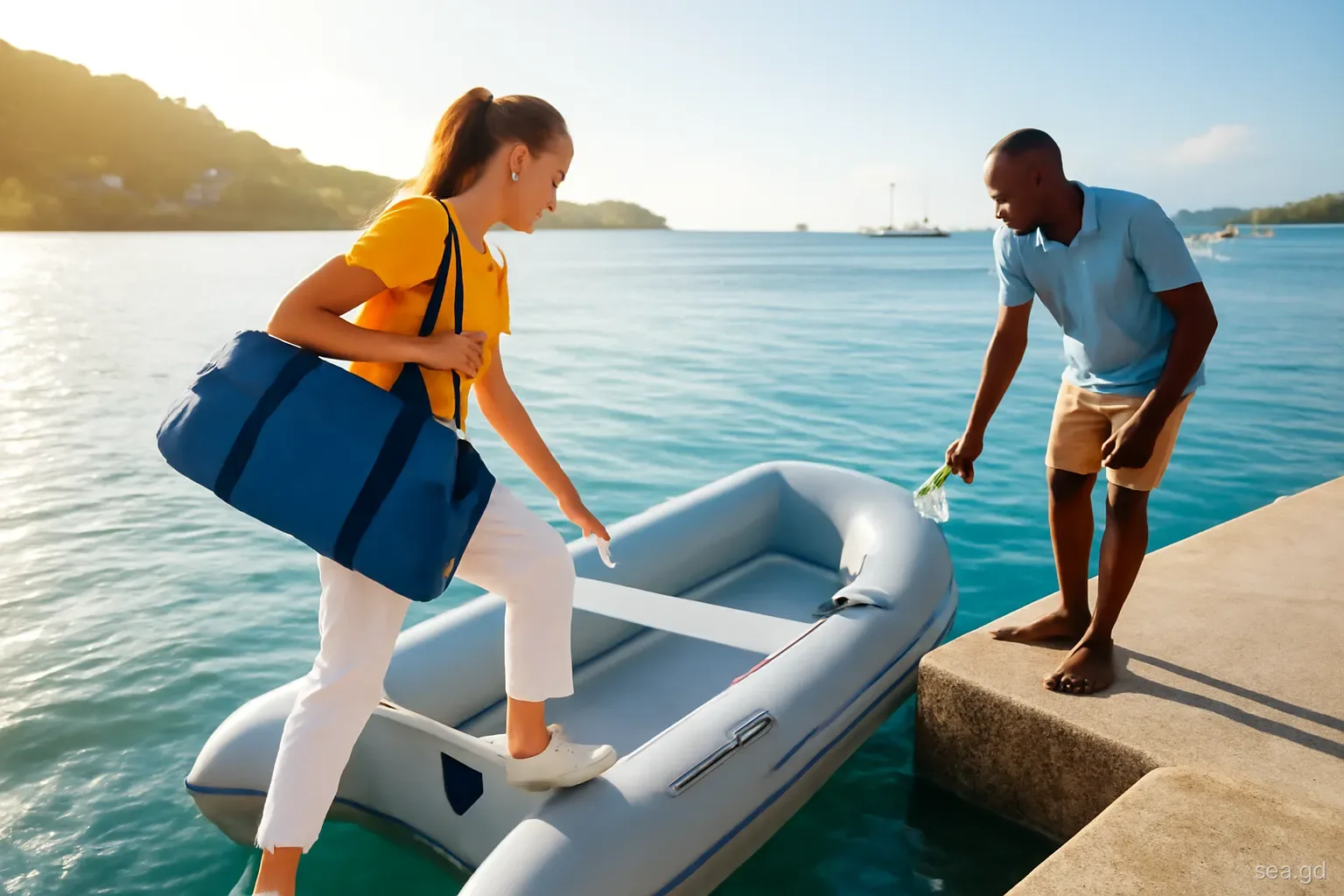
Jerry cans. Many crews at anchor fill jerry cans at roadside service stations, which sell diesel and petrol at the national pump price. It is often cheaper than marina fuel, but it means carrying heavy cans by bus or taxi and decanting them over the side. Use a proper funnel with a filter.
Fuel quality. Fuel in Grenada is generally of decent quality, but any tank in the tropics can grow diesel bug. Filter fuel going in, keep spare filter elements, and add a biocide if the boat will sit for months.
Payment. Marina fuel docks usually accept cards; service stations take cash and often cards. Prices are quoted in EC dollars per litre or per imperial or US gallon, so check which unit before comparing.
Fresh water: dock supply, watermakers and rain
Mains water is supplied by NAWASA, the national water authority, and marinas sell it at the dock, normally metered by the gallon or included in a berth package. It is treated and widely used for tanks. After heavy rain, water from some catchments can carry more sediment, and supply interruptions occur in very dry spells, so a sediment pre-filter on the hose and a carbon filter for drinking water are sensible.
Boats at anchor have three choices: take the boat to a dock to fill tanks, ferry jerry cans of water by dinghy, or make their own. Watermakers are common on long-stay boats in Grenada, and the anchorages on the south coast are clean enough for most crews to run them, although many avoid doing so in enclosed, crowded bays or near outfalls. Service technicians for the common brands are available around the south-coast yards.
In the rainy season, roughly June to December, rain catchment from a bimini or deck can fill tanks quickly. Let the first few minutes of a shower wash salt and dust off the catchment surface before diverting water into the tank, and keep a separate container for rainwater if you are unsure of its cleanliness.
Shore power: 230 volts, 50 hertz
Grenada's electricity, supplied by GRENLEC, runs at 220 to 240 volts and 50 hertz, the same broad standard as the United Kingdom and most of Europe. Boats built for the North American market are usually wired for 120 volts at 60 hertz, and plugging one straight into a 230-volt pedestal can destroy chargers, appliances and air conditioners in seconds.
Marinas that cater for American yachts may offer 120-volt outlets or 208/240-volt split-phase arrangements on some pedestals; others offer only 230 volts. Ask exactly what is on your dock before connecting, and inspect the pedestal and cable. The common fixes are an isolation or step-down transformer, which converts the supply and also adds galvanic isolation, or relying on battery chargers and inverters rated for universal input. Note that 60 hertz equipment, particularly motors and some older air conditioning units, may run hot or badly on 50 hertz even at the right voltage.
Electricity at the dock is normally metered and billed per kilowatt-hour, often with a minimum charge. Grenada's power is not cheap by international standards, and air conditioning running all day in the summer adds up quickly. Many boats on long berths fit solar panels and use shore power mainly as backup.
Cooking gas: refills, exchanges and fittings
Cooking gas is the consumable that causes the most head-scratching, because cylinder standards vary across the Caribbean and the world.
- Grenada uses liquefied petroleum gas (LPG). Locally standard cylinders are exchanged at service stations and distributors, which is the simplest option if your boat can take a local bottle.
- Foreign cylinders, such as American propane tanks, European butane or Camping Gaz bottles, may not be fillable directly. Some cruisers rely on a refill arrangement where cylinders are collected and taken to the filling plant; ask on the morning cruisers' net or at the marina for whoever currently offers it.
- Fittings differ. Carry an adaptor for the local regulator thread, or keep a local cylinder and regulator aboard and use your own bottles as spares.
- Check that any cylinder you buy fits your gas locker, which must drain overboard. A taller local bottle that does not fit safely is not a bargain.
- Test the system for leaks with soapy water after every change, and fit a gas alarm if the boat lacks one.
- Allow a few days for refills during busy periods, and never let all cylinders run empty at once.
Carriacou and planning your supplies
Carriacou has fuel and water available at Tyrrel Bay and Hillsborough, but on a smaller scale, and the effects of Hurricane Beryl in July 2024 on docks, power and water supply were severe. Some facilities have reopened while others were still being rebuilt; check with the Tyrrel Bay yards or local businesses before arriving with empty tanks. Petite Martinique has historically sold fuel and has long been known for it, but confirm availability first.
The sensible approach is to treat the main island as your filling station. Arrive in Carriacou with full fuel and water tanks and enough gas for your stay, and treat local supplies there as a bonus.
If you are heading north into the St Vincent Grenadines, fuel and water are available at Union Island, Bequia and some of the smaller islands, but are generally more expensive and sometimes less convenient. Topping up on Grenada's south coast before leaving costs little extra effort.
What to check so you are not caught short
Your actual consumption. Know your litres per engine hour and your daily water use. Crews new to tropical cruising underestimate how much water they use for rinsing and showers.
The pedestal before the plug. Read the voltage and frequency on the pedestal, and if unsure ask the dockmaster. A burnt charger is an expensive lesson, and spares may need to be imported.
Fuel dock hours. Fuel docks keep shorter hours than the marina office and may close on Sundays and public holidays. Fill up the day before an early departure.
Dock water at peak times. In dry spells, marinas occasionally restrict water to berth holders. Ask before planning a tank fill.
Gas bottle compatibility. Sort out adaptors and a backup cylinder in your first weeks, not when the stove sputters out mid-dinner.
Spills and waste oil. Grenada's bays are shallow and enclosed. Use absorbent pads when refuelling, and dispose of waste oil and filters at a marina or yard, not in a bin at the dinghy dock.
Frequently asked questions
Can an American boat plug into shore power in Grenada?
Only with care. Grenada's supply is 230 volts at 50 hertz. Some marinas provide 120-volt or split-phase outlets for American boats; others do not. Ask what is on your pedestal, and use an isolation or step-down transformer or universal-input chargers if needed. Plugging a 120-volt boat into 230 volts can destroy equipment instantly.
Is diesel cheaper at a service station than at a marina?
Often it is, because service stations sell at the national pump price, while marinas may add a margin for the convenience of the dock. The saving has to be weighed against the effort of carrying jerry cans by bus or taxi and decanting them safely over the side.
Can an American propane tank be refilled in Grenada?
Sometimes, through a refill service that takes cylinders to the filling plant, but arrangements change and fittings differ. Many long-stay cruisers buy a local LPG cylinder and regulator for everyday use. Ask on the morning cruisers' net or at your marina about current options before you run low.
Is it safe to run a watermaker in Grenada's anchorages?
Most crews run watermakers in the larger south-coast anchorages without trouble. Many avoid running them in enclosed, crowded bays, close to outfalls, or after heavy rain when runoff brings sediment. Good pre-filters and regular cleaning keep membranes healthy in warm, nutrient-rich water.
How is electricity charged at Grenada marinas?
Most marinas meter electricity and charge per kilowatt-hour, sometimes with a daily minimum or a connection fee. Rates reflect Grenada's relatively expensive power. Running air conditioning all day can produce a large bill, so ask for the tariff and read the meter when you arrive and leave.
Where can you get fuel in Carriacou?
Fuel has traditionally been available at Tyrrel Bay and in the Hillsborough area, and Petite Martinique has long sold fuel. Facilities were affected by Hurricane Beryl in 2024 and recovery has been gradual, so confirm availability locally and arrive from the main island with full tanks.